Wind Resistance of Fusion Bonded Epoxy (FBE) Tanks: Engineering Analysis
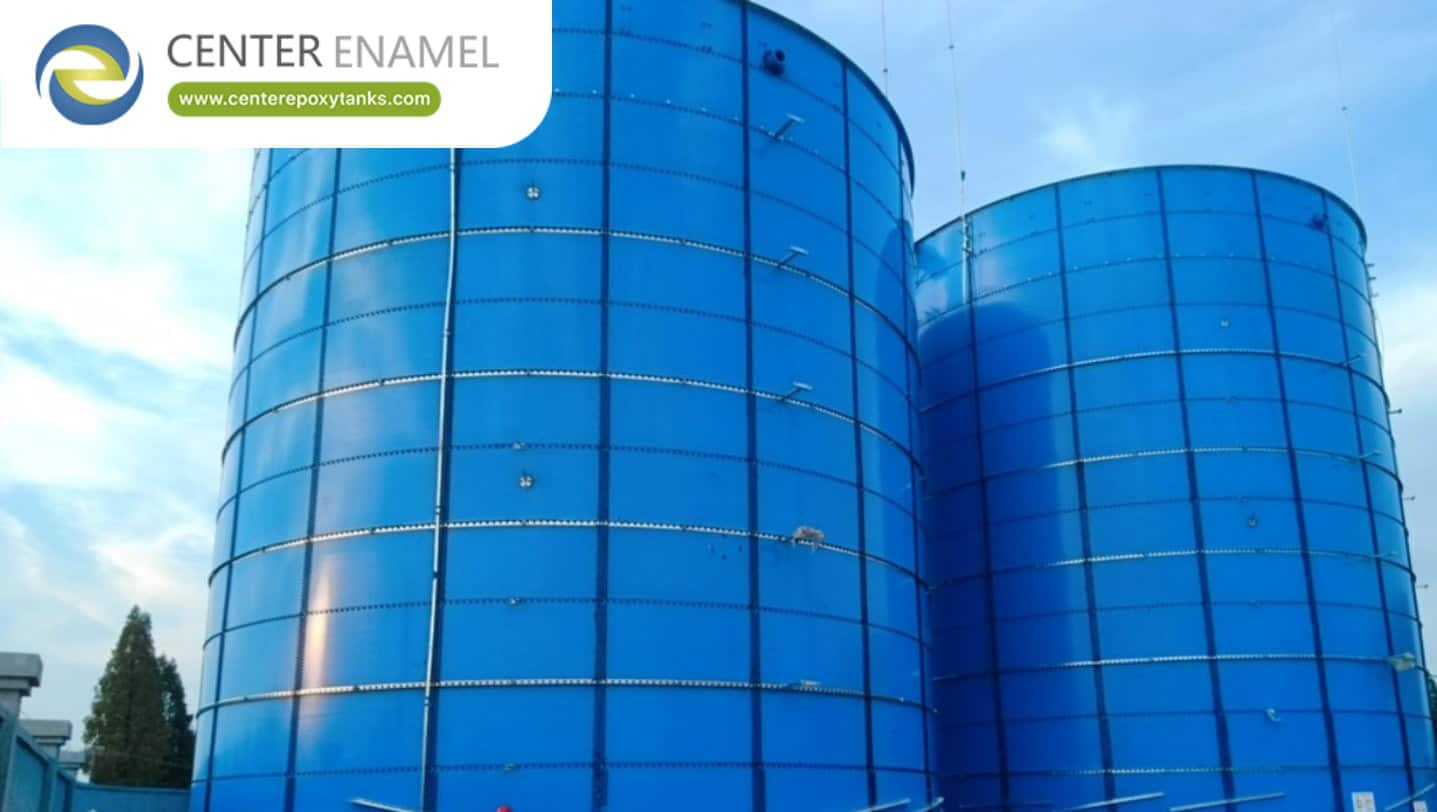
For large-diameter, flat-bottomed storage vessels like Fusion Bonded Epoxy (FBE) bolted tanks, wind is often a more critical structural threat than seismic activity in non-earthquake-prone regions. When an empty or partially filled tank is subjected to hurricane-force winds, it faces two primary failure modes: overturning (the tank tips over) and shell buckling (the wind pressure crushes the sidewalls). Designing for wind resistance is a matter of strict adherence to international standards and precise structural anchoring.
1. The Physics of Wind Loading on Storage Tanks
When wind hits a cylindrical tank, it creates a non-uniform pressure distribution.
● Windward Pressure: High positive pressure acts on the front of the tank.
● Leeward Suction: Negative pressure (suction) acts on the sides and the rear, effectively trying to pull the tank apart.
● Overturning Moment: The combined effect of wind force acting on the tank’s projected area creates an "overturning moment" that attempts to rotate the tank off its foundation.
2. Key Design Standards for Wind Resilience
FBE bolted tanks are engineered following rigid structural codes that ensure the shell and roof remain intact under specified design wind speeds.
● AWWA D103: The primary standard for bolted steel tanks. It dictates the minimum design wind speed (often ranging from 100 mph to 150+ mph depending on the region) and the resulting pressure calculations.
● ASCE 7: The reference standard for "Minimum Design Loads for Buildings and Other Structures." It provides the environmental coefficients used to calculate the wind velocity pressure (qz) based on terrain, exposure, and structure height.
3. Structural Strategies for High-Wind Zones
To guarantee stability in regions prone to extreme wind events (e.g., coastal zones or high-altitude plains), FBE tanks incorporate specific structural reinforcements:
A. Anchor Bolt Embedment
The most effective way to prevent overturning is to mechanically lock the tank to the foundation.
● Calculation: Engineers calculate the "Resisting Moment"—the weight of the empty tank plus the weight of the liquid—against the "Overturning Moment" caused by the wind.
● Anchorage: High-strength, corrosion-resistant anchor bolts are spaced around the perimeter and embedded into a concrete ring wall or slab to ensure the wind force cannot overcome the tank’s stability.
B. Roof-to-Shell Connection
The roof is the most vulnerable point during a windstorm. If wind pressure peels the roof off, the tank loses its structural shape, leading to rapid shell collapse.
● High-Strength Fasteners: FM Approved and AWWA-compliant roof-to-shell connections utilize high-density bolting patterns.
● Structural Purlins: Internally, geodesic domes or cone roofs are reinforced with structural steel rafters and purlins to distribute wind loads evenly across the top shell ring.
C. Shell Stiffening
In very large tanks, the wind can cause the upper shell rings to "oil can" or buckle under extreme suction.
● Wind Girders: External or internal horizontal stiffening rings (wind girders) are added at specific elevations to brace the shell against buckling.
4. The Stability Matrix: Empty vs. Filled
Wind resistance design is fundamentally different based on the tank's operational status:
Load Condition | Primary Wind Risk | Engineering Solution |
Empty Tank | Overturning (Tipping) | Requires robust anchor bolting. |
Partially Filled | Buckling (Shell Crushing) | Requires adequate shell plate thickness. |
Full Tank | Minimal Wind Impact | Liquid mass provides extreme ballast/stability. |
Critical Note: The most dangerous time for an FBE tank is during construction or during maintenance cycles when the tank is empty. Site managers must ensure that if a storm is forecasted during the erection phase, the partially completed shell is braced and the anchor bolts are fully torqued according to the design specification.
5. Frequently Asked Questions (FAQ)
Q: Do I need to worry about wind if my tank is indoors?
A: No. Wind load calculations are only relevant for outdoor installations. However, indoor tanks must still be anchored to the slab to handle operational vibrations or seismic loads.
Q: How does a geodesic dome roof improve wind resistance?
A: Because of its aerodynamic, spherical shape, a geodesic dome effectively "sheds" wind. Compared to a flat roof, which catches wind like a sail, a dome significantly reduces the drag coefficient and the total overturning moment applied to the tank.
Q: Can I upgrade an existing FBE tank to handle higher wind speeds?
A: In some cases, yes. It may be possible to retrofit additional anchor bolts or add external wind stiffeners. However, this requires a full structural review by a professional engineer to ensure the existing foundation and steel shell can handle the increased load concentrations.
FBE tanks are engineered to thrive in outdoor environments. By utilizing aerodynamically stable roof geometries, calculating precise wind-load overturning moments, and enforcing robust anchor-bolt connections, these tanks provide a reliable containment solution even in the world's most wind-exposed regions. Compliance with AWWA D103 standards ensures that your tank is not just a storage vessel, but a structurally resilient piece of infrastructure.
Are you currently siting a tank in a high-wind zone (such as a coastal area or hurricane-prone region), and do you need assistance determining the design wind speed parameters for your specific location?


