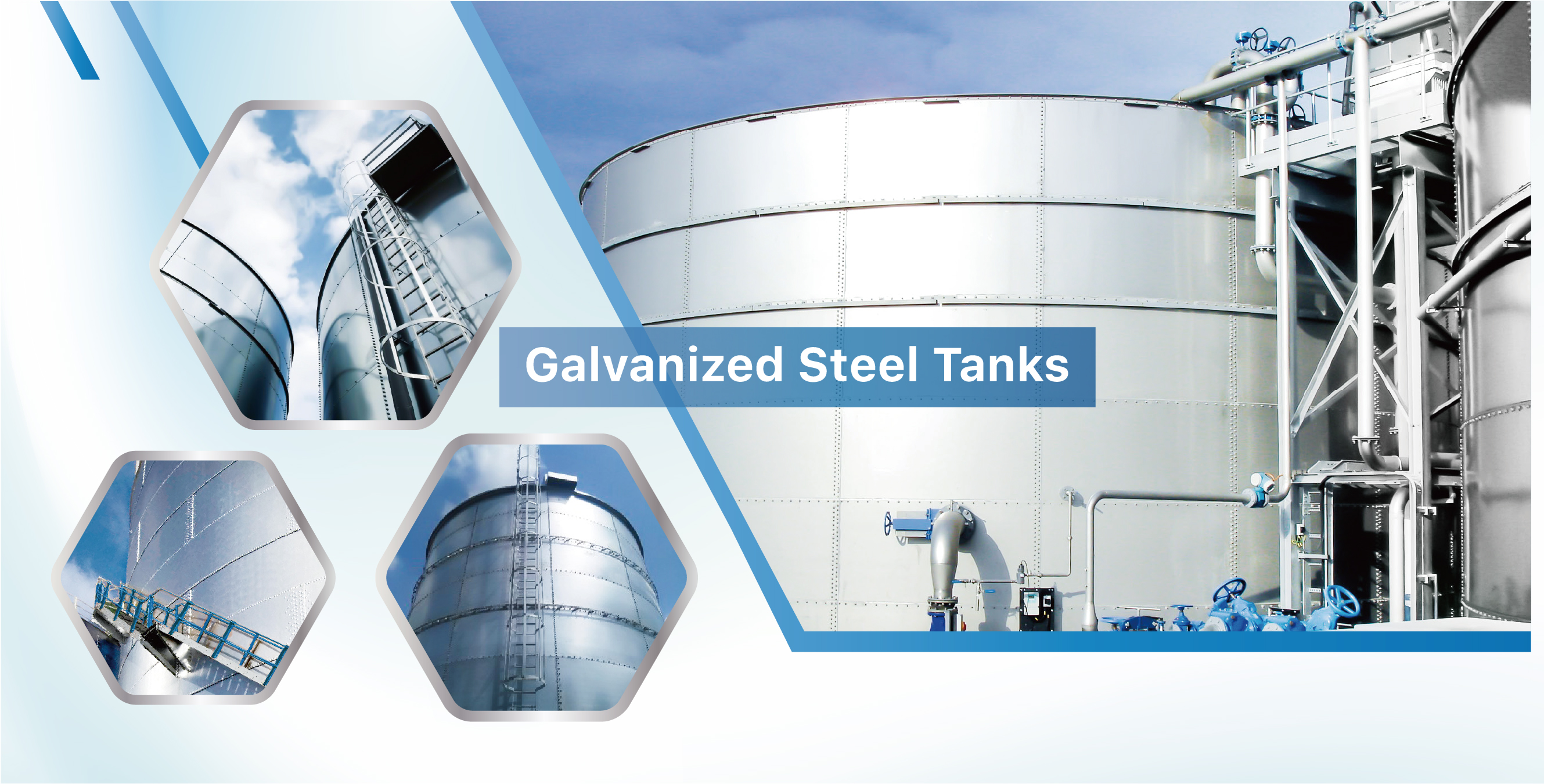
Galvanized Steel Tanks for Water Storage: A Complete Engineering Guide
When engineering high-volume liquid storage for commercial, industrial, or municipal infrastructure, material selection dictates the project's capital expenditure (CAPEX), deployment speed, and operational lifespan. Hot-dip galvanized steel tanks have remained a cornerstone of global liquid storage infrastructure, providing a superior strength-to-weight ratio and highly reliable corrosion resistance.
These modular, factory-fabricated vessels are primarily utilized for fire suppression reserves, potable water distribution, and agricultural processing.
The Science of Hot-Dip Galvanization
Galvanizing is a metallurgical process that protects carbon steel from structural degradation. Rather than applying a superficial layer of paint, the steel panels are submerged in a bath of molten zinc. This process creates a tightly bonded zinc-iron alloy layer that acts as both a physical barrier and a sacrificial anode.
Coating Specifications and Longevity
To guarantee long-term performance, the galvanization process must adhere to strict international manufacturing standards:
ISO 1461 / ASTM A123: These standards dictate the minimum required thickness and mass of the hot-dip zinc coating applied to finished steel products.
Thickness Metrics: For high-capacity industrial water tanks, high-quality galvanized plates typically feature a zinc coating thickness ranging between 80 μm and 100 μm.
Cathodic Protection: Even if the tank panel suffers minor mechanical damage (such as a scratch that exposes the underlying steel), the surrounding zinc will corrode sacrificially to protect the exposed carbon steel from rusting.
Regulatory Compliance and Engineering Standards
Engineers must ensure galvanized tanks meet specific regulatory codes based on their intended application, primarily focusing on structural integrity and fire safety.
AWWA D103 (Bolted Steel Tanks)
While AWWA D100 covers field-welded tanks, AWWA D103 is the defining American Water Works Association standard for factory-coated bolted steel tanks. It governs the minimum design criteria for shell thickness, wind loading, snow loading, and seismic design constraints for water storage.
NFPA 22 (Private Fire Protection)
When a galvanized tank is utilized as a dedicated fire-fighting water reservoir to supply sprinkler systems or fire hydrants, it falls under the NFPA 22 standard. NFPA 22 dictates rigorous safety and operational modifications, including:
Mandatory 360-degree roof handrails and internal ladders equipped with fall arrest systems.
Anti-vortex plates on suction pipes to prevent air from entering the fire pumps.
Specialized water-level monitoring systems and overflow protection.