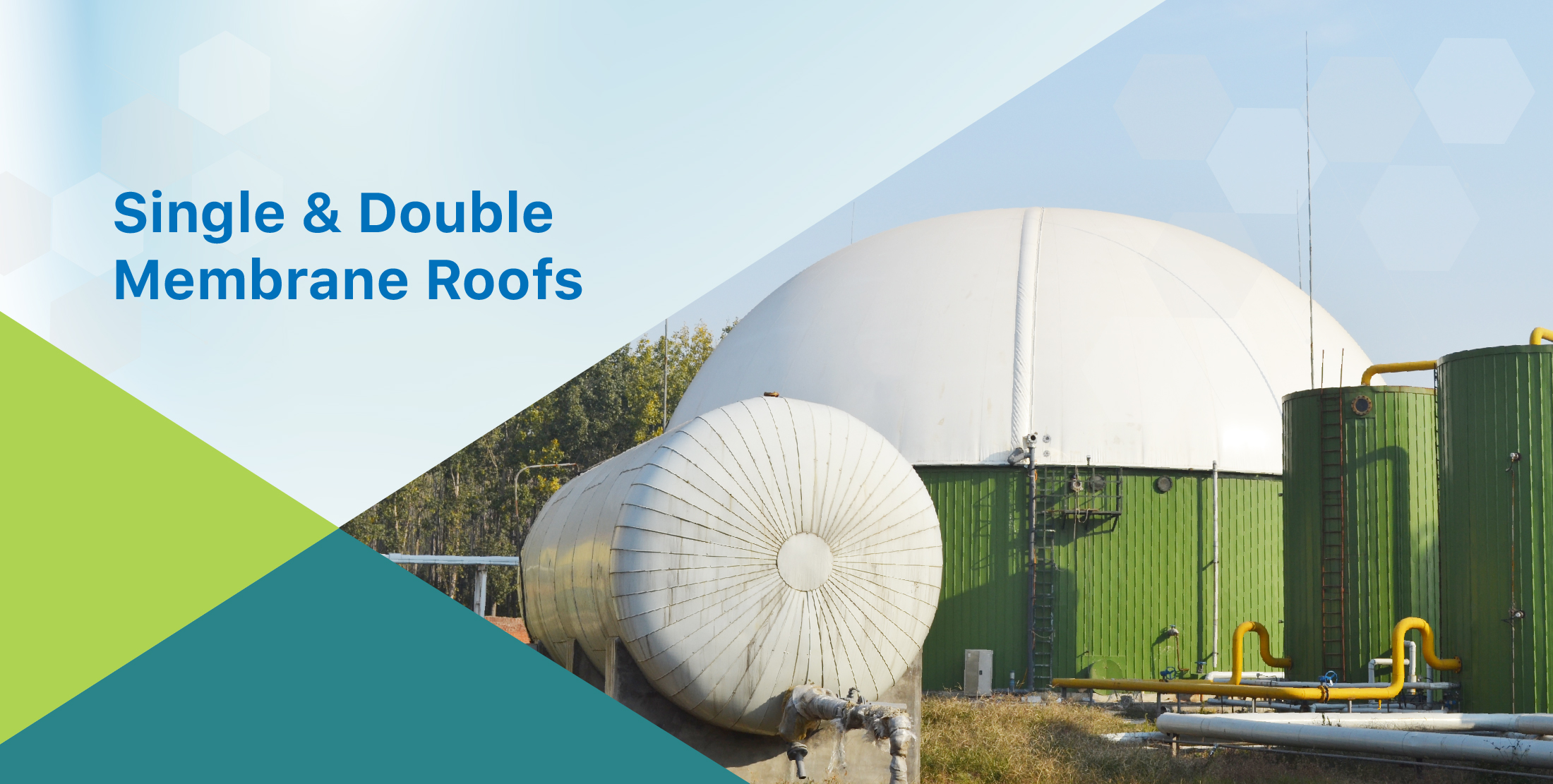
Single & Double Membrane Roofs

Single & Double Membrane Roofs: Advanced Cover Solutions for Biogas Storage

In modern anaerobic digestion processes and bioenergy operations, selecting an optimal containment cover is crucial. The roof must not only manage gas pressure but also provide an airtight seal to facilitate biogas collection, prevent greenhouse gas leakage, and control volatile odors.

As a global leader in containment solutions with decades of industrial manufacturing experience, Center Enamel engineers high-performance Single and Double Membrane Roofs. These advanced cover systems are designed to integrate seamlessly into anaerobic fermenters and wastewater treatment systems, delivering durable, cost-effective, and environmentally compliant storage solutions.

1. Single vs. Double Membrane Roofs: Structural Overview

Depending on the operational goals of your facility—whether you require dynamic gas-holding capacity or simple, robust emission containment—different membrane architectures are utilized.

Single Membrane Roofs: Economical Odor & Emission Control

A Single Membrane Roof consists of a single layer of high-strength, reinforced synthetic fabric tensioned over a support structure (typically a central stainless-steel column and a network of heavy-duty polyester belts).

  • Best For: Odor control, VOC reduction, and secondary containment.

  • Airtight Collection: It provides a hermetically sealed barrier over wastewater clarifiers, sludge holding tanks, and anaerobic digesters where active gas storage is not required.

Double Membrane Roofs: Advanced Biogas Storage

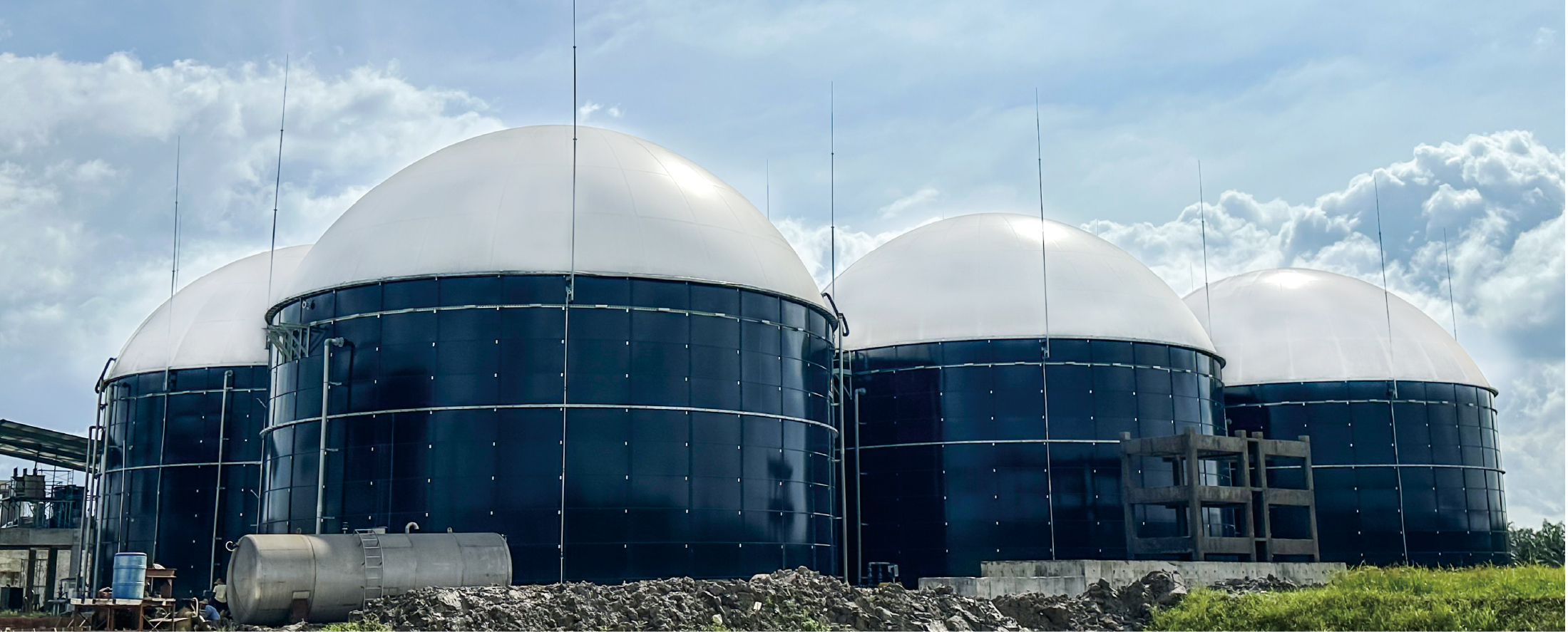
A Double Membrane Roof is a three-layer, pressure-stabilized containment system composed of an outer membrane, an inner membrane, and a bottom membrane, complemented by a comprehensive series of automated control, safety, and gas-measuring components.

  • Best For: Active, pressurized biogas storage and regulation.

  • Pressurized Process Applications: This design acts as a physical, variable-volume gas holder that dynamically buffers fluctuations in gas production.

2. Dynamic Operating Cycle of a Double Membrane Roof

The operational superiority of a double membrane gas holder lies in its ability to adapt dynamically to gas production and consumption rates without structural fatigue:


1.Outer Membrane Inflation:Continuous Stability。

An explosion-proof air blower continuously pumps air into the space between the outer and inner membranes. This maintains the outer membrane at a permanent, stable positive pressure, forming a rigid dome that resists extreme wind and snow loads.


2.Biogas Accumulation:Inner Membrane Expansion

Biogas generated from the digestion substrate flows into the inner gas chamber. As the volume of methane (CH4) increases, the flexible inner membrane expands upward into the pressurized air buffer zone, storing the gas safely at a consistent pressure.


3.Automated Pressure Balancing:Air Venting & Extraction

To prevent over-pressurization during gas accumulation, air in the buffer zone is automatically vented out through pressure-regulation valves. When biogas is extracted for CHP engines, the blower inflates the air space further, maintaining a constant operating pressure on the inner membrane to guarantee a steady, reliable gas feed.


3. Comparison Matrix: Selecting the Right Cover

Feature

Single Membrane Roof

Double Membrane Roof

Primary Objective

Odor control & rain exclusion

Active biogas storage & pressure control

Gas Storage Capacity

None (Static cover)

High (Dynamic variable-volume storage)

Operating Pressure

Low (< 5 mbar)

Medium/High (10 to 50+ mbar)

Components

Single fabric sheet, belt matrix, central column

Outer/inner/bottom membranes, blower, safety valves, sensors

CAPEX Level

Low (Most economical containment solution)

Moderate (Excellent long-term ROI for energy recovery)


Key Advantages of Center Enamel’s Membrane Roofs

Center Enamel’s membrane covers are designed to meet strict industrial, environmental, and municipal guidelines:

High Anti-Corrosion & UV Performance

Our membrane fabrics are coated with advanced Polyvinylidene Fluoride (PVDF). This layer provides outstanding resistance to ultraviolet (UV) radiation, atmospheric aging, and biogenic sulfuric acid. This protective barrier ensures that the structural membrane retains its physical integrity and does not degrade in highly corrosive gas environments.

Safe and Reliable Structural Design

Safety is built into every layer. Center Enamel's double membrane roofs are engineered using specialized membrane design software to calculate wind, snow, and internal pressure loads. The systems are paired with integrated double-pressure safety valves (liquid or spring-loaded), flame arrestors, and ultrasonic level sensors to prevent over-pressure or vacuum damage.

Convenient and Fast Installation

Compared to traditional heavy concrete or welded steel covers, our membrane roofs are exceptionally lightweight and modular. Pre-fabricated and precision-welded in a quality-controlled factory environment, they are delivered as a complete system, reducing on-site construction time by up to 40% and cutting down on commissioning delays.

Wide Range of Applications

Our roofs are engineered to accommodate multiple gas storage scenarios, including biogas, natural gas, hydrogen, and industrial process gases. They are highly adaptable and can be retrofitted onto diverse tank types (concrete, stainless steel, or Glass-Fused-to-Steel).

Energy Saving & Environmental Protection

By ensuring an airtight seal, our membrane covers eliminate VOC and methane emissions, making them a cornerstone for facilities aiming to achieve zero-emission sustainability goals and earn carbon credits.

Long Service Life

Through the use of high-tenacity, low-permeability polyester fabrics and specialized hot-press welding in dust-free workshops, our membrane covers routinely deliver a stable operational life of 15 to 20 years.


Single & Double Membrane Roofs Application

Global Application Fields

Whether managing urban utilities or high-demand renewable energy systems, these advanced covers deliver reliable gas containment across multiple fields:

Biogas & Bioenergy Engineering

Integrated directly onto anaerobic fermenters, double membrane systems regulate gas pressure and temporarily store generated biomethane from agricultural agricultural residue and organic food waste.

Municipal & Industrial Wastewater

Used on sludge digesters and clarifiers to capture foul sulfur-containing compounds and methane, preventing air pollution and enabling energy recovery at municipal water treatment facilities.

Industrial Gas Storage

Engineered to safely house a variety of gases, including processed natural gas, hydrogen, and carbon dioxide, providing a highly reliable and durable utility container.

Frequently Asked Questions (FAQ)

1. What is the typical life expectancy of a double membrane roof?

With high-performance PVDF surface coatings protecting the underlying structural fabric from UV light and biogenic sulfuric acid, Center Enamel's membrane roofs routinely achieve an operational service life of 15 to 20 years with minimal ongoing maintenance.

2. Can these membrane systems withstand extreme wind and snow loads?

Yes. The outer membrane of the double membrane roof is held under constant positive air pressure, forming a rigid, aerodynamic dome. This pressurized structure, combined with its naturally curved shape, forces snow to slide off and deflects strong winds up to 150 km/h safely.

3. How does the system prevent over-pressurization?

Every double membrane installation features an integrated safety assembly. This includes automated pressure sensors, warning alarms, and mechanical hydraulic or spring-loaded pressure relief valves that automatically vent air (or gas) if internal pressures exceed designated safety thresholds.

4. What is the maintenance requirement for a single membrane roof versus a double membrane roof?

Single membrane roofs are largely static, requiring simple periodic visual inspections of tensioning belts and material wear. Double membrane systems also require basic visual checks, alongside simple scheduled maintenance of the mechanical air blowers and safety pressure-relief valves to ensure long-term, fail-safe performance.


Chat with us