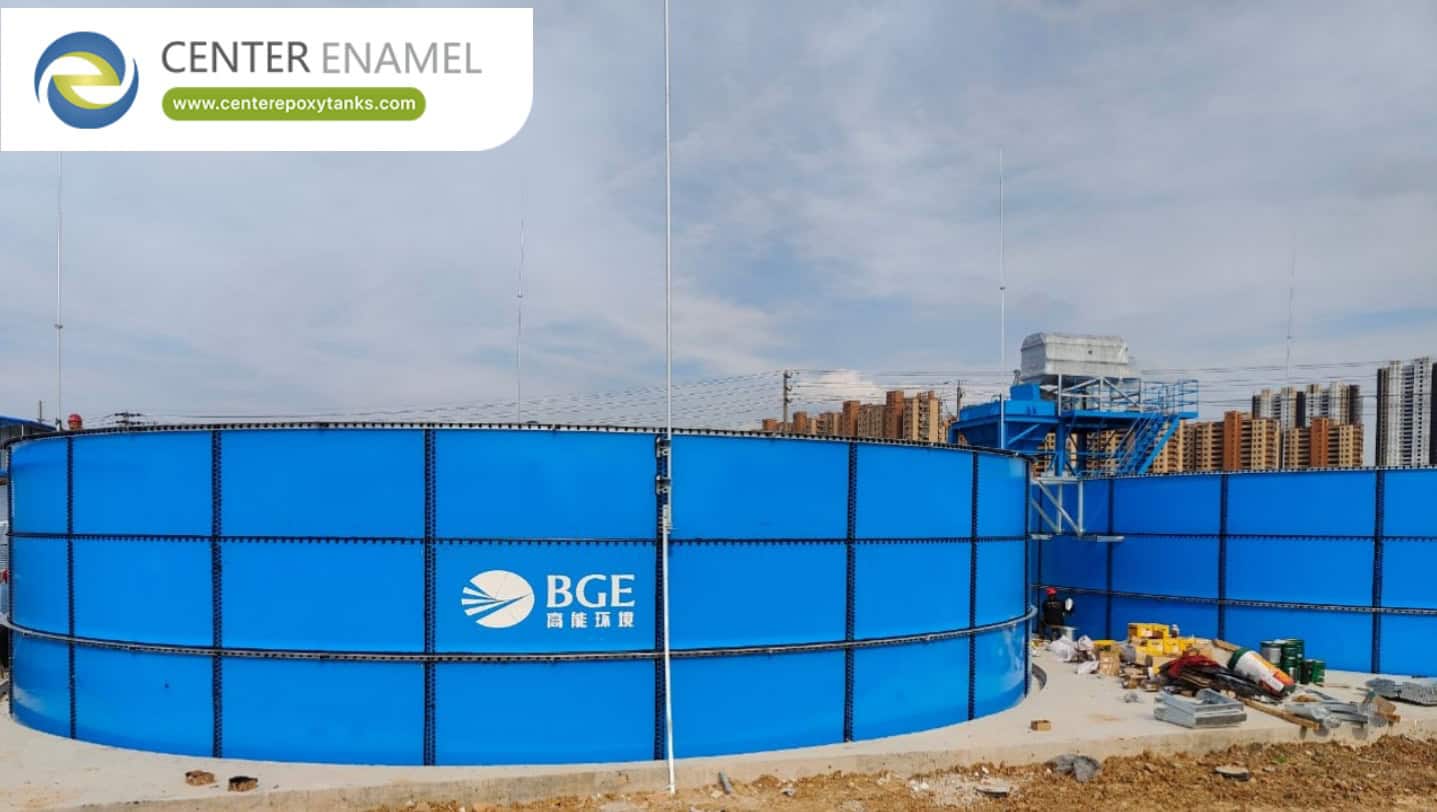
Fusion Bonded Epoxy (FBE) Tanks Accessory Selection and Function Introduction
While the shell and foundation define the structural envelope of a Fusion Bonded Epoxy (FBE) bolted tank, the appurtenances and accessories govern its operational utility and safety. Selecting the correct accessories—ranging from basic access manways to advanced level-sensing instrumentation—ensures the asset integrates smoothly into broader process, municipal, or fire-protection networks. Because FBE tanks are modular and factory-coated, every accessory penetration must be engineered and sealed to prevent any compromise to the protective epoxy barrier.
1. Primary Accessory Categories
Industrial bolted storage tanks require a suite of mechanical, safety, and monitoring hardware to function safely and efficiently within a facility.
A. Access and Maintenance Appurtenances
Safe access for routine inspection, cleaning, and maintenance is non-negotiable.
Roof Manways / Hatches: Typically positioned on the tank cover to allow personnel and inspection equipment entry into the vapor space. They feature weather-tight, gasketed seals to prevent external contamination.
Shell Manways: Located on the lower sidewall panels for easy access during comprehensive tank washdowns or major maintenance.
External & Internal Ladders: Safety-caged vertical ladders or spiral stairways provide operators access to the roof. For safety compliance, ladders often incorporate a step-off platform and fall-arrest systems.
B. Process Nozzles and Piping Connections
Fluid entry and exit points must be mechanically robust to handle hydraulic forces.
Flanged Nozzles: Bolted, nozzle-style penetrations (typically carbon steel with FBE lining, or stainless steel) welded or bolted to the shell plates to connect inlet/outlet pipes, overflow lines, and drain valves.
Threaded Couplings: Used primarily on smaller-diameter connections or instrumentation ports.
C. Safety and Hydraulic Control Hardware
These components protect the tank and downstream equipment from operational extremes.
Anti-Vortex Assemblies: Mandated for high-demand draw-off lines (especially in fire-protection service). Positioned over the outlet nozzle, the anti-vortex plate prevents the formation of an air-pulling whirlpool, protecting emergency pumps from cavitation.
Overflow Weirs / Assemblies: An engineered overflow pipe ensures that if the tank is overfilled, the excess liquid is safely diverted to drainage before structural over-pressurization can occur.
Vents (Free and Pressure/Vacuum Vents): Allows the tank to "breathe" as liquid levels rise and fall. In enclosed or wastewater applications, these can be substituted with carbon filters or pressure/vacuum relief valves.
2. Tank Accessory Selection Matrix
Accessory Type | Primary Operational Function | Critical Engineering Consideration | Maintenance Impact |
Anti-Vortex Assemblies | Prevents pump cavitation during high-velocity discharge. | Must be corrosion-resistant and sized to flow rate. | Low (annual visual check). |
Flanged Nozzles | Fluid transfer ingress/egress. | Must have dielectric isolation if dissimilar metals are used. | Medium (check gasket torque). |
Level Indicators | Real-time volume tracking. | Non-contact radar vs. pressure transducers (fluid chemistry). | Dependent on sensor type. |
Roof Hatches | Access for internal inspection. | Must be lockable and weather-stripped. | Low (gasket inspection). |
3. Critical Engineering Considerations for FBE Hardware
Adding accessories to a modular bolted tank introduces specific mechanical challenges that field-welded tanks do not face.
Dielectric and Galvanic Isolation
If accessories made of stainless steel, aluminum, or bronze are bolted directly to the carbon steel, FBE-coated shell, the risk of galvanic corrosion escalates in aquatic environments.
Engineering Rule: All metallic appurtenances touching the tank shell must be isolated using dielectric gaskets, isolating sleeves, and washers to break the electrical path between dissimilar metals.
Factory-Engineered Penetrations
Never cut or drill holes into FBE panels in the field. All nozzle locations and accessory penetrations should be CNC-punched or drilled at the factory before the epoxy coating is applied. This ensures that the cut edges of the steel are fully encapsulated in epoxy, eliminating potential corrosion sites.
Liquid-Tight Sealing
Nozzles and manway flanges are bolted to the tank wall using high-tensile fasteners paired with specialized elastomeric gaskets (such as EPDM or Viton). Field crews must apply controlled torque sequencing to ensure uniform gasket compression, guaranteeing liquid-tight containment under full hydrostatic pressure.
4. Frequently Asked Questions (FAQ)
Q: Can level sensors be retrofitted to an existing FBE tank?
A: Yes. Non-contact radar level transmitters can be mounted on the roof hatch or an existing nozzle without modifying the tank shell. However, any sensor requiring a new shell penetration must be carefully planned and installed using factory-approved hardware.
Q: Why is an anti-vortex plate necessary for fire water tanks?
A: When fire pumps draw water rapidly, the sudden flow creates a vortex that sucks air into the suction pipe. This air can destroy the pump impeller through cavitation. The anti-vortex assembly breaks the rotational flow, ensuring a solid, bubble-free stream of water feeds the sprinkler system.
Q: How often should tank accessories be inspected?
A: A comprehensive inspection of all hardware, gaskets, vents, and level indicators should be conducted annually. Particular attention should be paid to the flange seals on the lower shell rings, as they experience the highest hydrostatic pressure.
Optimizing your Fusion Bonded Epoxy tank with the correct accessory matrix transforms a basic steel shell into an automated, highly reliable containment asset. By prioritizing factory-prepped penetrations, enforcing strict galvanic isolation, and specifying loss-prevention hardware like anti-vortex assemblies, facility operators can safeguard their processes and maximize system uptime.
Are you currently compiling a bill of materials (BOM) for an upcoming FBE tank project, and do you need support determining which nozzle configurations or level-monitoring systems best suit your process requirements?


