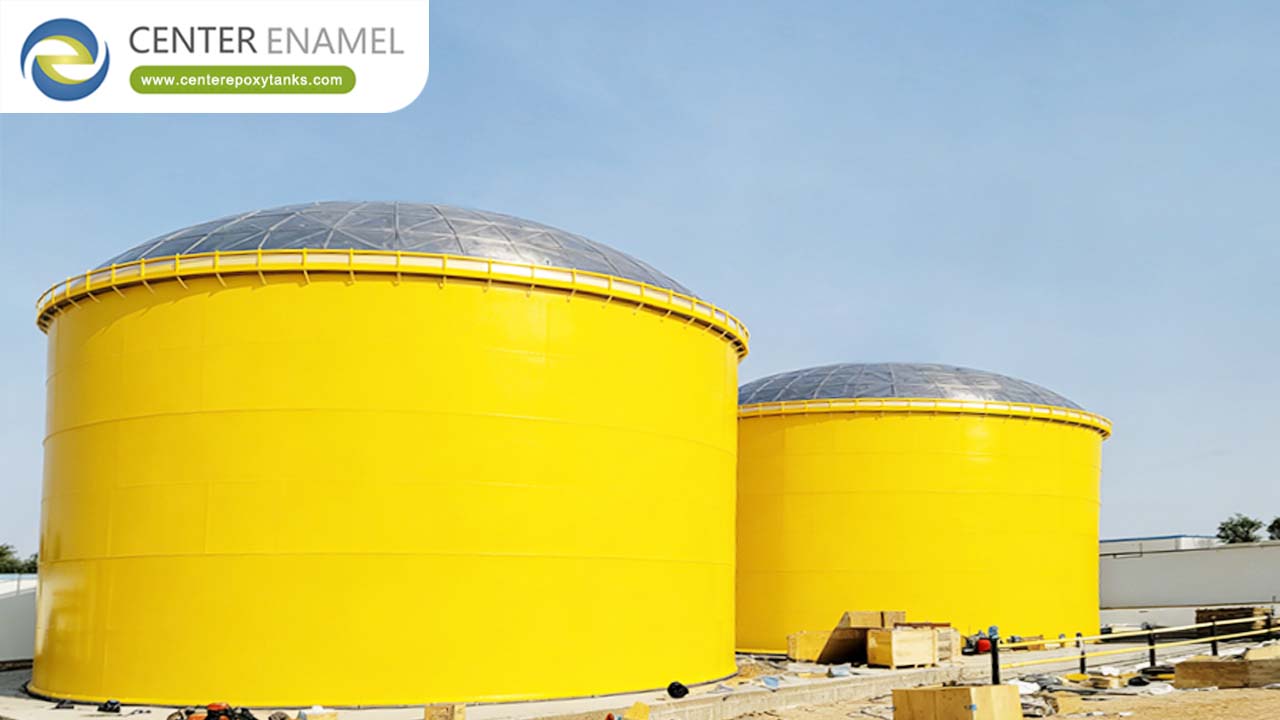
Why Welded Steel Storage Tanks Are the Future of Thermal Energy Storage (TES)
As global energy markets accelerate their transition toward renewable sources, grid stability depends heavily on advanced energy storage. While lithium-ion batteries dominate short-term electrical storage, Thermal Energy Storage (TES) has emerged as the premier solution for large-scale, long-duration energy buffering. Whether utilized in Concentrating Solar Power (CSP) plants storing high-temperature molten salts or district cooling systems managing chilled water reserves, TES infrastructure requires robust containment.
Among containment technologies, welded steel storage tanks are rapidly becoming the undisputed future of TES. By offering monolithic structural integrity, exceptional high-temperature resilience, and absolute leak prevention, welded steel vessels provide the reliability necessary to support next-generation green energy grids.
1. The Critical Role of Welded Steel in High-Temperature Molten Salt TES
Concentrating solar power (CSP) and industrial waste-heat recovery systems frequently rely on molten salts (such as solar salt mixtures containing sodium and potassium nitrates) operating at temperatures exceeding 500°C.
·
Thermal Cycling Resilience: Molten salt tanks experience massive daily thermal expansion and contraction as temperatures cycle between 300°C and 600°C. Welded carbon steel and specialized stainless steel grades (such as ASTM A516 or 300-series austenitic stainless steels) offer the uniform mechanical ductility needed to withstand severe thermal shock without structural fatigue.
·
·
Monolithic Leak-Free Integrity: Molten salt leakage poses severe safety and environmental hazards. Unlike bolted tanks that rely on gaskets and mechanical fasteners vulnerable to high-temperature degradation, welded steel tanks feature continuous, fused metallic joints that eliminate joint weeping entirely.
·
2. Structural Superiority for Chilled Water and District Cooling TES
Beyond high-temperature solar applications, thermal energy storage is widely deployed in commercial district cooling using large-scale stratified chilled water tanks.
·
Hydrostatic Strength: These massive vertical reservoirs can hold millions of gallons of water, generating intense hydrostatic pressure on lower shell courses. Welded field-erected steel tanks provide the high tensile yield strength required to handle massive fluid volumes safely.
·
·
Thermal Stratification Efficiency: Welded construction allows for perfectly smooth interior walls, minimizing fluid turbulence and preserving the crucial thermocline layer that separates warm and cold water phases inside the tank.
·
Data Table: Welded Steel Tanks in Thermal Energy Storage (TES) Applications
TES Application | Stored Fluid Medium | Operating Temperature Range | Recommended Steel Grades | Governing Standards |
High-Temp Solar TES | Molten Nitrate Salts | 300°C to 565°C+ | ASTM A516 Gr. 70, Stainless Steel 304/316/347H | API 650, ASME Section VIII |
District Cooling TES | Chilled Water | 4°C to 20°C | ASTM A36, S275 / Carbon Steel | AWWA D100, API 650 |
Industrial Waste Heat | Thermal Oils / Glycol | 100°C to 350°C | Carbon Steel with high-temp coatings | ASME BPVC, API 650 |
3. Lower Total Cost of Ownership (TCO) and Maintenance
As renewable energy projects scale to utility levels, lifecycle cost efficiency is paramount:
·
Elimination of Fastener Maintenance: Bolted tanks require continuous inspection and re-torquing of thousands of bolts under thermal stress. Welded steel tanks eliminate mechanical fasteners on the pressure boundary, drastically reducing long-term maintenance overhead.
·
·
Custom Field-Erection Scalability: Welded steel tanks can be engineered and erected on-site to custom diameters and heights, maximizing thermal storage capacity within strict footprint boundaries.
·
Frequently Asked Questions (FAQ)
Q: Why are welded steel storage tanks preferred for Thermal Energy Storage (TES)?
A: Welded steel tanks provide monolithic, leak-free containment, high tensile strength under extreme hydrostatic loads, and excellent thermal fatigue resistance, making them ideal for containing high-temperature molten salts or massive chilled water volumes.
Q: How do welded steel tanks handle extreme thermal cycling in molten salt systems?
A: By utilizing specialized high-temperature steel alloys (such as stainless steel grades 316 or 347H) and adhering to strict welding and post-weld heat treatment (PWHT) standards, welded tanks safely absorb the expansion and contraction cycles of molten salts operating above 500°C.
Q: What engineering standards govern TES steel storage tanks?
A: Welded TES tanks are commonly designed, fabricated, and inspected in compliance with international standards such as API 650 for petroleum and industrial fluid storage, ASME Section VIII for pressure vessels, and AWWA D100 for water-based thermal storage systems.
Q: Are welded steel tanks suitable for both hot and cold thermal storage?
A: Yes. They are widely used in cold district cooling reservoirs utilizing carbon steel and in high-temperature solar thermal energy storage utilizing advanced stainless steel alloys.


