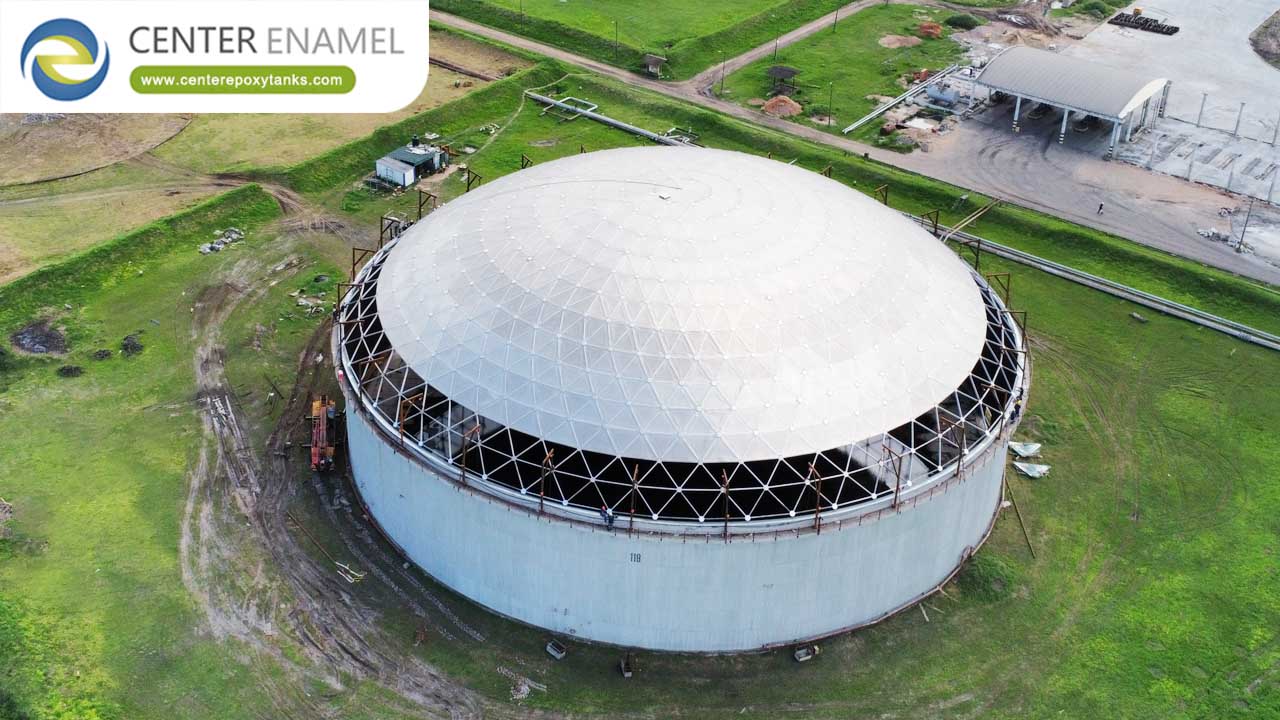
How Geodesic Dome Roofs Improve Safety in Petrochemical Storage Facilities
In petrochemical processing and bulk fuel terminal operations, risk management is paramount. Storing volatile organic compounds (VOCs), crude oil, and refined chemical products presents continuous hazards related to vapor accumulation, fire ignition, environmental leaks, and structural fatigue.
While traditional industrial storage relied heavily on welded carbon steel fixed roofs, modern high-risk facilities have shifted rapidly toward aluminum geodesic dome roofs. Beyond providing superior corrosion resistance and clear-span architecture, geodesic domes serve as critical safety assets that fundamentally mitigate operational hazards in petrochemical storage.
1. Elimination of Flammable Vapor Pockets and Fire Hazards
The greatest operational threat in petrochemical storage is the formation of a flammable vapor-air mixture inside the storage tank ullage (headspace).
·
Synergy with Internal Floating Roofs (IFRs): When an aluminum geodesic dome is paired with an internal floating roof, the combination creates a dual-barrier safety system. The internal floater rests directly on the liquid surface to eliminate vapor headspace, while the geodesic dome shields the system from wind and weather.
·
·
Spark-Resistant Metallurgy: Aluminum is naturally non-sparking. Unlike steel structures where tools or structural friction can generate mechanical sparks, aluminum geodesic frames eliminate potential ignition sources inside the tank envelope, greatly reducing explosion risks during maintenance or lightning events.
·
2. Structural Resilience Against Extreme Weather and Seismic Shocks
Petrochemical facilities are frequently located in coastal or high-wind environments vulnerable to hurricanes, heavy snow loads, and seismic activity.
·
Clear-Span Geodesic Engineering: The triangulated space-frame geometry of a geodesic dome distributes structural loads uniformly across the entire perimeter ring beam. Because it requires zero internal support columns, there are no internal stress points or connection failures during high wind shear or seismic tremors.
·
·
Reduced Shell Deflection: Being exceptionally lightweight compared to steel roofs, aluminum domes impose minimal dead load on the tank's top shell courses, preventing structural deformation during extreme environmental loading events.
·
3. Environmental Protection and Spill Prevention
Containment safety extends beyond preventing fires to stopping toxic emissions and hazardous chemical leaks into soil and groundwater.
·
Complete Weather Sealing: Geodesic domes seal the tank completely from rainwater, snow, and wind-blown debris. Preventing water ingress eliminates biological contamination and prevents water from accumulating on internal floating decks, which can otherwise cause the deck to tilt or sink.
·
·
VOC Emission Suppression: By blocking solar heat gain and preventing wind turbulence across the liquid surface, geodesic domes drastically suppress Volatile Organic Compound (VOC) emissions, protecting plant operators from toxic chemical exposure and ensuring strict compliance with EPA and NFPA mandates.
·
Data Table: Geodesic Domes vs. Traditional Steel Fixed Roofs in Safety Performance
Safety & Performance Parameter | Aluminum Geodesic Dome Roofs | Traditional Carbon Steel Fixed Roofs |
Spark Generation Risk | Non-sparking aluminum metallurgy (Zero ignition risk) | Ferrous metal; risk of mechanical friction sparks |
Internal Support Hazard | Clear-span design (No internal columns or rafters) | Requires internal support columns and rafters |
Rainwater Ingress & Deck Sinking | Fully sealed structure prevents water accumulation on deck | Vulnerable to rainwater pooling through vents and gaps |
Seismic & Wind Load Resistance | High structural redundancy via triangulated geometry | Moderate; heavier dead load increases shell stress |
Governing Safety & Design Codes | AWWA D108, API 650 (Annex H), NFPA compliant | API 650, AWWA D100 |
Frequently Asked Questions (FAQ)
Q: How do geodesic dome roofs improve safety in petrochemical storage?
A: Geodesic dome roofs enhance safety by utilizing non-sparking aluminum, eliminating flammable vapor headspaces when paired with internal floating roofs, providing clear-span structural resilience against extreme weather, and preventing toxic VOC emissions.
Q: Are aluminum geodesic domes spark-resistant?
A: Yes. Aluminum is a non-sparking metal, which significantly reduces the risk of accidental ignition caused by mechanical friction, tools, or lightning strikes inside the storage vessel.
Q: Why do geodesic domes reduce the risk of internal floating roof failure?
A: By completely sealing out rain, snow, and wind debris, geodesic domes prevent water from pooling on top of internal floating roofs, thereby eliminating the risk of deck tilt, overloading, or sinking.
Q: What engineering standards govern geodesic dome construction in petrochemical plants?
A: Geodesic dome roofs are engineered and fabricated in strict accordance with international standards such as AWWA D108 and API 650 (Annex H), alongside alignment with NFPA fire protection codes.


