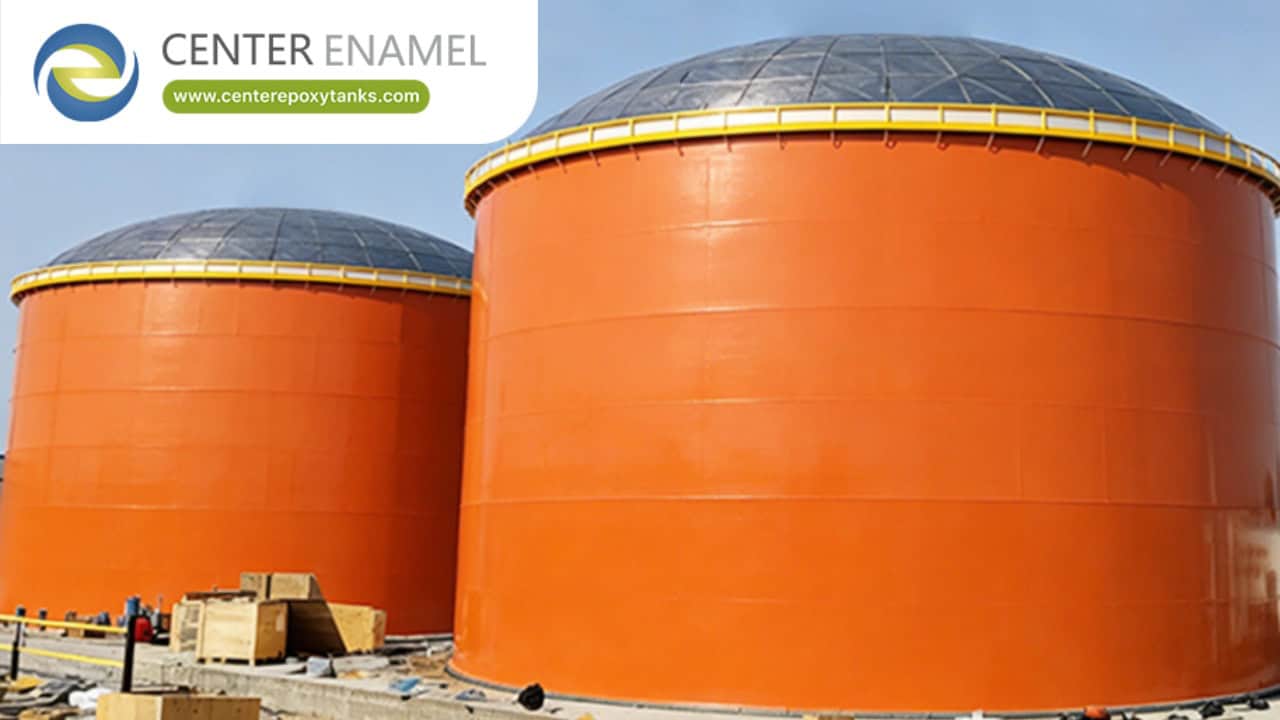
Why Field-Erected Storage Tanks Are an Ideal Choice for Tank Facilities
When designing and engineering a high-capacity tank facility or industrial tank farm, procurement managers and civil engineers face a critical logistical choice: sourcing multiple shop-built tanks or investing in large-scale field-erected storage tanks.
For modern bulk liquid storage, wastewater treatment hubs, and petrochemical terminals, field-erected tanks are universally recognized as the superior solution. By shipping raw materials—such as prefabricated coated steel panels or rolled plates—directly to the project site for assembly, field erection bypasses the severe transportation limitations that bottleneck factory-built vessels. This approach allows tank facilities to maximize their storage volume within a consolidated footprint, dramatically improving operational efficiency and long-term return on investment.
Key Advantages for Tank Facilities
Integrating field-erected storage tanks into a centralized tank facility offers several distinct engineering and economic benefits:
1. Unrestricted Volumetric Capacity
The primary limitation of a shop-built tank is highway infrastructure. Transporting a vessel wider than 12 to 14 feet is logistically complex and heavily regulated. Field-erected tanks have virtually no size limit. A single field-erected tank can hold millions of gallons, allowing a facility to meet its bulk liquid storage requirements with fewer, larger vessels rather than dozens of smaller ones.
2. Superior Footprint Optimization
In industrial real estate, space is a premium asset. By utilizing field-erected tanks, engineers can design taller, wider structures that maximize the vertical and horizontal limits of the designated property. Fewer tanks mean less complex piping manifolds, reduced valve maintenance, and a more streamlined facility layout.
3. Logistical Flexibility in Congested Sites
Many existing tank facilities are highly congested, with complex networks of pipes, access roads, and existing structures. Dropping a massive pre-built tank into the center of an active facility is often impossible. Because field-erected tanks arrive disassembled in standard shipping containers, the materials can be maneuvered into tight footprints and built vertically on-site, causing minimal disruption to ongoing operations.
4. Advanced Bolted Steel & GFS Technology
While traditional field-welding is still used for massive petroleum terminals, modern tank facilities are rapidly shifting toward bolted steel tanks. In this method, steel panels are precision-manufactured and coated in a factory setting—often with advanced materials like Glass-Fused-to-Steel (GFS) or fusion-bonded epoxy.
Speed: Bolted tanks can be erected in a fraction of the time required for field-welded tanks.
Quality: The factory-applied GFS coating provides unmatched corrosion resistance, eliminating the need for weather-dependent, on-site painting and sandblasting.
Modularity: Bolted tanks can be expanded, modified, or even relocated as the tank facility's needs evolve over time.
Frequently Asked Questions (FAQ)
Q: What is a tank facility or tank farm?
A: A tank facility (commonly called a tank farm or terminal) is a specialized industrial site containing multiple large-capacity storage tanks, interconnected piping, and pumping systems designed to store and distribute bulk liquids like chemicals, water, wastewater, or petrochemicals.
Q: Why are bolted field-erected tanks faster to install than welded tanks?
A: Bolted steel tanks use prefabricated panels that are already coated and punched at the factory. Because assembly simply requires bolting the panels together and applying a sealant, it eliminates the slow, highly specialized, and weather-dependent processes of on-site welding, X-ray testing, and field painting.
Q: Can field-erected tanks be used for both liquid and dry bulk storage?
A: Yes. Field-erected tanks are highly versatile. By integrating specialized hopper bottoms and varying the interior coatings, they can be utilized as liquid storage vessels for wastewater/chemicals or as tall silos for dry bulk materials like cement, grain, or plastic pellets.
Q: How does a field-erected tank reduce long-term maintenance costs for a facility?
A: By utilizing fewer, higher-capacity tanks, a facility reduces the total number of pumps, valves, and monitoring systems required. Furthermore, utilizing advanced factory coatings like Glass-Fused-to-Steel (GFS) on bolted tanks minimizes the need for routine recoating and corrosion mitigation, significantly lowering lifecycle costs.


