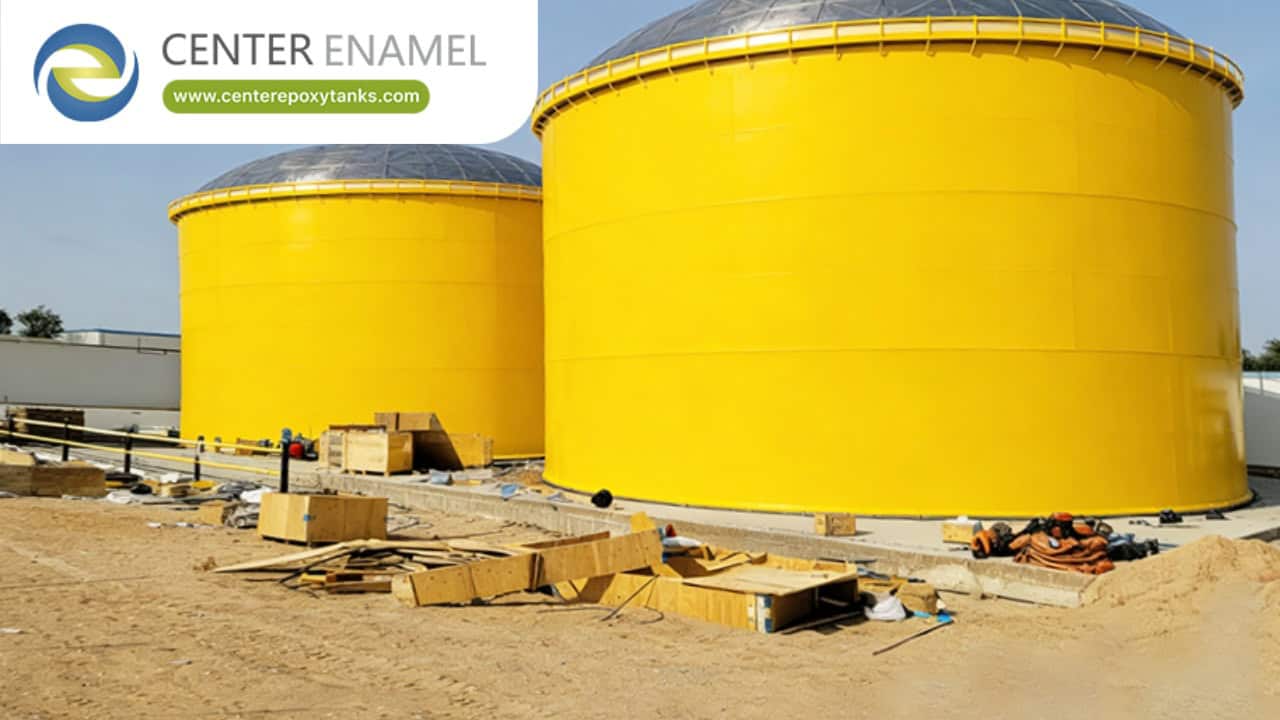
Differences of Field Erected Tanks and Shop-Fabricated Tanks: A Complete Engineering Comparison
When engineering bulk liquid or dry storage infrastructure, one of the most critical logistical decisions is choosing between a field-erected tank and a shop-fabricated tank.
The fundamental difference lies in where the final assembly occurs. Shop-fabricated tanks are fully manufactured, welded, and coated inside a controlled factory environment before being shipped whole to the job site. Field-erected tanks are manufactured as individual plates or panels in a factory, shipped in compact pieces, and assembled directly on the final project site by specialized construction crews.
Understanding the constraints of both methods—ranging from maximum volumetric capacity to highway transportation limits—is essential for optimizing your facility's design and budget.
Core Comparison: Capacity, Transport, and Construction
The decision between shop-built and field-erected generally comes down to a hard physical limit: the size of the highways leading to your facility.
1. Volumetric Capacity & Size Limits
Shop-Fabricated Tanks: Restricted by infrastructure. Because they must be transported over highways or by rail, they are generally limited to a maximum diameter of 12 to 14 feet (3.6 to 4.2 meters) and a capacity of around 30,000 to 40,000 gallons. Anything larger requires special oversized-load permits, pilot cars, and route surveys, which become prohibitively expensive.
Field-Erected Tanks: Virtually unlimited capacity. Because they ship in pieces, field-erected tanks can be engineered to hold anywhere from 50,000 gallons to over 10 million gallons. They are the only option for massive petrochemical terminals, municipal water reservoirs, and large-scale wastewater treatment plants.
2. Quality Control and Environmental Factors
Shop-Fabricated Tanks: Benefit from a 100% controlled factory environment. Welding, blasting, and protective coatings are applied indoors, free from rain, wind, or extreme temperatures. This guarantees highly consistent curing and weld quality.
Field-Erected Tanks: Historically, field-welded tanks faced challenges with weather delays and on-site coating application. However, modern bolted steel field-erected tanks solve this. The steel panels are factory-coated (such as with Glass-Fused-to-Steel or epoxy) in a controlled environment and simply bolted together on-site, offering factory-level quality control on massive structures.
3. Site Accessibility and Logistics
Shop-Fabricated Tanks: Require a completely clear path from the highway to the concrete pad, free of overhead wires, tight corners, or low bridges. Placing the tank requires heavy-duty cranes and massive rigging equipment.
Field-Erected Tanks: Ideal for highly congested industrial facilities or remote locations. The materials arrive in standard shipping containers or flatbed trucks and can be carried into tight footprints where cranes cannot operate.
Quick Reference Comparison Table
Feature | Shop-Fabricated Tanks | Field-Erected Tanks |
Location of Assembly | 100% Factory | 100% On-Site |
Maximum Diameter | ~12 to 14 feet (Transport Limit) | Virtually Unlimited |
Max Capacity | ~30,000 - 40,000 Gallons | 50,000 to 10M+ Gallons |
Site Delivery | Shipped whole as an oversized load | Shipped in flat panels/plates |
Installation Speed | Drops into place in a single day | Takes weeks/months to assemble |
Ideal Application | Small chemical storage, localized fuel | Municipal water, large wastewater, bulk oil |
Frequently Asked Questions (FAQ)
Q: Are shop-fabricated tanks cheaper than field-erected tanks?
A: For lower volumes (under 30,000 gallons), shop-fabricated tanks are generally more cost-effective because factory labor is cheaper than mobilizing a specialized field construction crew. However, once capacity requirements exceed highway limits, field-erected tanks become the only viable and economical choice.
Q: Can a field-erected tank be moved once it is built?
A: If the tank is field-welded (API 650), it is permanent and cannot be easily moved. However, if it is a field-erected bolted tank (AWWA D103), it can be unbolted, dismantled, shipped, and reassembled at a new facility.
Q: Do field-erected tanks have the same safety standards as shop-built tanks?
A: Yes. Field-erected tanks are governed by rigorous international engineering standards, such as API 650 for welded oil tanks and AWWA D103 for bolted water tanks. Field crews conduct rigorous on-site quality control, including X-ray weld testing and hydrostatic testing, to ensure the tank meets or exceeds factory safety standards.


