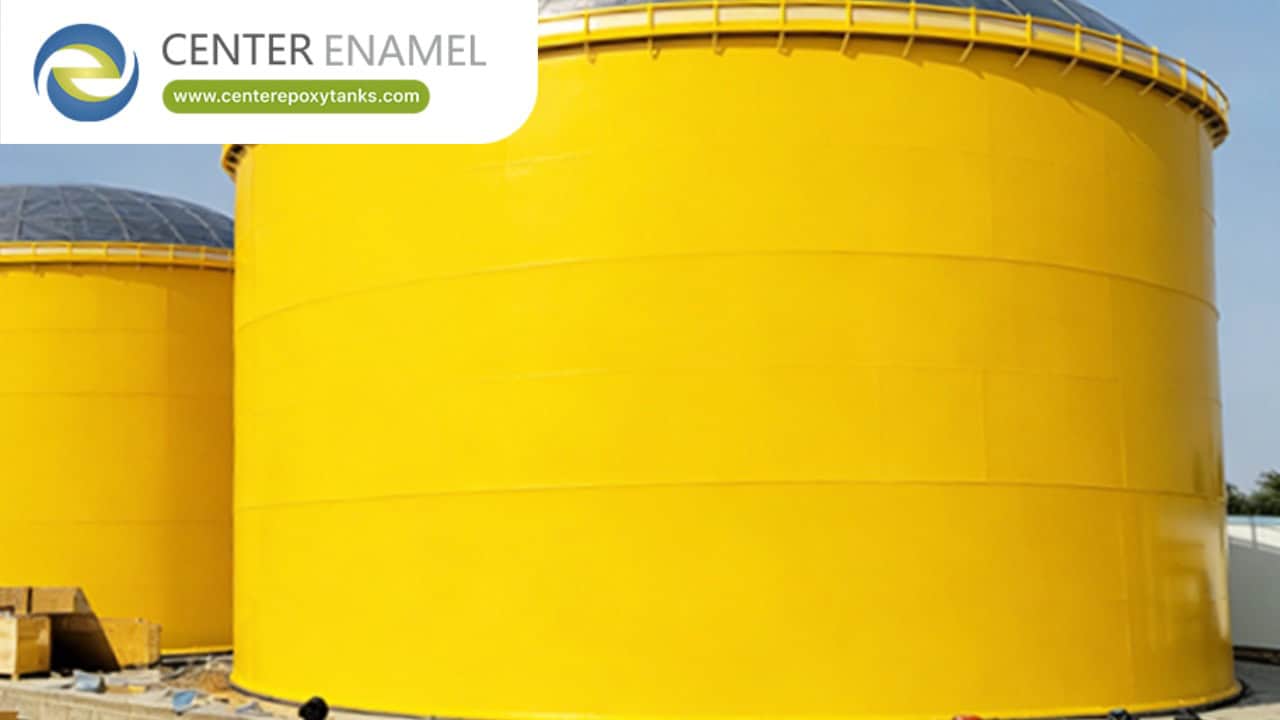
What Is a Field-Erected Welded Steel Tank? Design, Standards, and On-Site Construction
A field-erected welded steel tank is a massive, above-ground industrial containment vessel that is constructed piece-by-piece directly at its final project site through precision welding and heavy plate assembly.
Unlike shop-built tanks—which are completely manufactured off-site and limited by highway transportation dimensions—field-erected welded tanks are engineered for high-capacity liquid storage. Raw steel plates are rolled to exact specifications at a fabrication plant, transported flat to the site, and welded together by certified structural welders. These robust structures serve as the cornerstone of heavy industry, providing critical containment for petroleum products, chemical reserves, and bulk water systems.
Core Engineering and Design Standards
Because field-erected welded tanks hold millions of gallons of potentially hazardous or volatile liquids, their design is tightly governed by rigorous international engineering codes:
1. API 650 (Welded Tanks for Oil Storage)
The American Petroleum Institute's API 650 is the global benchmark for welded steel tanks designed for atmospheric pressures (operating up to 2.5 psig). It outlines exact requirements for material selection, minimum plate thicknesses, seismic calculations, and wind load resistance, ensuring safety in petroleum and chemical facilities.
2. API 620 (Design and Construction of Large, Welded, Low-Pressure Storage Tanks)
When a facility requires a field-welded tank that operates at internal pressures higher than 2.5 psig and lower than 15 psig (often for refrigerated or low-temperature products), API 620 governs the specialized structural and welding requirements.
The On-Site Construction Process
Building a field-erected welded steel tank transforms a job site into a specialized construction hub. The execution follows a strict sequence:
Foundation & Subgrade Preparation: A stable, level foundation (such as a ringwall or slab concrete pad) is poured to handle the immense hydrostatic weight of the full tank.
Bottom Plate Laying: Floor plates are laid out in a overlapping pattern and vacuum-box or dye-penetrant tested to ensure 100% leak-proof weld integrity across the base.
Shell Ring Erection: Steel shell courses are added progressively. Crews utilize either traditional crane lifting or modern hydraulic jacking systems (where the roof and top rings are built first and jacked up to install lower rings underneath) to assemble the vessel safely.
Roof Installation: Depending on the project requirements, a cone roof, dome roof, or internal/external floating roof is welded into place to minimize vapor emissions or prevent contamination.
Quality Assurance and Testing
Before a field-erected welded tank can be commissioned into active service, it must pass exhaustive quality control checks:
Non-Destructive Examination (NDE): Weld seams undergo rigorous testing, including radiographic (X-ray) testing, ultrasonic testing, and magnetic particle inspection to detect any microscopic flaws or structural weaknesses.
Hydrostatic Testing: The tank is completely filled with water to test its structural load capacity, settle the foundation, and verify that all welded joints hold under maximum hydrostatic pressure.
Frequently Asked Questions (FAQ)
Q: What is the main advantage of a field-erected welded tank?
A: The primary advantage is capacity. Because they are welded on-site from individual plates, they have virtually no size limits and can be engineered to hold millions of gallons, far exceeding the volume limits of transportable shop-built tanks.
Q: What is the difference between API 650 and API 620?
A: API 650 governs welded steel tanks operating at ambient (atmospheric) internal pressures. API 620 is used for large welded tanks that must withstand higher internal pressures (up to 15 psig) or low-temperature storage conditions.
Q: Can a field-erected welded steel tank be relocated?
A: Generally, no. Because the plates are permanently welded together on-site, dismantling a welded tank requires cutting the metal, rendering the components structurally unsuitable for re-welding at a new location.
Q: How long does it take to construct a field-erected welded tank?
A: Construction timelines depend heavily on tank capacity, environmental conditions, and the complexity of internal components. A standard large-scale petroleum or water tank typically requires anywhere from a few weeks to several months of on-site fabrication, welding, and testing.


