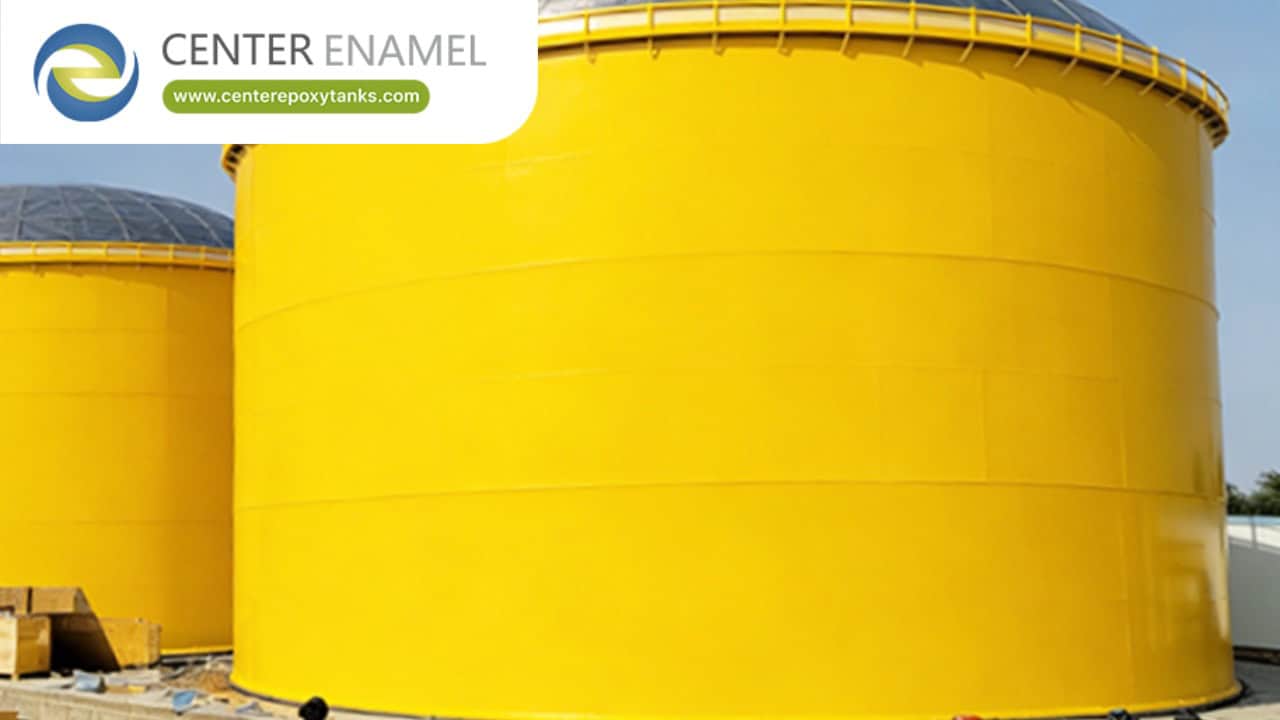
Why API 650 Storage Tanks Are Essential for Oil & Gas
In the high-stakes environment of the oil and gas industry, storage tank failure is not just an operational disruption—it is a catastrophic safety and environmental liability. API 650 is the American Petroleum Institute’s definitive standard for welded, aboveground storage tanks (ASTs). It is not merely a set of construction rules; it is the industry’s primary mechanism for ensuring structural integrity, vapor containment, and long-term operational safety.
1. Standardization for Predictable Performance
Before API 650, tank construction was often fragmented, leading to varying levels of quality and safety. API 650 provides a unified engineering baseline. Whether a tank is being built in the Middle East, North America, or Asia, an API 650-compliant tank guarantees:
Calculated Material Strength: Defined requirements for steel plate thickness based on hydrostatic pressure and product density.
Uniform Testing Protocols: Mandatory non-destructive testing (NDT) of welds to detect structural fatigue before it leads to leakage.
2. Extreme Environmental Resilience
API 650 is not a one-size-fits-all code. It requires engineers to calculate site-specific environmental variables.
Seismic Design: API 650 includes stringent annexes for earthquake design, ensuring that tanks located in high-seismic zones can withstand ground acceleration without buckling or shell tearing.
Wind and Snow Loads: The standard dictates design adjustments for regions prone to hurricanes, typhoons, or heavy snow, preventing the catastrophic "roof collapse" scenarios common in substandard infrastructure.
3. Vapor Containment and Environmental Protection
One of the most essential aspects of API 650 is its role in emission control. By dictating the interface between the tank shell, the roof, and the product, the standard helps minimize the release of Volatile Organic Compounds (VOCs).
Floating Roof Integration: API 650 provides the structural framework for fitting floating roofs, which physically suppress vapor formation, directly supporting corporate ESG (Environmental, Social, and Governance) goals and regulatory emission compliance.
Decision Support: Comparing Tank Standards
To understand where API 650 fits into the broader engineering landscape, use this comparison matrix to evaluate tank selection:
Frequently Asked Questions (FAQ)
Q: What is the primary purpose of the API 650 standard?
A: API 650 provides the requirements for material, design, fabrication, erection, and testing for vertical, cylindrical, aboveground, closed- and open-top, welded storage tanks. Its primary purpose is to ensure safety and prevent fluid release in the oil, gas, and chemical industries.
Q: How does API 650 differ from API 620?
A: API 650 is designed for atmospheric storage (pressures up to 2.5 psig). API 620 is designed for large tanks that require higher internal pressures (up to 15 psig) or operate under specialized low-temperature/cryogenic conditions.
Q: Can API 650 tanks store liquids other than petroleum?
A: Yes. While API 650 was developed for the petroleum industry, it is widely used for storing water, fertilizers, biofuels, and various chemical products, provided the material thickness and design are adjusted to the specific gravity and chemical compatibility of the stored liquid.
Q: Why is "corrosion allowance" included in API 650 designs?
A: Corrosion allowance is a mandatory thickness added to the base calculation of the shell and bottom plates. It acts as a safety buffer to account for the inevitable material loss caused by oxidation and chemical exposure over the tank's 20-to-30-year design life, preventing premature structural failure.


