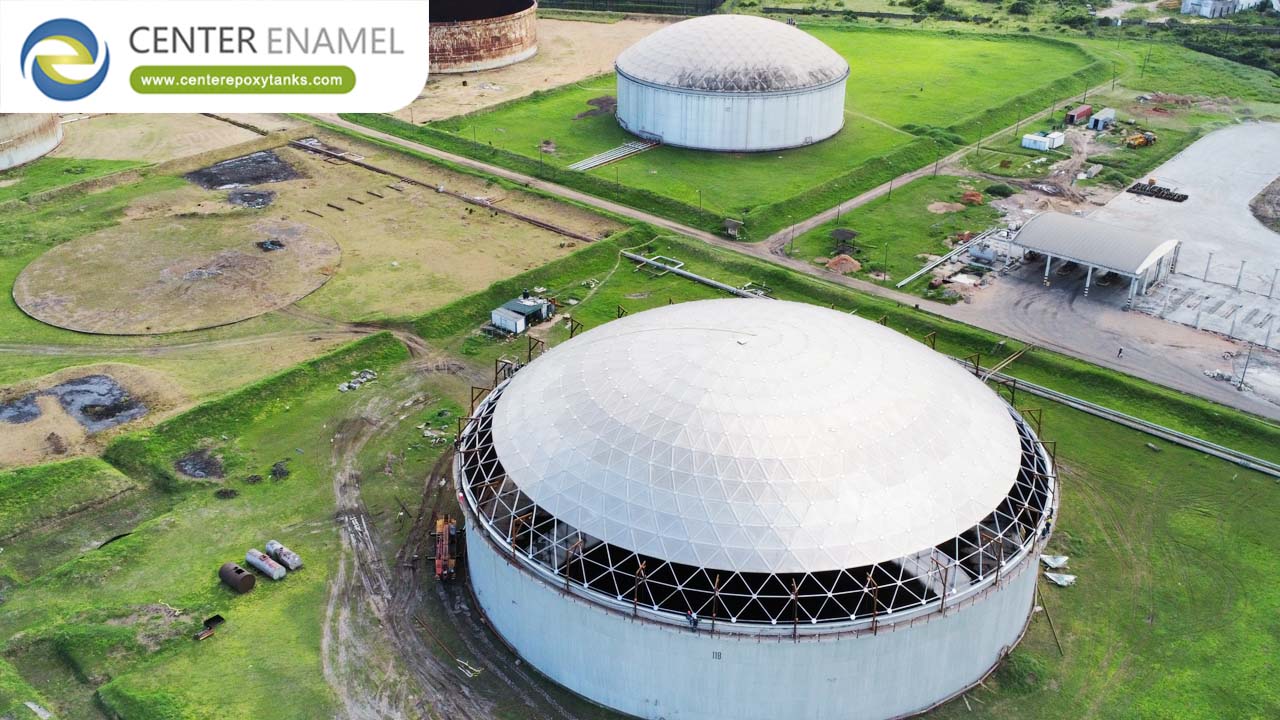
What is an Oilfield Storage Tank?
An oilfield storage tank is a heavy-duty industrial containment vessel deployed at upstream drilling sites, wellheads, and central tank batteries to temporarily or permanently store crude oil, produced water, condensate, and drilling fluids. Unlike downstream refinery tanks that hold massive multi-million-barrel reserves, oilfield production tanks are engineered to handle the immediate output of extraction wells, facilitating primary phase separation, chemical treatment, and temporary holding before transport via pipeline or tanker truck.
These vessels are built under strict industrial specifications—primarily governed by the American Petroleum Institute (API)—to withstand variable hydrocarbon pressures, corrosive produced waters, and harsh environmental exposure found in remote oil and gas basins.
Primary Functions of Oilfield Storage Tanks
Oilfield tanks serve several critical operational functions across exploration and production (E&P) lifecycles:
Crude Oil Accumulation: Storing stabilized crude oil extracted from wells before it is metered and transferred into midstream pipelines or transport trucks.
Produced Water Management: Separating and holding saline formation water that is co-extracted with crude oil prior to reinjection disposal or water-flooding operations.
Phase Separation and Treating: Acting as settling vessels where entrained gas, basic sediment, and water (BS&W) separate from the hydrocarbon liquid via gravity.
Chemical and Fracking Support: Holding water, friction reducers, and chemical additives required during well stimulation or enhanced oil recovery (EOR) programs.
Common Types and Design Standards
Oilfield storage tanks are categorized by their manufacturing method, capacity, and structural engineering standard:
Shop-Welded Tanks (API 12F): Smaller, standardized vertical cylindrical tanks fabricated off-site in controlled factory environments. Typically built in capacities ranging from 90 to 500 barrels (bbl), they are easily transported and installed on standard production pads.
Field-Erected Tanks (API 650): Larger storage assets (such as 1,000-barrel to 5,000-barrel tanks or larger) constructed plate-by-plate directly on location at central tank batteries.
Bolted Steel Tanks (API 12B): Modular panel tanks bolted together with internal gaskets, highly favored in remote or rugged terrain due to ease of assembly and flexible capacity scaling.
Data Table: Overview of Oilfield Storage Tank Standards
Tank Standard | Fabrication Method | Typical Capacity Range | Primary Field Application | Governing Specifications |
API 12F | Shop-welded steel | 90 to 500 barrels (bbl) | Wellhead production, small lease automatic custody transfer (LACT) units | Prefabricated vertical cylindrical tanks |
API 650 | Field-erected welded steel | 1,000 to 50,000+ barrels | Central tank batteries, high-volume crude storage | Atmospheric / low-pressure welded structures |
API 12B | Bolted modular steel | Variable (100 to 10,000 bbl) | Remote drilling fluids, frac water storage, temporary holding | Bolted tank panels with elastomeric seals |
Frequently Asked Questions (FAQ)
Q: What is an oilfield storage tank?
A: An oilfield storage tank is a specialized industrial container used at upstream oil and gas production sites to hold crude oil, produced water, and drilling fluids before they are processed or transported.
Q: What is the difference between API 12F and API 650 oilfield tanks?
A: API 12F covers smaller, shop-welded vertical tanks manufactured off-site for standardized field applications, whereas API 650 governs larger, field-erected welded steel tanks built directly on location for high-capacity terminal storage.
Q: Why do oilfield tanks need corrosion protection?
A: Crude oil and produced water often contain hydrogen sulfide, carbon dioxide, and high salinity levels, which can cause rapid internal corrosion. Tanks utilize specialized epoxy internal coatings, corrosion allowances, and cathodic protection systems to ensure longevity.
Q: What is a central tank battery?
A: A central tank battery is a centralized collection facility where oil, gas, and water streams from multiple surrounding production wells are routed together into a cluster of oilfield storage tanks for separation, measurement, and shipping.


