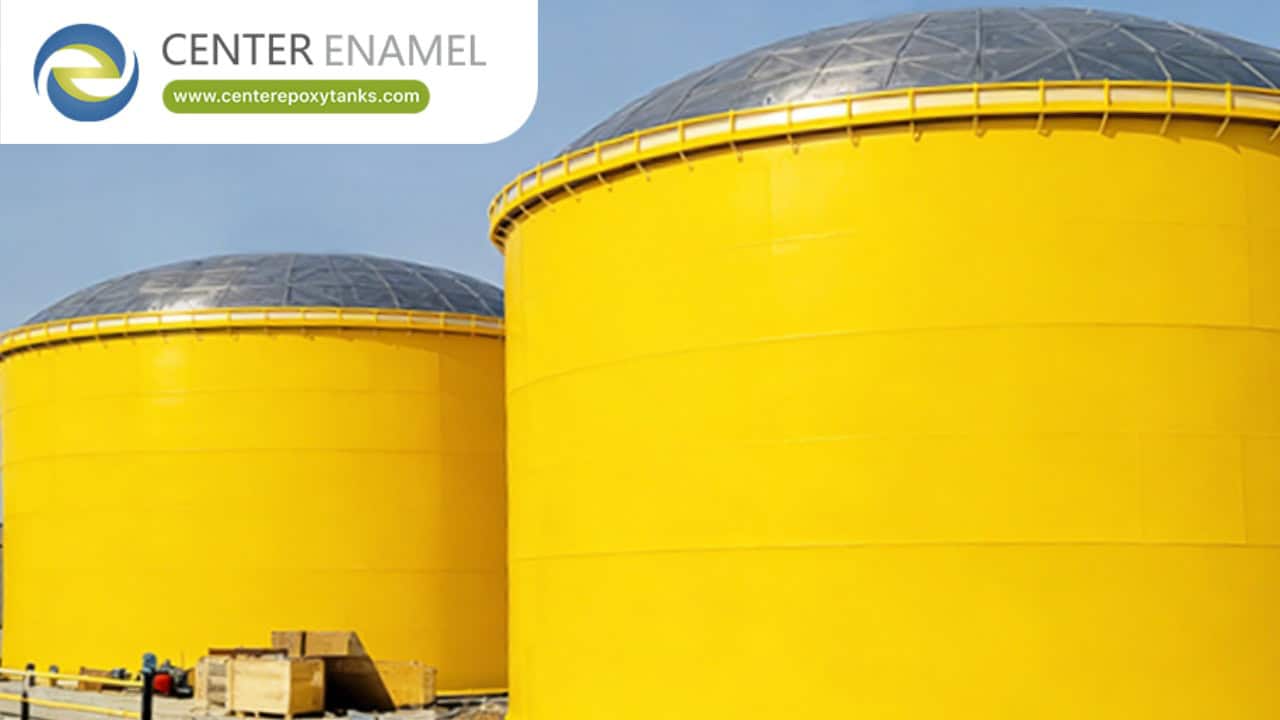
What is an Oilfield Storage Tank?
An oilfield storage tank is a specialized industrial vessel designed to temporarily store crude oil, produced water, or natural gas liquids (NGLs) immediately after they are extracted from a well.
Rather than acting as long-term warehousing, these tanks serve as critical staging areas. They provide the necessary time and controlled environments for initial separation processes before the liquids are transported via pipeline, truck, or rail to commercial refineries and wastewater treatment facilities.
An interconnected system of tanks handles different phases of the separation process on-site.
The Oilfield Tank Battery Ecosystem
Rarely does a single tank handle an entire well's output. Instead, production flows into an interconnected network of pressure vessels and storage units known as a tank battery. A standard tank battery consists of several specialized components:
1. The Separator
The first stop for raw well fluid. The separator uses gravity and pressure control to divide the incoming mixture into three distinct streams: natural gas (which rises to the top), crude oil (the middle layer), and produced water (which sinks to the bottom).
2. Wash Tanks (Heater Treaters)
Because oil and water often form stubborn emulsions, wash tanks apply heat and chemical treatments to break these bonds. This ensures the crude oil meets the strict purity standards (low basic sediment and water content) required by pipeline operators.
3. Stock Tanks
Once the crude oil is separated and treated, it is piped into stock tanks. These are the final holding points for market-ready crude oil while it awaits custody transfer to a transport company.
4. Produced Water Tanks
The highly corrosive, saline water extracted alongside the oil is stored in dedicated produced water tanks. Due to the aggressive nature of this brine, these tanks require highly specialized interior coatings or specific material engineering before the water is transported for deep-well injection or industrial recycling.
Tank Materials and Construction Standards
The operational lifespan of an oilfield tank is dictated entirely by its material and construction. With produced water and sour crude posing severe corrosion threats, selecting the right tank architecture is the most critical procurement decision.
Welded Carbon Steel: The traditional standard. While highly durable and impact-resistant, standard carbon steel is highly susceptible to internal corrosion without rigorous maintenance and thick, field-applied epoxy coatings.
Fiberglass Reinforced Plastic (FRP): Highly resistant to the corrosive effects of produced water and lightweight. However, FRP tanks generally have lower pressure tolerances and are more vulnerable to extreme UV degradation over time compared to steel.
Bolted Glass-Fused-to-Steel (GFS): The premier standard for modern global industrial manufacturing. By fusing molten glass to steel panels at extremely high temperatures, GFS tanks combine the structural strength of steel with the absolute corrosion resistance of glass. Because they are bolted, these tanks can be shipped globally in compact containers and rapidly assembled on-site, drastically reducing construction timelines.
Use this interactive tool to compare how different materials perform across various operational environments:
Key Insight: For high-volume wastewater and produced water applications, bolted GFS tanks offer the lowest total lifecycle cost due to near-zero internal maintenance requirements.
Modern Procurement: Verifying Engineering Specs
In modern B2B industrial procurement, verifying the exact specifications of a bolted storage tank system before mass production is vital.
To bridge the gap between digital engineering models and physical assembly, leading global manufacturers now utilize 3D-printed product samples. Providing engineers and site managers with a high-fidelity, scaled physical model of the tank's joints, nozzles, and structural components allows for rigorous pre-production review. This ensures that when the final components arrive at the oilfield, integration with the existing tank battery is flawless.
Bolted tanks can be scaled to massive capacities while maintaining rapid deployment timelines.
Frequently Asked Questions (FAQ)
What is the standard capacity of an oilfield stock tank?
Stock tanks typically range from 100 barrels (bbl) to 1,000 barrels in a standard battery. However, custom bolted industrial tanks can be engineered to hold tens of thousands of barrels to serve as centralized gathering hubs.
What is the difference between a separator and a storage tank?
A separator is an active pressure vessel designed specifically to split the well stream into gas, oil, and water. A storage tank is an atmospheric (or low-pressure) vessel designed to passively hold those separated fluids until transport.
Why do oilfield tanks have stairs and walkways?
Tank batteries require routine inspection, manual gauging of fluid levels, and maintenance of pressure relief valves. OSHA-compliant stairs and top-level catwalks ensure operators can safely access the tops of the tanks to perform these duties without fall risks.
How do you prevent corrosion in produced water tanks?
Corrosion is prevented through advanced material selection. Utilizing bolted Glass-Fused-to-Steel (GFS) panels, specialized internal epoxy coatings, and sacrificial anodes (cathodic protection) are the primary methods for extending tank life in highly corrosive brine environments.


