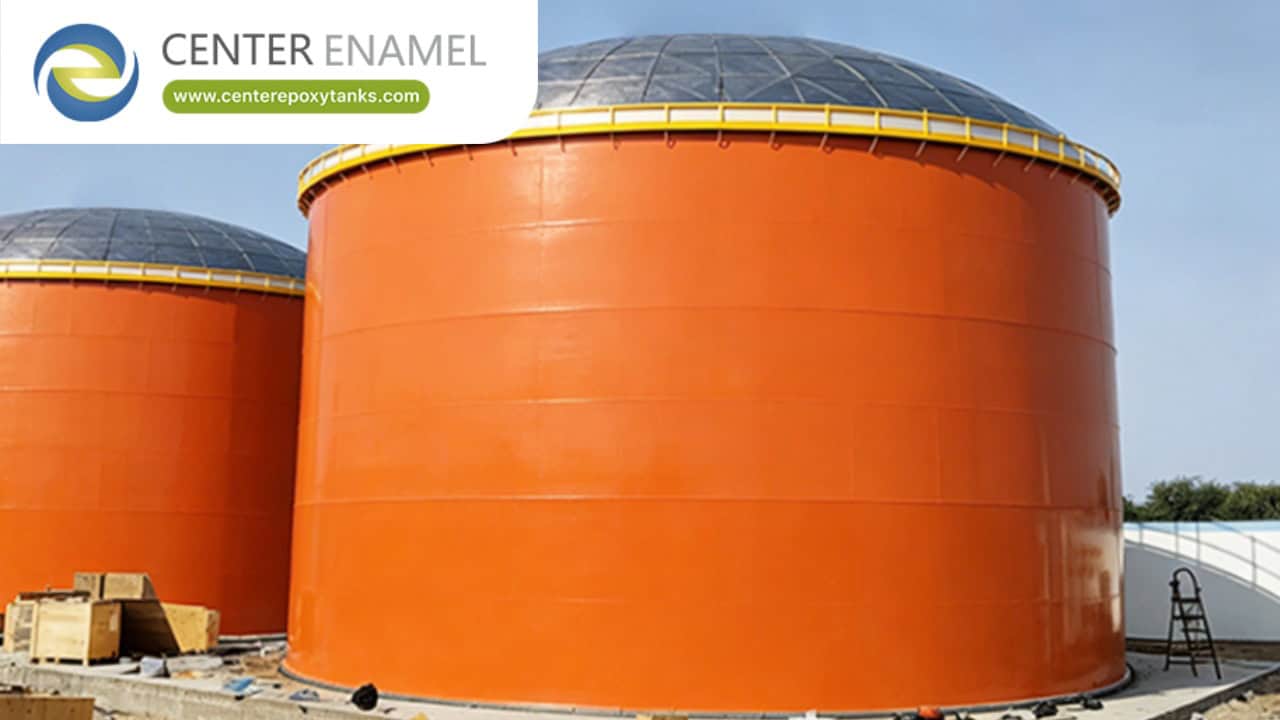
The Different Uses of Oil Storage Tanks
Oil storage tanks are the silent infrastructure behind global energy logistics. While often viewed simply as containers, their functionality varies drastically depending on their position in the supply chain. From the wellhead to the refinery, each tank configuration is optimized for a specific operational role.
1. Upstream: Wellhead & Field Storage
At the point of extraction, storage tanks serve as the initial collection point.
Primary Use: Gathering crude oil from the wellhead before it is transported via truck or pipeline.
Key Function: Initial separation of oil, water, and gas. These tanks allow for gravity-based settling, where basic sediment and water (BS&W) are removed before the crude enters the midstream network.
2. Midstream: Surge Capacity & Custody Transfer
Pipeline operators utilize tanks to regulate the flow of product across vast distances.
Surge Capacity: When pipeline volume exceeds refinery intake rates, tanks act as buffers to prevent system shutdowns.
Custody Transfer: These tanks are critical for legal measurement. They hold oil for precise gauging, ensuring that the volume of product entering or leaving the pipeline system is accurately documented for commercial transactions.
3. Downstream: Refinery Feedstock & Blending
Within refinery operations, tanks become specialized process vessels.
Feedstock Storage: Staging various grades of crude oil before they are introduced into the distillation unit.
Product Blending: Storage tanks act as mixing vessels. Operators add additives or combine different fuel grades to meet specific market or environmental specifications (e.g., octane ratings for gasoline).
Intermediate Storage: Holding semi-refined products that need further treatment or cracking before final distribution.
4. Environmental & Safety Management
Modern industrial facilities must prioritize compliance and spill prevention.
Produced Water Storage: Managing the massive volumes of saline, chemically laden water extracted alongside oil. These tanks often require advanced linings (like Glass-Fused-to-Steel) to resist extreme corrosion.
Fire Protection: Dedicated water storage tanks, often maintained at specific heads, provide the fire-suppression capability required by global safety codes.
Emergency Containment: Secondary storage solutions designed to hold runoff or leaked materials in the event of primary tank failure.
Functional Comparison Matrix
Use Case | Tank Type Priority | Critical Requirement |
Field/Extraction | Bolted/Welded Steel | Corrosion Resistance (Brine/Sulfur) |
Midstream/Pipeline | API 650 Welded Steel | High Capacity/Structural Integrity |
Refinery/Blending | Internal Floating Roof | Vapor Control/VOC Emission Management |
Wastewater/Environmental | GFS/FRP | Maximum Chemical Inertness |
Interactive Planning Tool
Frequently Asked Questions (FAQ)
Q: What is the difference between a surge tank and a storage tank?
A: A surge tank is designed specifically to handle flow fluctuations in a pipeline or process system, absorbing excess volume to maintain steady pressure and prevent system overload. A storage tank is typically a larger, long-term holding vessel used for inventory or custody transfer.
Q: Why is vapor control so important in refinery storage tanks?
A: Refined products are highly volatile. Without internal or external floating roofs, these products evaporate into the "ullage" (the space above the liquid). This results in lost product revenue, dangerous fire hazards, and the release of volatile organic compounds (VOCs) into the atmosphere, which violates strict environmental regulations.
Q: Why are Glass-Fused-to-Steel (GFS) tanks increasingly used for produced water?
A: Produced water contains high concentrations of salts and chemical agents that rapidly degrade standard carbon steel. GFS technology provides a glass-like, non-porous interior surface that is chemically inert, providing superior protection against corrosion and reducing long-term maintenance costs.
Q: Do all oil storage tanks need to follow API 650?
A: Not all, but the vast majority of industrial, field-erected welded tanks do. API 650 is the "gold standard" for flat-bottom, vertical, above-ground tanks. If a tank operates at higher pressures, API 620 may be the required standard. If a tank is shop-fabricated and smaller, UL 142 or other local codes might apply.


