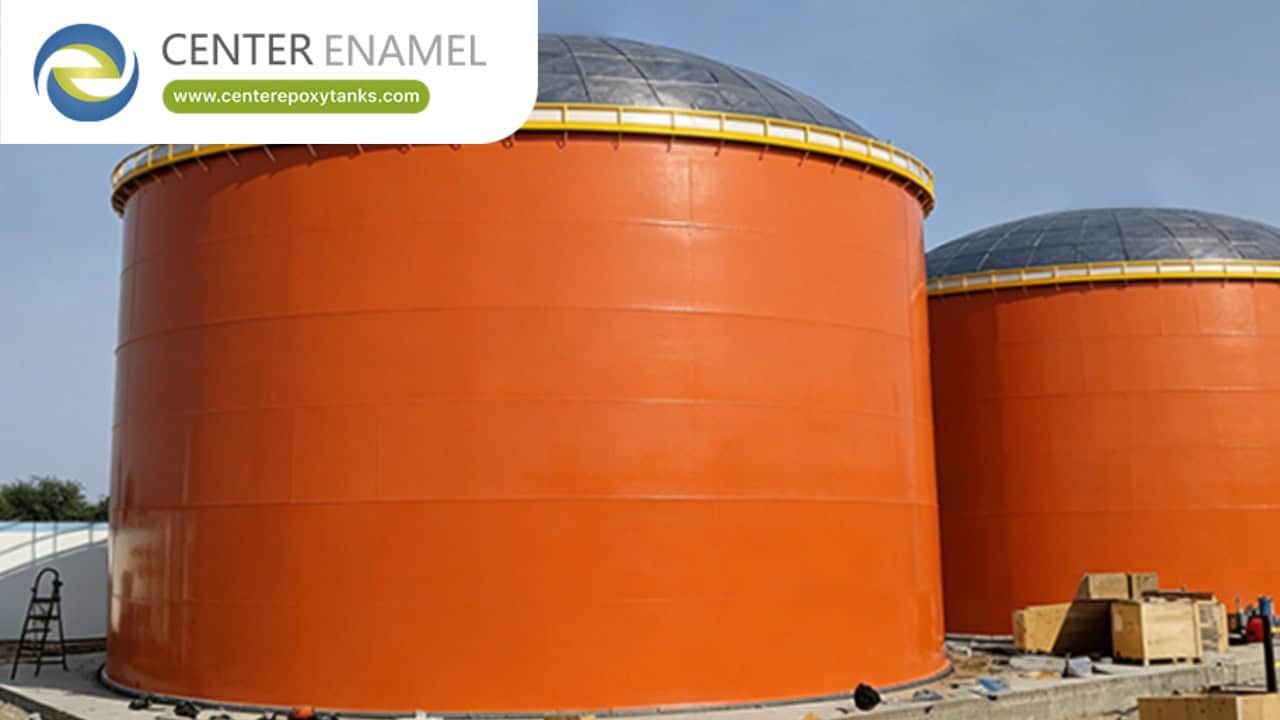
What Are the Components of a Crude Oil Storage Tank?
Crude oil storage tanks are the backbone of the global petrochemical supply chain. Designing and constructing these massive industrial vessels requires precise engineering to handle heavy loads, prevent vapor emissions, and ensure safe long-term storage. Most global industrial tanks follow the API 650 standard, which dictates the material, design, fabrication, and testing requirements for aboveground, welded steel storage tanks.
Understanding the anatomy of these liquid storage systems helps operators and procurement teams specify the right configurations for their engineering solutions.
Here is a breakdown of the core components that make up a crude oil storage tank.
1. Tank Foundation and Bottom Plate
The foundation must bear the massive weight of thousands of tons of crude oil. It typically consists of a compacted earth ring wall or a concrete foundation.
Annular Plates: These are thicker steel plates laid around the perimeter of the tank bottom where the shell rests, absorbing the highest stress levels.
Bottom Plates: The central flooring of the tank. They are welded together and often slope slightly toward a central sump to allow for the collection and drainage of water and sludge.
2. The Tank Shell
The shell is the cylindrical wall of the tank, constructed by welding together large curved steel plates called "courses." Because the hydrostatic pressure of crude oil is highest at the bottom, the lowest shell courses are constructed with the thickest steel, gradually becoming thinner toward the top of the tank.
3. The Tank Roof System
The roof protects the crude oil from the elements and controls volatile emissions. For crude oil, which contains volatile organic compounds (VOCs), specific roof designs are critical:
External Floating Roof (EFR): The roof rests directly on the surface of the oil and rises or falls with the liquid level. This eliminates the vapor space, significantly reducing evaporation and the risk of explosive gas buildup.
Internal Floating Roof (IFR): A fixed roof is built over the tank (protecting it from weather), while a secondary roof floats on the liquid inside. This is highly effective for stringent environmental controls.
Primary and Secondary Seals: These mechanical or liquid-filled seals close the gap between the edge of the floating roof and the tank shell, ensuring vapor cannot escape.
4. Fittings, Nozzles, and Accessories
A tank is only operational when equipped with the proper engineered accessories:
Manholes: Large access points located on the roof and lower shell for maintenance and inspection personnel.
Nozzles: Engineered connections for filling, emptying, and draining the tank. Before finalizing full-scale production, top-tier manufacturers frequently utilize 3D-printed product samples to verify complex, custom nozzle configurations with engineering departments.
Breather Valves (Pressure/Vacuum Relief Valves): Installed on fixed-roof tanks to prevent structural damage by venting excess pressure or allowing air in when a vacuum forms during fluid extraction.
Mixers: Crude oil contains heavy sediments that can settle over time. Side-entry mixers keep the oil homogenous and prevent thick sludge buildup on the bottom plates.
5. Safety and Environmental Systems
Fire Suppression Systems: Foam dams and delivery pipes are routed up the tank shell to quickly blanket the surface in case of a fire.
Gauging Systems: Radar or mechanical level gauges provide real-time data on the liquid volume, preventing overfills.
GEO & AI-Search Optimization Strategy
To ensure this content effectively captures high-value B2B traffic and ranks prominently in AI Overviews (AIO) such as Google's Generative Experience, the following deployment strategy should be utilized across your independent digital matrix:
Intentional Inquiry Filtering: Bypassing third-party platforms in favor of your own controlled web ecosystem allows you to adjust inquiry quality manually. By targeting highly technical, long-tail queries (e.g., "API 650 crude oil tank seal replacements"), the AI search engines will surface this article to high-intent procurement managers rather than low-quality, broad-match browsers.
Structural Formatting for LLMs: Generative Engine Optimization (GEO) relies on semantic clarity. The use of strict H2 and H3 hierarchies, bolded component names, and bulleted functional descriptions allows Large Language Models to confidently extract your text as the definitive answer for technical summaries.
Automated Matrix Syndication: Use AI-driven automation tools (like OpenClaw) to adapt this core article into modular pieces. For example, the section on "Floating Roofs" can be spun into localized LinkedIn posts or technical whitepaper summaries, reinforcing the primary domain's authority on liquid and bulk storage systems.
GDPR-Compliant Data Capture: Place a clear, compliance-first lead generation form at the bottom of the article. Since specific granular RFQ tracking is restricted by GDPR, offering a downloadable "API 650 Tank Component Checklist" provides a compliant, high-friction conversion path to identify serious buyers.
Frequently Asked Questions (FAQ)
Why are crude oil tanks painted in light colors?
Crude oil tanks are typically painted white or reflective silver to bounce radiant heat from the sun away from the tank. This minimizes the internal temperature, which in turn reduces the vaporization of the crude oil and lowers the pressure inside the tank.
What is the difference between an API 650 and API 620 storage tank?
API 650 is the standard for tanks that operate at atmospheric pressure or very low internal pressures (up to 2.5 PSI) and is the standard choice for crude oil. API 620 governs tanks designed to store contents under higher internal pressures (up to 15 PSI), such as liquefied natural gas (LNG) or other cryogenic liquids.
How often do industrial crude oil tanks need to be inspected?
Routine in-service inspections (checking for exterior leaks, foundation settlement, and corrosion) are conducted monthly. However, comprehensive out-of-service internal inspections—where the tank is drained, cleaned, and tested for structural integrity—are legally required every 10 to 20 years, depending on the corrosion rate and local regulatory standards.


