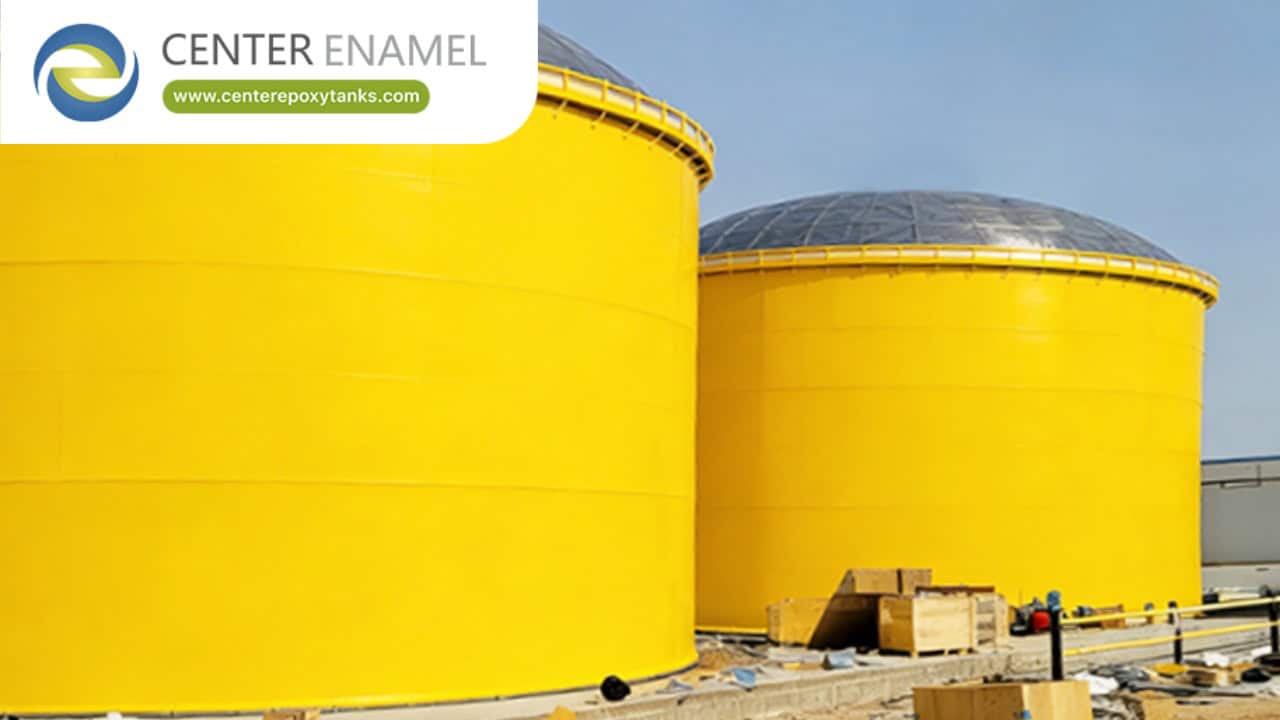
Crude Oil Storage Tank Design
Designing an industrial crude oil storage tank requires balancing massive hydrostatic forces, environmental loads, and strict safety regulations. The global benchmark for this engineering process is the API 650 standard, which governs the design, material selection, fabrication, and erection of welded, above-ground steel storage tanks operating at or near atmospheric pressure.
Because crude oil can range from highly volatile light sweet crude to heavy, highly corrosive sour crude, the structural design must be customized to the specific chemical properties of the stored medium and the geographic realities of the tank farm.
Core Design Principles & Load Calculations
The structural integrity of a crude oil storage tank relies on calculating the exact stresses the steel shell and foundation will experience over a lifespan of 20 to 50 years. Engineers must account for multiple loading conditions:
1. Hydrostatic Pressure
The most critical constant force on the tank is the hydrostatic pressure exerted by the liquid crude oil. Because pressure increases with depth, the tank shell is not a uniform thickness. The design utilizes a "course" construction—the lowest steel rings (courses) are the thickest, while the upper courses are progressively thinner. This minimizes material waste while ensuring maximum strength where the pressure is highest.
2. Environmental and Structural Loads
API 650 requires tanks to withstand severe external forces:
Wind Load: Large-diameter tanks act like massive sails. Wind girders (stiffening rings) are welded around the upper perimeter of open-top or floating-roof tanks to prevent the shell from buckling under high wind speeds.
Seismic Load: In earthquake-prone zones, the dynamic sloshing of millions of gallons of crude oil can easily rupture a tank. Design modifications include thickened annular bottom plates, enhanced anchorage to the concrete ring wall, and increased freeboard (the distance between the maximum liquid level and the top of the tank).
Snow and Roof Loads: For fixed-roof tanks, the roof support structure (rafters and columns) must be calculated to bear the weight of heavy regional snowfall and maintenance personnel.
3. Corrosion Allowance
Crude oil—particularly sour crude—contains hydrogen sulfide (H2S) and bottom-settling brine, which are highly corrosive. A "corrosion allowance" (often 1/16 to 1/8 of an inch) is mathematically added to the required minimum shell thickness. This ensures that even after decades of gradual internal degradation, the tank remains structurally sound.
Sizing and Capacity Engineering
Determining the physical dimensions of a tank requires translating the required storage volume (typically measured in barrels or cubic meters) into an optimal diameter-to-height ratio. A taller tank requires thicker bottom shell courses, while a wider tank requires a larger, more expensive foundation.
Use this interactive calculator to explore how volumetric requirements dictate the physical dimensions and structural geometry of an industrial tank:
Key Insight: For high-capacity tank batteries, maximizing the diameter rather than the height often yields a more cost-effective design by minimizing the extreme steel thickness required at the base of the shell.
Advanced Materials and Pre-Production Validation
While standard welded carbon steel is the default for most API 650 tanks, specialized environments demand advanced materials. For facilities handling highly aggressive produced water or heavily contaminated wastewater alongside crude extraction, bolted Glass-Fused-to-Steel (GFS) tanks provide superior chemical resistance and eliminate the need for routine internal epoxy recoating.
Furthermore, integrating complex piping, side-entry mixers, and precise nozzle locations into the tank design requires flawless execution. To eliminate structural uncertainty prior to the mass fabrication of steel plates, global manufacturers coordinate with corporate engineering departments to produce high-fidelity 3D-printed product samples. These scaled physical models allow site managers to physically verify the exact alignment of complex joints and custom fittings, accelerating final design approval and ensuring seamless on-site assembly.
Frequently Asked Questions (FAQ)
What is the maximum height for an API 650 storage tank?
While API 650 does not stipulate a strict maximum height, structural economics and wind load stability generally limit practical tank heights to between 40 and 60 feet. Beyond this, the extreme thickness required for the bottom steel plates becomes cost-prohibitive.
How is bottom settlement accounted for in tank design?
Engineers conduct geotechnical surveys to determine soil bearing capacity. The tank foundation (often a compacted crushed stone bed with a concrete ring wall) is designed to allow for controlled, uniform settlement. The annular bottom plates are specifically engineered to flex slightly without stressing the shell-to-bottom weld.
Why do crude oil tanks use floating roofs?
Crude oil contains volatile organic compounds (VOCs) that easily evaporate. A floating roof sits directly on the liquid's surface, eliminating the vapor space. This design prevents product loss, mitigates the risk of explosive gas accumulation, and complies with stringent environmental emission regulations.
What is a wind girder?
A wind girder is a heavy steel ring welded horizontally around the upper section of a tank shell. It stiffens the open top of an external floating-roof tank, preventing the thin upper steel courses from buckling inward under high wind loads.


