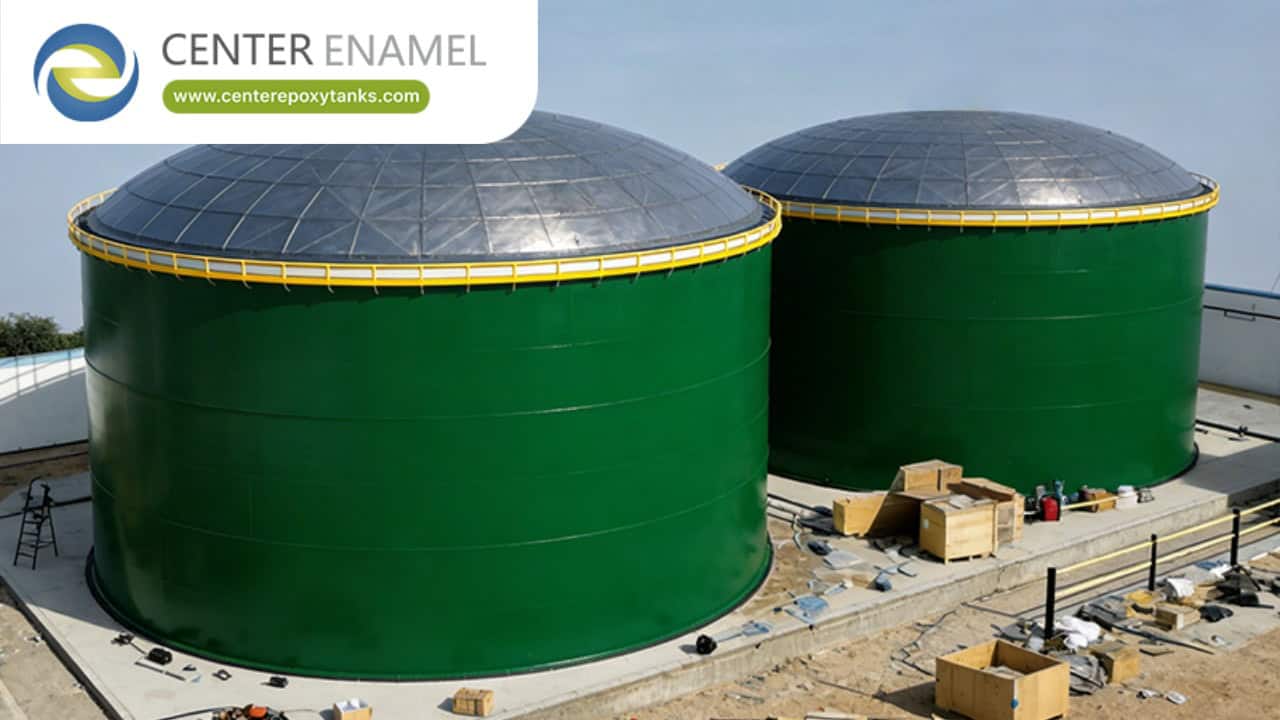
Oil Storage Tanks: A Complete Engineering Guide To Types, Materials And Standards
Oil storage tanks sit at the center of every fuel supply chain — from wellhead gathering through refining, terminal distribution and retail dispensing. Yet the term covers an unusually broad family of vessels, and choosing the wrong configuration is one of the most expensive early decisions in a fuel infrastructure project. A tank that is correctly sized but built to the wrong code, or correctly coded but coated for the wrong product, will fail inspection long before it fails structurally.
This guide walks through the engineering fundamentals: tank categories and where each applies, material and coating selection logic, the standards that govern design and fabrication, and a procurement checklist that owners can hand directly to their EPC or tank supplier. The goal is not to make every reader a tank designer, but to make every buyer a better specifier.
Tank Categories: AST, Field-Erected And Bolted Configurations
Aboveground storage tanks (ASTs) divide into shop-fabricated and field-erected classes. Shop-fabricated tanks are built in a controlled plant environment, transported as complete vessels, and typically capped by shipping and road constraints in the low hundreds of cubic meters. Field-erected tanks are welded plate-by-plate on site and scale from a few thousand to well over 100,000 m3, making them the default choice for crude and product storage at terminals and refineries.
Bolted steel tanks occupy a distinct middle ground. Panels are factory-coated — glass-fused-to-steel or fusion bonded epoxy — then bolted on site with gasketed joints. Erection speed, relocatability and coating quality are the decisive advantages; diameter ceilings and seismic detailing are the trade-offs. For remote depots, phased capacity builds and temporary fuel farms, bolted configurations frequently beat both alternatives on lifecycle cost.
Attribute | Shop-Fabricated | Field-Erected (API 650) | Bolted Coated |
Typical capacity | Up to ~500 m3 | Thousands to 100,000+ m3 | Hundreds to ~20,000 m3 |
Construction site | None (delivered complete) | Full field welding crew | Bolted erection, weeks |
Coating quality control | Plant environment | Field conditions | Plant environment, per-panel records |
Relocatability | Possible | Not practical | Yes — disassemble and re-erect |
Best fit | Small depots, skid duties | Crude and product terminals | Phased, remote, temporary farms |
Material Selection: Carbon Steel, Stainless And Coated Alternatives
Carbon steel is the workhorse of oil storage because it is strong, weldable and economical — provided corrosion is engineered, not ignored. The interior environment is the aggressor: water bottoms, microbial contamination, sour crude traces and oxygen ingress all attack the shell. A corrosion allowance of 1.6 mm to 3.2 mm on wetted surfaces is standard practice in API 650 design, but allowance alone is a consumable, not a barrier.
Internal coatings are the primary defense. Fusion bonded epoxy (FBE) delivers 400-800 micron dry film thickness with excellent resistance to hydrocarbons and water, and is the industry default for refined product service. For aggressive chemical or sour service, stainless steel — 304 for general duty, 316L where chlorides or sour media are present — removes the corrosion question entirely at a higher first cost. External surfaces receive paint systems specified for the site UV and humidity regime, typically epoxy primer plus polyurethane topcoat.
Coating Systems And Their Service Limits
Coating selection is product-specific. Gasoline and diesel tolerate FBE well; ethanol blends and sour streams demand compatibility verification with the coating manufacturer. Glass-fused-to-steel (GFS) panels, fired at 820-930 C, offer a vitreous enamel layer with exceptional resistance to a wide pH range — a reason bolted GFS tanks serve so many water and wastewater duties, and increasingly light hydrocarbon and solvent service where the product is compatible.
Whatever the system, surface preparation governs outcome. Near-white blast cleaning to SA 2.5, controlled application humidity and full holiday testing are non-negotiable. On Center Enamel projects, coating inspection records accompany every tank shipment so field repairs can be verified against a documented baseline.
Coating System | Typical Dry Film Thickness | Best-Fit Service | Key Limitation |
Fusion bonded epoxy (FBE) | 400-800 microns | Refined products, diesel, gasoline | Compatibility check needed for ethanol blends |
Glass-fused-to-steel (GFS) | Vitreous enamel layer (fired 820-930 C) | Water, wastewater, solvents, mild hydrocarbons | Diameter bounded by panel catalog |
Epoxy paint systems | 300-500 microns (multi-coat) | General atmospheric and immersion duty | Field application quality risk |
Stainless steel (no coating) | N/A — material is the barrier | Aggressive, sour, hygienic duty | Several times carbon steel cost |
Governing Standards: What Each Code Actually Covers
API 650 is the dominant code for large welded oil storage tanks in the Americas and much of Asia, covering design pressures near atmospheric, material groups, shell course thickness rules and inspection intervals. EN 14015 is the European equivalent for aboveground vertical cylindrical steel tanks. AWWA D103-09, while written for water, is frequently applied to bolted and coated tanks serving adjacent duties because of its panel-quality and coating requirements.
The practical point for buyers: ask which code the tank is designed to, and which annex governs the inspection regime. A tank "built to API 650" without Annex E or F seismic detailing is not seismically qualified, no matter what the nameplate suggests.
Capacity Sizing And Nominal Vs Working Volume
Tank capacity is quoted in two numbers that never match: nominal (geometric) volume and working volume. Working volume excludes freeboard, dead stock at the sump and unusable volume under the roof. For planning purposes, budget 90-95 percent of nominal as usable. Turnover requirements — how many days of throughput a terminal wants on hand — set the working volume; the nominal figure follows from that, not the reverse.
Sizing drivers include product slate (how many segregated products), delivery vessel size (a tank that cannot take a full compartment parcel wastes logistics), and peak daily draw. Undersizing forces frequent deliveries and increases demurrage exposure; oversizing strands capital and raises heel volumes that degrade in storage.
Tank Farm Layout, Bunding And Secondary Containment
Layout governs both safety and operability. API 650 terminals segregate products into dedicated tanks or into tanks with proven changeover procedures, maintain separation distances driven by radiant heat calculations, and locate transfer pumps outside bund walls. Bunding or diking capacity is a code-driven calculation — commonly 110 percent of the largest tank plus freeboard — and drainage from bunds must be valved and controlled, not open.
For bolted tank farms, bunding is frequently achieved with the same panel technology, creating a visually and thermally consistent envelope. Foundation design must assume uniform settlement; bolted tanks tolerate differential settlement better than welded tanks but neither tolerates poor soil.
Vapor, Breathing And Emission Control
Every fixed-roof oil tank breathes: thermal expansion and pump-out displace vapors that must be controlled. Fixed venting with flame arrestors is the minimum; where local regulation or product loss economics demand it, internal floating roofs recover the majority of displaced vapor. An internal floating roof can cut standing losses by 80-90 percent compared with a bare cone roof, and is standard practice for volatile products at regulated terminals.
Vent sizing is a calculation, not a fitting choice. Inbreathing during pump-out and outbreathing during filling must both be checked at maximum flow, with flame arrestors specified for the product group. Emergency venting for fire exposure rounds out the system.
Inspection, Maintenance And Integrity Management
AST integrity programs combine external visual inspection on a short interval, ultrasonic thickness mapping on a scheduled basis, and internal inspection at extended intervals or after product changes. API 653 formalizes this regime for welded tanks. The corrosion allowance is the buffer that makes scheduling possible: when measured thickness approaches minimum allowable, repair or retirement decisions must already be made.
Bolted tanks invert the maintenance model. Because panels are coated in a controlled plant, field corrosion concentrates at gaskets and fasteners — inspectable from outside in hours, not days. This is why bolted configurations dominate temporary fuel farms and phased deployments where the asset life is measured in years, not decades.
Fire Protection And Safety Systems
Oil storage safety engineering spans passive and active layers. Passive: tank spacing, bunding, and foam dam or rim-seal fire protection on floating roofs. Active: foam delivery systems, cooling water sprays, and detection tied to plant emergency shutdown. Electrical area classification — the zone map around the tank — drives every equipment choice within it, and bolted tanks must be specified with bonded and grounded panels so static cannot accumulate across gasketed joints.
None of these systems substitute for correct tank selection. A properly sized, correctly coated, code-compliant tank with a functioning vent and containment system is the first and best safety device in any fuel farm.
Procurement Checklist For Tank Buyers
Before issuing an RFQ, fix the following in the specification: product slate and worst-case corrosivity, nominal and working volumes, design code and annexes, corrosion allowance, coating system with dry film thickness and holiday test protocol, seismic and wind design basis, roof type and vent sizing, bund capacity, and the inspection regime with documentation deliverables.
A supplier who answers every line without questions is either exceptional or not listening. The best engineering conversations start when the vendor pushes back on a coating compatibility or a vent assumption — that pushback is the value you are buying.
Why Center Enamel For Oil Storage Duties
Center Enamel brings API 650 and AWWA D103 engineering capability, FBE and epoxy internal coating systems and EN 1090 execution discipline to oil storage projects, with bolted GFS configurations deployed across more than 100 countries. Where the duty is water-like, solvent-compatible or phased in capacity, our factory-coated panel technology compresses erection schedules and relocates with the operation.
For welded, field-erected terminals, our engineering team supports specification, coating verification and third-party inspection coordination — the same documentation discipline that has kept our bolted fleet in service for decades.
About Company
Shijiazhuang Zhengzhong Technology Co.,Ltd(Center Enamel) is a professional manufacturer dedicated to the design and fabrication of bolted storage tanks since 2008. Our products range includes Glass-Fused-to-Steel (GFS) tanks, fusion bonded epoxy tanks, stainless steel tanks, galvanized steel tanks and aluminum geodesic dome roofs. With professional enameling R&D team and nearly 200 enameling patents, Shijiazhuang Zhengzhong Technology Co.,Ltd has become the leader in bolted tanks industry of Asia. Our products are certified to ISO9001, NSF61, EN1090, ISO28765, WRAS ,FM, LFGB, BSCI, IS0 45001 and other international standards.
Shijiazhuang Zhengzhong Technology Co., Ltd is not only the first manufacturer in China which produces Glass-Fused-to-Steel tanks, but also the most experienced professional bolted tanks manufacturer in Asia.The engineering & design, product testing and quality system of Center Enamel Glass-Fused-to-Steel tanks is in strict accordance with AWWA D103-09, OSHA, ISO 28765, NSF/ANSI 61, NFPA and other international standards. Until 2023, Center Enamel bolted tanks have been exported to more than 100 countries including USA, Australia,Canada, Malaysia, Indonesia, Russia, UAE, Panama,Brazil and South Africa etc., the superior tank quality and prompt service gains us worldwide recognition.
As an outstanding containment and cover system provider with decades of industry experience, Shijiazhuang Zhengzhong Technology Co., Ltd sincerely expects to establish long-term cooperation with the local partners throughout the world and make continuous contribution to the development of the industry.
Suggested CTA
Center Enamel delivers welded carbon steel / api 650 ast engineered for crude and refined oil storage duty, with api 650 / awwa d103 engineering capability, fbe and epoxy internal coating systems, exports to 100+ countries. Contact our engineering team for engineering guidance on your next oil storage tank project — including sizing, standards compliance and delivery scheduling.
Frequently Asked Questions
Q: What is the most common material for oil storage tanks?
A: Carbon steel with an internal coating — typically fusion bonded epoxy at 400-800 microns dry film thickness — is the industry default. Stainless steel (304 or 316L) is selected for aggressive, sour or ethanol-blend service where coating compatibility cannot be assured.
Q: What does API 650 cover?
A: API 650 governs the design and construction of large welded aboveground storage tanks for atmospheric pressure service. It defines material groups, shell course thickness rules, welding quality, and annexes for seismic and wind detailing. It does not itself specify coatings or internal inspection intervals — those come from the owner’s corrosion engineering program.
Q: How much usable capacity should I expect from a tank’s nominal volume?
A: Plan on 90-95 percent of nominal volume as usable, after deducting freeboard, sump dead stock and roof displacement. Turnover requirements should be calculated against working volume, not the nameplate figure.
Q: Are bolted steel tanks suitable for fuel storage?
A: Yes, where the product is compatible with the panel coating and the diameter requirement fits bolted construction limits. Bolted GFS and epoxy tanks are widely used for diesel, kerosene and solvent service, phased fuel farms and remote depots, with erection speed and relocatability as the decisive advantages.
Q: What is an internal floating roof and when is it required?
A: An internal floating roof is a floating deck inside a fixed-roof tank that eliminates the vapor space above the product. It reduces standing losses by 80-90 percent and is standard practice for volatile products at terminals subject to emission regulation or product-loss economics.
Q: How often should an oil storage tank be inspected?
A: External visual inspection is typically monthly to quarterly; ultrasonic thickness surveys are scheduled based on measured corrosion rates, commonly every 3-5 years; internal inspection follows API 653 intervals or is triggered by product changes, coating condition or thickness approaching minimum allowable.


