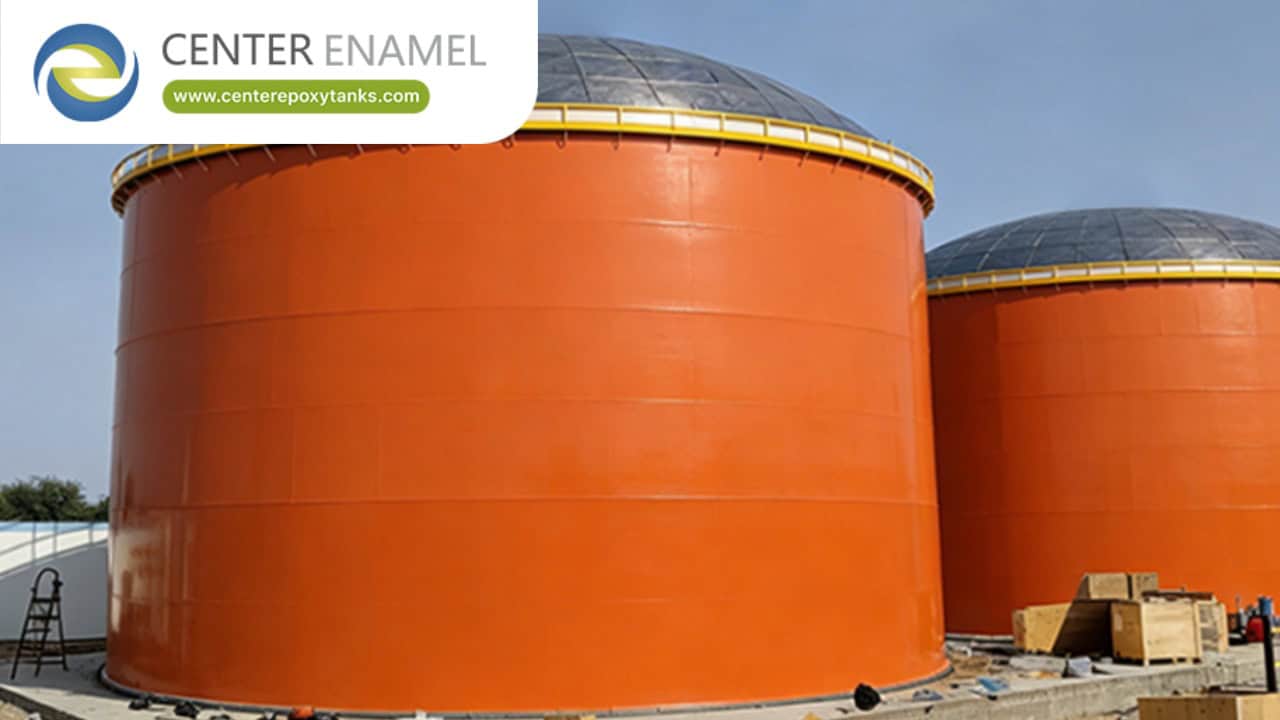
 What is a Crude Oil Storage Tank?
A crude oil storage tank is a large-scale, aboveground industrial container designed to safely hold unrefined petroleum before it is processed, transported, or refined. Because unrefined crude contains highly volatile compounds and varying levels of corrosive elements, these tanks are rigorously engineered to prevent leaks, manage vapor pressure, and mitigate fire risks.
Typically constructed from welded carbon steel, these structures range in capacity from a few thousand to hundreds of thousands of cubic meters. They serve as the critical infrastructure nodes in oil tank farms, refineries, and global shipping terminals.
Core Types of Crude Oil Storage Tanks
Because crude oil emits volatile organic compounds (VOCs) that can evaporate and create hazardous vapor pockets, the design of the tank roof is the most critical engineering decision.
Tank Type | Roof Mechanism | Primary Use Case |
External Floating Roof (EFRT) | Roof floats directly on the oil surface, rising and falling with liquid levels. | High-volatility crude; massive storage volumes; standard for large tank farms. |
Internal Floating Roof (IFRT) | Features a fixed outer dome/cone with a floating deck inside. | Extreme weather environments (heavy snow/rain) or products needing high vapor control. |
Fixed Roof (Cone/Dome) | Structurally rigid roof permanently welded to the shell. | Low-volatility liquids (water, wastewater, heavy diesel). Rarely used for raw crude. |
Note: The floating roof eliminates the "vapor space" between the liquid and the roof, drastically reducing evaporation losses and fire hazards.
The Engineering Benchmark: API 650
In global industrial manufacturing, petroleum storage tanks are rarely custom-engineered from scratch. Instead, they strictly adhere to API 650, the foundational standard published by the American Petroleum Institute.
Specifying an API 650 tank ensures the container is built to handle atmospheric or near-atmospheric pressures (typically design pressures not exceeding 2.5 psig). The standard governs every aspect of the tank's lifecycle:
Material Selection: Dictates specific carbon steel grades (like SA-516 Grade 70) and corrosion allowances based on the specific gravity, maximum filling height, and temperature of the stored fluid.
Shell and Bottom Design: Calculates required wall thickness depending on the hydrostatic pressure and the tank's diameter—which can easily exceed 200 feet.
Welding and Inspection: Mandates non-destructive examination (NDE), such as radiographic (RT) and ultrasonic testing (UT), to verify the integrity of all welded seams before commissioning.
Frequently Asked Questions (FAQ)
Why aren't crude oil tanks fully sealed like pressure vessels?
Crude oil is stored in massive volumes where building high-pressure containment is economically unfeasible. Instead, API 650 atmospheric tanks use floating roofs to manage vapors at low pressures, allowing the tank to safely "breathe" as temperatures fluctuate without risking structural rupture.
What happens to the sludge that builds up in crude oil tanks?
Unrefined crude contains heavy hydrocarbons, wax, and sediment that settle at the bottom over time. Tanks are equipped with specialized side-entry mixers to keep the oil agitated and manways to allow for periodic robotic or manual sludge removal and cleaning.
How do you prevent corrosion inside a carbon steel tank?
Engineers use a multi-layered approach: adding a "corrosion allowance" (extra sacrificial steel thickness), applying specialized epoxy coatings to the tank floor and lower shell, and installing cathodic protection systems underneath the tank bottom to stop galvanic corrosion.


