What Is an Internal Floating Roof Tank? Design, Structure, and Advantages
In industrial bulk liquid storage—ranging from petroleum distribution hubs and chemical processing facilities to aviation fuel terminals—controlling vapor emissions and protecting stored media from environmental contamination are critical engineering priorities. When operators require the emission-reduction benefits of a floating roof combined with total protection against weather elements, the industry standard solution is the Internal Floating Roof Tank (IFRT).
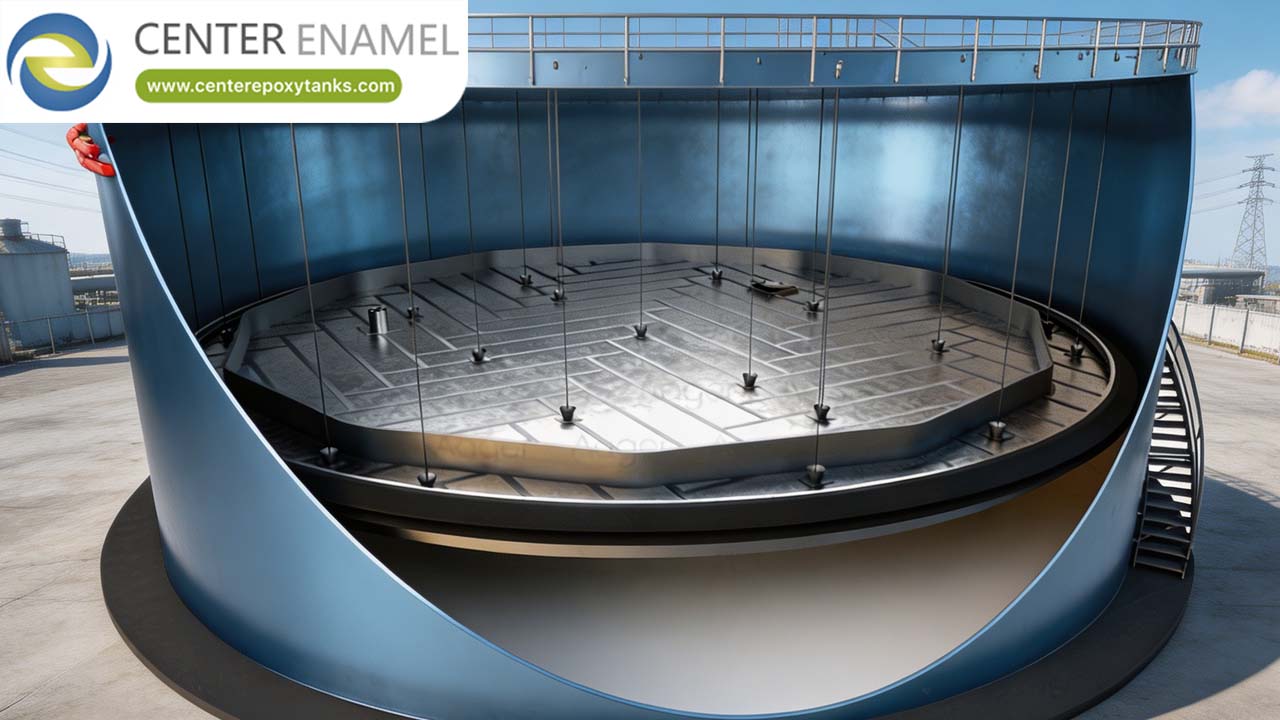
An IFRT is a hybrid storage vessel that features a permanent outer fixed roof (typically a cone or dome roof) enclosing an internal buoyant deck that floats directly on the surface of the stored liquid.
1. How Internal Floating Roof Tanks Operate
The engineering architecture of an IFRT bridges the gap between fixed-roof and external floating roof designs:
Elimination of Vapor Space: Similar to external floating roofs, the internal deck rests directly on the liquid product, rising and falling with fluid level fluctuations. By removing the vapor headspace between the liquid and the roof, the tank drastically suppresses evaporation and Volatile Organic Compound (VOC) emissions.
Outer Fixed Roof Shielding: Unlike open-top floating roof tanks, an IFRT encloses the floating deck within a fixed outer shell and roof structure. This exterior roof acts as a permanent shield, completely preventing rainwater, snow, wind shear, and airborne debris from accumulating on top of the floating deck.
2. Construction Materials and Deck Types
Internal floating decks are engineered from lightweight, highly buoyant, and corrosion-resistant materials to ensure smooth vertical travel inside the tank shell:
Aluminum Panel Decks: Highly favored for modern IFRTs due to their lightweight nature, corrosion resistance, and ease of installation. They utilize modular pontoon chambers or structural panel arrays.
Stainless Steel and Carbon Steel Decks: Deployed in heavy industrial environments or when storing specific chemical feedstocks that require robust metallurgical compatibility.
Rim Seal Systems: A flexible peripheral seal (such as mechanical shoe seals, wiper seals, or resilient foam-filled tubes) bridges the narrow annular gap between the outer edge of the floating deck and the interior wall of the tank shell.
Data Table: Tank Design Comparison Matrix
Tank Type | Outer Roof Structure | Weather Protection | VOC Emission Control | Primary Industrial Application |
Internal Floating Roof Tank (IFRT) | Fixed outer roof (Cone or Geodesic Dome) | Complete protection (Rain, snow, and debris blocked) | Excellent (Eliminates internal vapor headspace) | Refined fuels, aviation gasoline, volatile chemicals |
External Floating Roof Tank (EFRT) | None (Open top with floating deck exposed) | None (Requires roof drainage systems) | Excellent (Direct liquid contact deck) | Crude oil storage, massive bulk fuel terminals |
Fixed Cone Roof Tank | Permanent fixed conical roof | Complete protection | Poor (Maintains a large internal vapor headspace) | Heavy fuel oil, water storage, non-volatile liquids |
3. Environmental and Operational Benefits
The hybrid design of an internal floating roof tank provides distinct operational advantages for industrial facilities:
Superior Environmental Compliance: By combining a fixed roof with a floating deck, IFRTs achieve double-barrier emission control, making them fully compliant with stringent environmental regulations governing air quality and VOC leakage.
Maintenance Efficiency: Because rainwater cannot pool on an internal floating deck, operators avoid the maintenance complexities associated with external floating roof drainage pipes and articulated hoses.
Frequently Asked Questions (FAQ)
Q: What is an internal floating roof tank?
A: An internal floating roof tank is a vertical cylindrical storage vessel that combines a permanent outer fixed roof with an internal buoyant deck that floats directly on the liquid surface to control vapor emissions.
Q: What is the main advantage of an internal floating roof tank over an external floating roof tank?
A: The primary advantage is weather protection. Because an IFRT has a fixed outer roof, rain, snow, and debris are completely blocked from falling onto the floating deck, eliminating the need for roof drainage systems.
Q: How do internal floating roof tanks control VOC emissions?
A: By having the internal deck rest directly on the liquid product, the tank eliminates the internal vapor space where volatile organic compounds (VOCs) typically accumulate and evaporate into the atmosphere.
Q: What engineering standards govern internal floating roof tanks?
A: Internal floating roof tanks are designed, fabricated, and inspected in accordance with international standards, primarily API 650, which outlines specific structural and mechanical requirements for internal floating decks.


