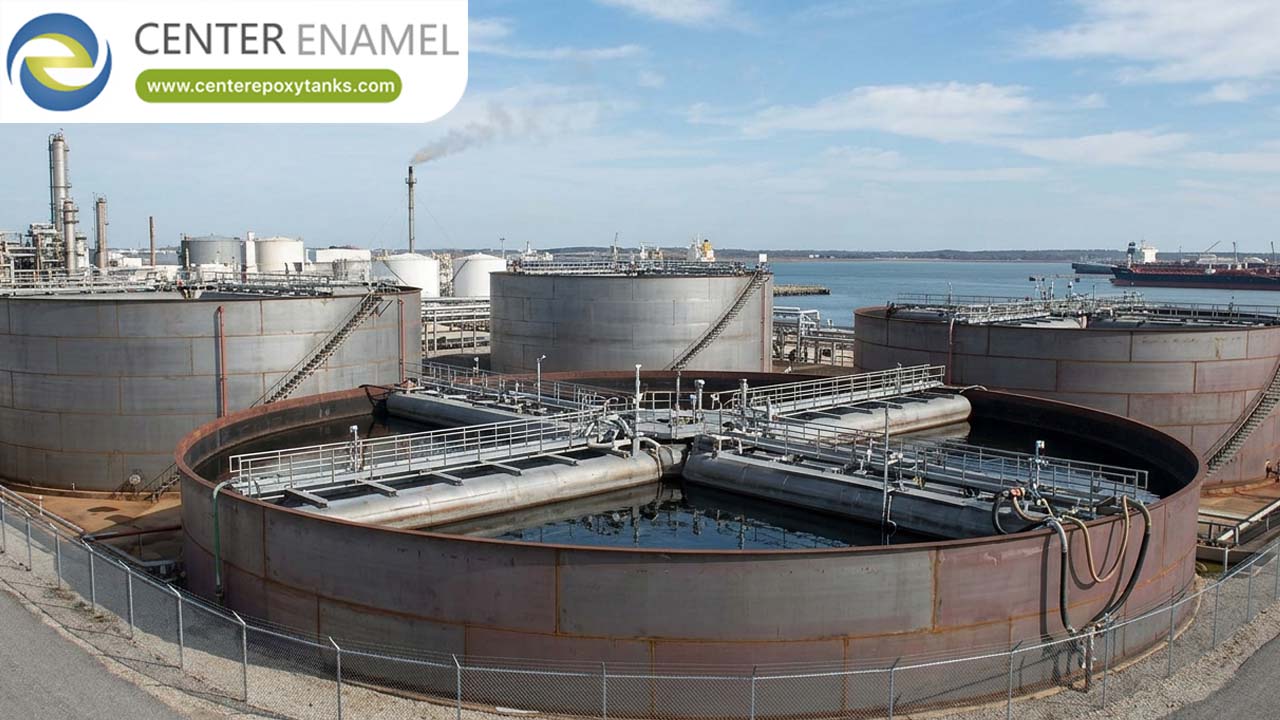
What is an External Floating Roof (EFR)? Industrial Storage Guide
An External Floating Roof (EFR) is a specialized storage tank roof designed to float directly on the surface of stored volatile liquids, such as crude oil or hydrocarbons, while remaining exposed to the atmosphere. Its primary engineering function is to minimize the "vapor headspace" to near zero, significantly reducing the evaporation of Volatile Organic Compounds (VOCs) and enhancing fire safety. Unlike Internal Floating Roofs (IFR) which are shielded by a fixed roof, an EFR is exposed to the elements, requiring unique design features—most notably a robust roof drainage system—to manage rainwater and snow accumulation. These tanks are the standard solution for very large-diameter storage applications where fixed-roof tanks would create hazardous, high-volume vapor spaces.
The Engineering Mechanics: How an EFR Functions
The operation of an EFR is governed by buoyancy, seal integrity, and moisture management.
● Buoyancy & Vertical Tracking: The roof deck is supported by pontoons or a full-contact deck that provides the lift required to float on the liquid. As the product level changes, the roof travels vertically, maintaining constant contact with the liquid to prevent vapor formation.
● Rim Seal System: A dual-seal configuration (Primary and Secondary) is essential. The primary seal provides the initial vapor barrier at the tank wall, while the secondary seal serves as a wiper to clear product residue, ensuring VOC emissions stay well within regulatory limits.
● Roof Drainage System (The Unique EFR Challenge): Because the EFR is exposed to rain and snow, the roof must be equipped with an automated drainage system. This is typically a flexible hose or an articulated pipe system that allows the roof to move up and down without kinking or leaking, safely discharging accumulated rainwater outside the tank shell.
External vs. Internal Floating Roofs: Key Differences
Feature | External Floating Roof (EFR) | Internal Floating Roof (IFR) |
Environmental Exposure | Exposed (Rain/Snow/Wind) | Protected (By fixed roof) |
Maintenance Needs | Higher (Drainage system care) | Lower |
Typical Diameter | Very Large (High capacity) | Small to Large |
Vapor Control | Excellent | Excellent |
Structural Complexity | High (Due to drainage/weather) | Lower |
Engineering Standards & Procurement Benchmarks
Selecting an EFR tank is a high-capital investment. To ensure asset longevity and regulatory compliance, project teams should prioritize the following:
1. API 650 Compliance: The design and fabrication must strictly adhere to API 650 (Appendix C). This standard governs the structural tolerances, pontoon design, and seal efficiency requirements.
2. Drainage Integrity: The roof drainage system is the most common point of failure. Require documented hydrostatic testing of the drain system to prove it can handle heavy precipitation without leaking into the product.
3. Seal Technology: Given the exposure to wind and temperature fluctuations, specify high-performance seals (such as Mechanical Shoe Seals) that can adapt to shell irregularities and tank deformations.
4. Weather Protection: In climates with heavy snowfall, ensure the deck structure is engineered to handle "snow load" (the weight of accumulated snow) without sinking the roof.
Frequently Asked Questions (FAQ)
Q: Why choose an EFR over an IFR for large tanks?
A: EFRs are often the standard for very large-diameter tanks where building a fixed roof of similar scale would be structurally prohibitive or cost-inefficient. They are the "workhorse" of the global crude oil and hydrocarbon storage industry.
Q: Are EFR tanks safe during extreme weather?
A: Modern EFR tanks are engineered with sophisticated drainage and robust roof structures to handle heavy rain and snow. However, they do require proactive maintenance to ensure drains remain clear and the deck remains free of excessive debris.
Q: Can EFR tanks reduce my facility's insurance premiums?
A: Yes. By significantly reducing the volatile vapor space above the product, EFR tanks drastically improve the fire safety profile of the facility, which is a major factor for insurance carriers and safety inspectors.
Partnering for Reliable Infrastructure
The installation of an External Floating Roof system is a major capital project. Success requires precise structural engineering, high-quality seal components, and rigorous adherence to international safety standards.
Are you evaluating storage solutions for high-volume hydrocarbon or crude oil projects?
[Contact our engineering team] to discuss your project’s capacity, regional weather challenges, and emission control targets. We can provide a structural load assessment and a design proposal tailored to your site's specific environmental and operational requirements.
Would you like a detailed technical brief on the difference between mechanical shoe seals versus liquid-mounted seals for EFR emission control?


