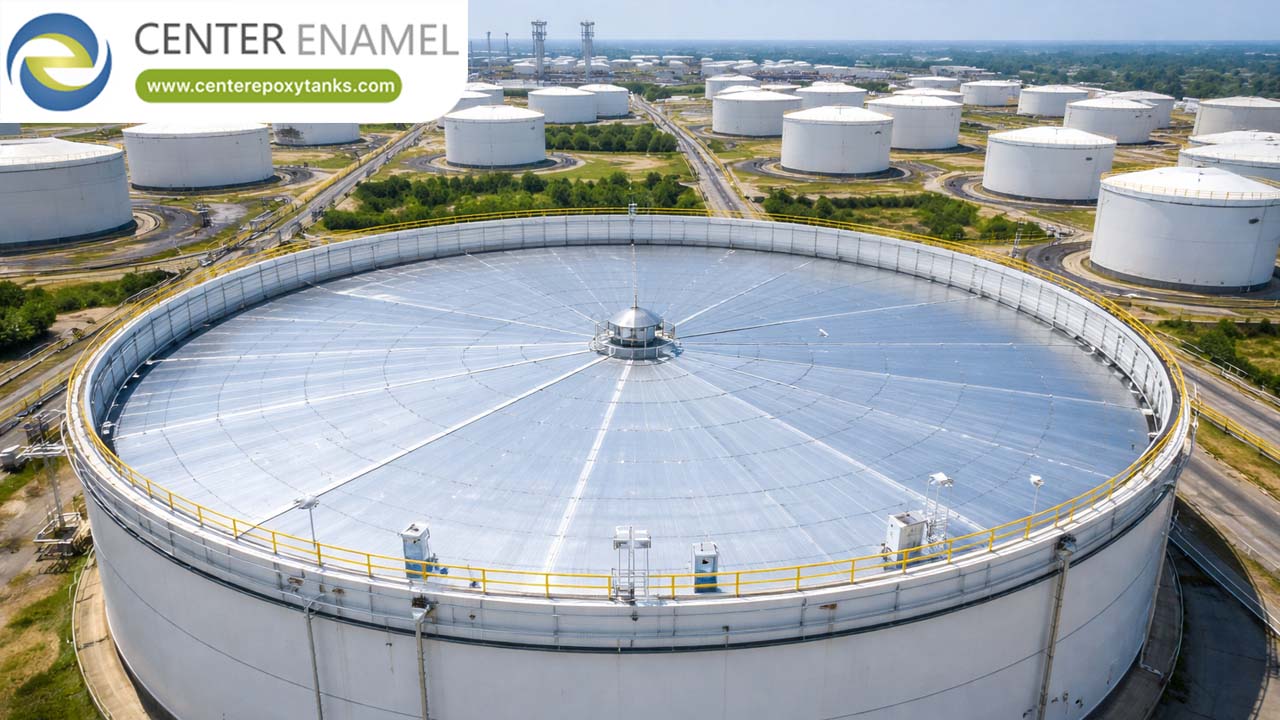
What is a Floating Roof? Industrial Design & Vapor Control Guide
A floating roof is a specialized component used within industrial storage tanks to eliminate the "vapor headspace" above the stored liquid. By floating directly on the surface of the product, the roof moves vertically as liquid levels rise and fall. This design effectively suppresses evaporation and drastically reduces Volatile Organic Compound (VOC) emissions by preventing product vapors from accumulating in the tank. Floating roofs are essential for storing volatile liquids like gasoline, crude oil, and organic solvents, ensuring compliance with strict environmental air-quality regulations and enhancing facility safety by minimizing the presence of flammable vapors.
How the Floating Roof Works
The engineering objective of a floating roof is to achieve a "zero headspace" environment. The mechanism relies on three core components:
● Buoyancy & Tracking: The roof deck is equipped with buoyant pontoons. These allow the structure to sit precisely on the liquid surface, moving up and down with the tank's contents throughout the filling and discharge cycles.
● Seal Systems: A flexible rim seal bridges the gap between the edge of the floating roof and the tank shell. Primary and secondary seals provide a "wiping" action, ensuring that product vapors are contained and not released into the space above.
● Anti-Rotation Systems: To ensure the seals remain intact and the roof does not tilt, guide poles or cable systems maintain the roof's alignment as it travels within the tank.
Types of Floating Roof Configurations
1. Internal Floating Roof (IFR):
2. The most common modern solution. A floating roof is installed inside a tank that also features a permanent fixed outer roof. The outer roof provides structural protection from the elements (rain, snow, debris), while the internal floating roof provides the emission control. This is the gold standard for long-term environmental compliance.
3. External Floating Roof (EFR):
4. The floating roof is exposed directly to the atmosphere. While historically common for very large-diameter crude oil tanks, they are less common in modern design due to the need for complex, roof-mounted drainage systems to handle rainwater accumulation.
Comparative Overview: Floating vs. Fixed Roof
Feature | Floating Roof Tank | Fixed Roof Tank |
Vapor Headspace | Near Zero | Large |
VOC Emissions | Minimal (Compliant) | High (Requires recovery) |
Fire Safety | Higher (Reduced O₂ contact) | Lower (Oxygen-rich headspace) |
Product Loss | Very Low (Low evaporation) | Moderate to High |
Complexity | High (Moving seals) | Low (Static structure) |
Key Engineering Benchmarks for Procurement
When selecting a floating roof system, procurement and project engineers should evaluate the following:
● Seal Integrity: For strict environmental compliance, specify a Mechanical Shoe Seal combined with a secondary wiper seal. This dual-seal approach is the industry benchmark for VOC reduction.
● API 650 Compliance: Ensure the design and fabrication strictly follow API 650 (Appendix C for internal floating roofs), which dictates material specifications, deflection tolerances, and safety standards.
● Material Compatibility: The roof material (typically high-grade aluminum or stainless steel) must be chemically compatible with the stored product. For aggressive or corrosive media, stainless steel is the preferred specification for structural longevity.
Frequently Asked Questions (FAQ)
Q: Do I need a floating roof for water storage?
A: Generally, no. Floating roofs are specifically designed to suppress the evaporation of volatile products (chemicals, hydrocarbons). For potable water or industrial wastewater, fixed roofs or GFS covers are standard unless specific vapor capture is required.
Q: Can I retrofit an existing tank with a floating roof?
A: Yes. Retrofitting an existing fixed-roof tank with an internal floating roof is a highly effective way to bring an aging asset up to modern environmental compliance standards without replacing the entire tank shell.
Q: What maintenance is required?
A: Periodic inspection of the rim seals is essential. If the seal is damaged, vapor suppression is compromised. Modern seals are designed for durability, but they should be inspected as part of your annual facility maintenance schedule.
Optimizing Your Infrastructure for Emissions Control
Integrating a floating roof system is a strategic operational upgrade that pays for itself through reduced product loss, improved site safety, and immediate compliance with environmental regulations.
Are you evaluating storage solutions for volatile chemicals or hydrocarbons?
[Contact our engineering team] to discuss your specific product data, capacity requirements, and emission control targets. We can provide a structural load assessment and a design proposal for either new IFR (Internal Floating Roof) construction or retrofitting your existing infrastructure.
Would you like a detailed technical brief on the difference between "contact" floating roofs versus "non-contact" floating roofs for high-viscosity product storage?


