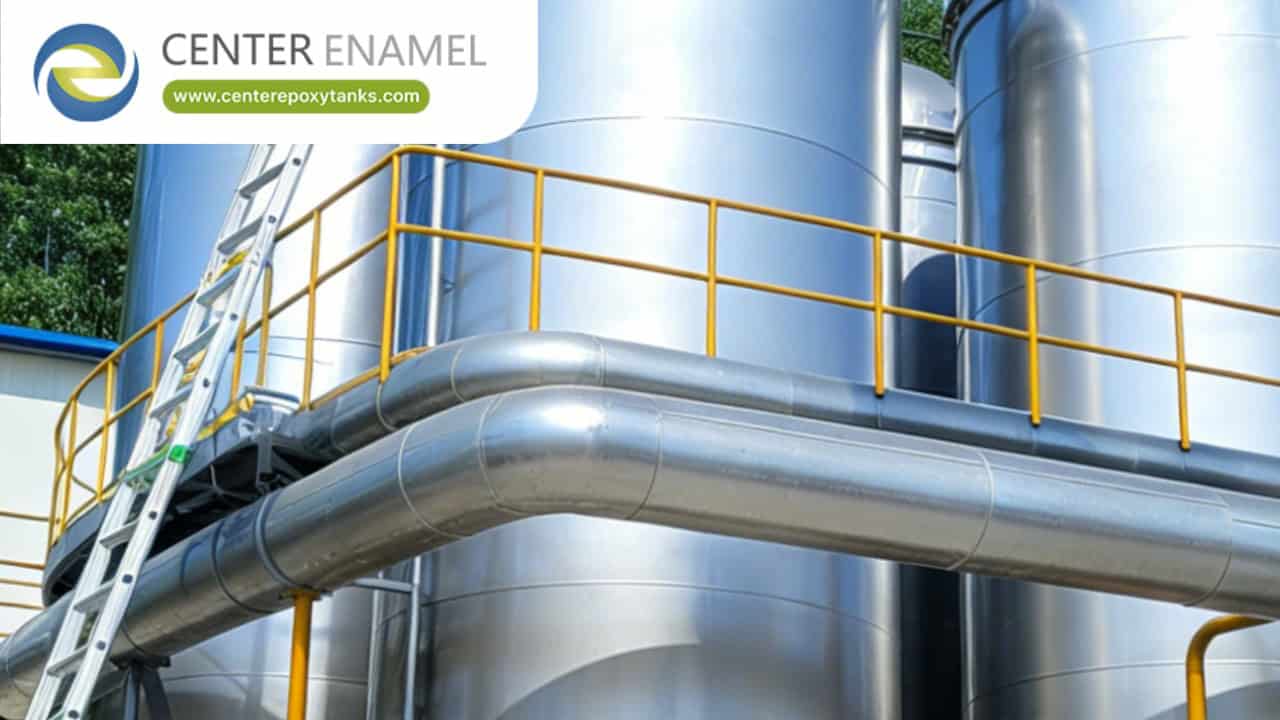
What Is an Edible Oil Storage Tank? Industrial Design and Features
What Is an Edible Oil Storage Tank?
An edible oil storage tank is a large-capacity, food-grade industrial vessel designed to safely store bulk vegetable, seed, and animal oils prior to refining, bottling, or global distribution.
Unlike standard liquid storage, edible oils (such as palm, soybean, canola, and sunflower oil) are highly susceptible to environmental degradation. A specialized edible oil tank operates as a controlled environment designed to prevent the rise of free fatty acids (FFA), halt rancidity, and maintain the structural integrity of the oil.
The primary functions of these industrial tanks include:
Oxidation Prevention: Oxygen is the primary catalyst for oil degradation. These tanks utilize airtight sealing and inert gas injection to completely isolate the product from ambient air.
Thermal Regulation: Many edible oils, particularly palm oil and coconut oil, will crystallize or solidify at room temperature. Tanks must maintain strict thermal control to keep the oil in a pumpable state without scorching it.
Contamination Defense: Edible oils easily absorb odors, moisture, and chemical residues. Food-grade tanks provide a sterile, non-reactive barrier that protects the flavor profile and complies with strict FDA and international food safety standards.
Critical Engineering Features
In B2B industrial operations, a single compromised tank can ruin hundreds of thousands of liters of product. To ensure absolute quality control, edible oil tanks are equipped with specialized engineering features:
Inert Gas Blanketing (Nitrogen/Argon): Automated valve systems continuously monitor internal headspace pressure. As oil is drawn out, food-grade nitrogen gas is injected to displace oxygen, creating a protective "blanket" over the oil's surface.
Heating Systems: To prevent high-saturated-fat oils from freezing, tanks utilize internal hot water coils or external dimple heating jackets. Direct steam is strictly avoided to prevent localized overheating, which burns the oil and degrades its quality.
Thermal Insulation: Tanks are wrapped in high-density mineral wool or polyurethane foam, then covered in metal cladding. This maintains internal temperatures and reduces the energy costs of continuous heating.
Clean-In-Place (CIP) Integration: Automated rotary spray balls are installed at the top of the tank to blast the interior with hot water and food-safe sanitizers, ensuring complete sterilization between batches without requiring confined-space entry.
Material and Configuration Comparison
Choosing the right material depends on the scale of the tank farm and the refinement stage of the oil.
Material Type | Best Application | Key Industrial Benefits |
AISI 304 / 316L Stainless Steel | Refined, premium, and cold-pressed oils. | Completely non-porous, highly corrosion-resistant, and requires no internal lining. The industry standard for ready-to-consume oils. |
Glass-Fused-to-Steel (GFS) | Massive bulk storage and crude oil tank farms. | Combines the strength of steel with the chemical resistance of glass. Exceptional cost-efficiency for very large volumes; highly resistant to abrasion and degradation. |
Epoxy-Lined Carbon Steel | Crude oil prior to refinement. | Economical for massive capacities. Requires a specialized food-grade epoxy lining to prevent rust and chemical reactions with the oil. |
Frequently Asked Questions (FAQ)
How do you prevent palm oil from freezing in a storage tank?
Palm oil solidifies at ambient temperatures. Industrial tanks prevent freezing by using internal hot water coils or external heating jackets to maintain the oil between 35°C and 45°C (95°F - 113°F). Heavy external insulation traps this heat, ensuring the oil remains liquid and pumpable year-round.
Why is nitrogen blanketing critical for edible oil?
When edible oil is exposed to oxygen, it undergoes oxidation, leading to a rise in free fatty acids (FFA) and causing the oil to go rancid. Nitrogen is an inert gas heavier than oxygen. Pumping it into the tank's headspace forces oxygen out, effectively pausing the degradation process and extending shelf life.
What is the difference between crude and refined oil storage?
Crude edible oils (unrefined) often contain higher moisture levels, gums, and impurities, allowing them to be stored in large Glass-Fused-to-Steel (GFS) or epoxy-lined carbon steel tanks. Refined oils are ready for human consumption and require pristine environments, making highly polished AISI 304 or 316L stainless steel the mandatory choice to prevent any flavor contamination.
Do edible oil tanks require conical bottoms?
It depends on the process. Tanks used for settling freshly pressed oil or for processing often feature conical bottoms (sloped at 30° to 45°) to allow water and sediment to gather at a single low point for easy purging. Massive bulk storage tanks, however, typically use flat bottoms to maximize volumetric capacity and minimize structural costs.


