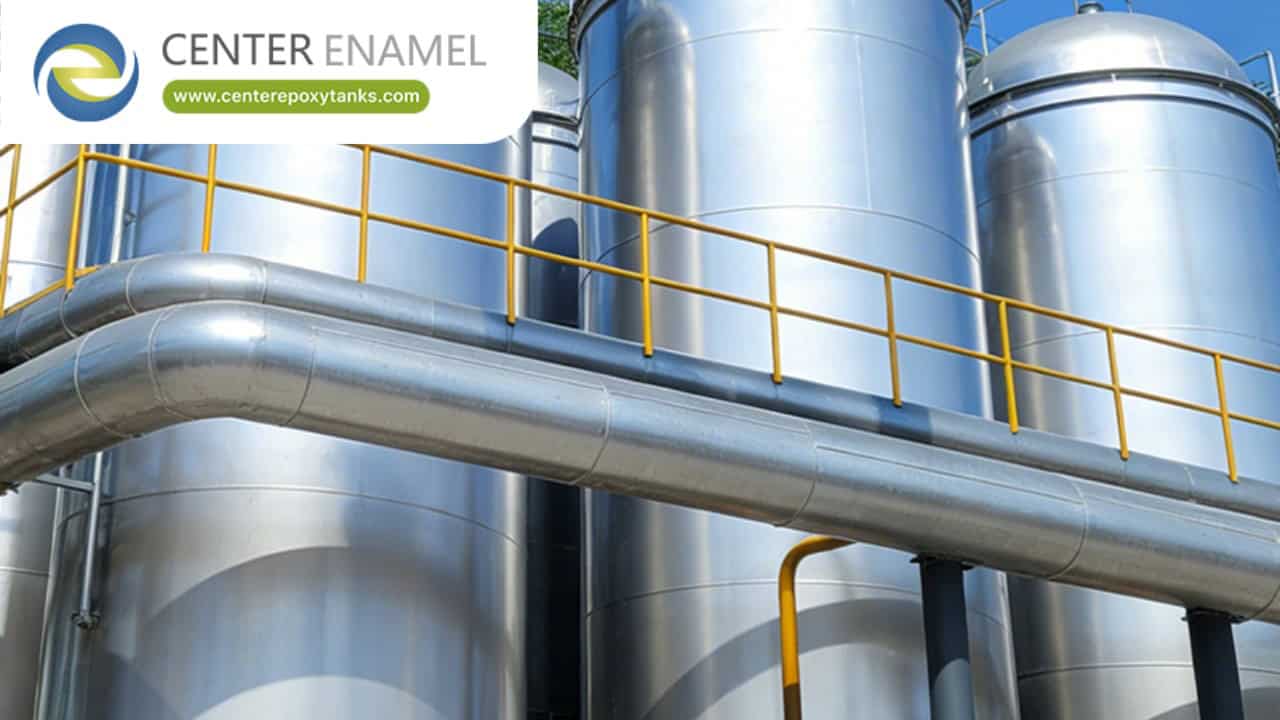
What Is a Vegetable Oil Storage Tank? Industrial Design and Features
What Is a Vegetable Oil Storage Tank?
A vegetable oil storage tank is a large-scale, food-grade industrial vessel engineered specifically to hold bulk quantities of edible oils (such as soybean, canola, sunflower, and palm oil) prior to processing, bottling, or transport.
Unlike standard chemical or water storage, vegetable oil requires strict environmental controls to prevent the development of free fatty acids (FFA), rancidity, and crystallization. The primary functions of these tanks include:
Thermal Regulation: Many vegetable oils, particularly palm and coconut oil, solidify or crystallize at ambient temperatures. Storage tanks utilize specialized heating and insulation systems to keep the oil in a liquid, pumpable state without burning it.
Oxidation Prevention: Exposure to oxygen degrades edible oils rapidly, altering their taste and reducing shelf life. Industrial tanks use hermetic seals and inert gas blanketing to completely isolate the oil from ambient air.
Contamination Defense: Edible oils easily absorb odors and chemical residues. Dedicated food-grade tanks provide a completely sterile, non-reactive environment that protects the structural integrity and flavor profile of the oil.
Critical Design Features
Vegetable oil storage involves massive volumes, meaning a single compromised tank can result in significant financial loss. To ensure product safety, industrial tanks incorporate specific engineering features:
Materials of Construction: While carbon steel lined with food-grade epoxy is sometimes used for massive bulk storage, AISI 304 stainless steel is the industry standard for refined vegetable oils. It is non-porous, corrosion-resistant, and requires no internal coatings that could chip or degrade.
Heating Coils and Jackets: Tanks are often equipped with internal hot water coils or external dimple heating jackets. Direct steam heating is avoided because localized overheating (scorching) degrades the oil's quality.
Thermal Insulation: To maintain consistent internal temperatures and reduce energy costs, tanks are wrapped in thick layers of mineral wool or polyurethane insulation, which is then covered by an outer metal cladding.
Nitrogen Blanketing Systems: Built-in valves continuously monitor internal pressure and inject nitrogen gas into the headspace as oil is drawn out, ensuring oxygen never touches the product surface.
Tank Configuration Comparison
Feature | Flat Bottom Tanks | Conical Bottom Tanks |
Primary Use | Massive bulk storage (100,000+ Liters). | Processing, settling, and complete drainage. |
Footprint | Highly space-efficient for high-volume storage. | Requires structural legs; larger footprint per liter. |
Drainage | Leaves a slight residue; requires mechanical pumping or floor sweeping to empty fully. | 100% gravity-assisted drainage; easy to clean and purge sediment. |
Cost | More economical for large-scale tank farms. | Higher manufacturing cost due to structural requirements. |
Frequently Asked Questions (FAQ)
How do you keep vegetable oil from freezing in a storage tank?
Vegetable oils with high saturated fat content (like palm or coconut oil) will solidify at room temperature. Tanks prevent this using internal hot water coils or external heating jackets. The entire tank is also heavily insulated to trap the heat and maintain a consistent, warm temperature that keeps the oil pumpable.
Why use nitrogen in a vegetable oil tank?
Nitrogen is an inert gas that is heavier than oxygen. When pumped into the headspace of a tank, it forms a protective blanket over the vegetable oil and forces oxygen out through a vent. This completely halts the oxidation process, preventing the oil from going rancid during long-term storage.
Can carbon steel be used for vegetable oil storage?
Yes, carbon steel is often used for crude vegetable oil or for massive bulk storage (millions of liters) where stainless steel is cost-prohibitive. However, the carbon steel must be treated or coated with a specialized, food-grade epoxy lining to prevent rust and chemical reactions. For refined, ready-to-consume oils, stainless steel is heavily preferred.
How are industrial vegetable oil tanks cleaned?
Tanks use a Clean-In-Place (CIP) system. Automated rotary spray balls are permanently mounted inside the tank roof. Between batches, these spray balls blast the interior walls with hot water, mild food-safe caustic solutions, and sanitizers, ensuring the tank is sterilized without requiring a worker to enter a confined space.


