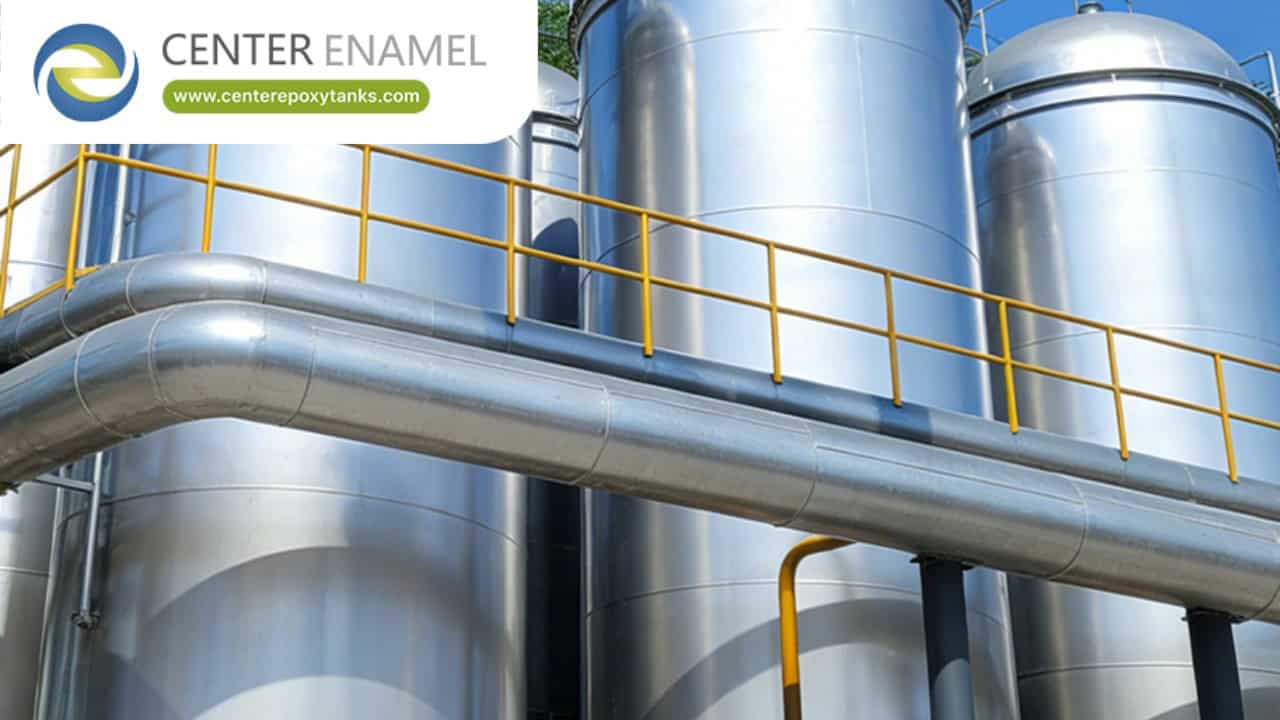
What Is a Coconut Oil Storage Tank? Industrial Design and Features
What Is a Coconut Oil Storage Tank?
A coconut oil storage tank is a specialized, food-grade industrial vessel engineered to store bulk quantities of crude or refined coconut oil.
Because coconut oil has a naturally high concentration of saturated fats (specifically lauric acid), it presents a unique storage challenge: it solidifies at temperatures below 24°C (76°F). Therefore, a coconut oil storage tank is not just a holding vessel, but an actively temperature-controlled environment designed to keep the oil liquid, pumpable, and free from degradation prior to processing, bottling, or transport.
The primary functions of these industrial tanks include:
Strict Thermal Management: Tanks must supply gentle, consistent heat to prevent the oil from freezing into a solid block, while avoiding localized overheating (scorching) which degrades the oil's color, flavor, and chemical structure.
Oxidation and Moisture Prevention: Like all edible oils, coconut oil is susceptible to oxidation and rancidity when exposed to oxygen or moisture. Specialized sealing and gas blanketing preserve the product's shelf life.
Sanitary Storage: Dedicated food-grade tanks provide a sterile, non-reactive barrier that complies with FDA and international food safety standards, preventing contamination from odors or chemical residues.
Critical Engineering Features
To handle the specific thermal and chemical properties of coconut oil safely, these tanks are equipped with precise engineering features:
Heating Systems (Jackets or Coils): This is the most critical feature. Coconut oil tanks utilize external dimple jackets or internal hot water coils to maintain an internal temperature of typically 27°C to 32°C (80°F - 90°F). High-pressure direct steam is strictly avoided because it can burn the oil.
Heavy-Duty Thermal Insulation: To minimize energy costs and ensure uniform temperature distribution, the tanks are wrapped in high-density polyurethane foam or mineral wool, which is then shielded by a protective outer metal cladding.
Inert Gas Blanketing: Automated systems pump food-grade nitrogen gas into the headspace of the tank. This displaces ambient oxygen and moisture, effectively pausing the oxidation process and preventing the buildup of free fatty acids (FFA).
Materials of Construction: Because coconut oil contains lauric acid, which can be mildly corrosive to certain metals over time, AISI 304 or 316L stainless steel is the industry standard. It is non-porous and highly resistant to acidic degradation.
Tank Configuration Comparison
Feature | Conical Bottom Tanks | Flat Bottom Tanks |
Primary Application | Processing, daily production lines, and settling. | Massive bulk storage (farms holding 100,000+ liters). |
Drainage Efficiency | 100% gravity-assisted complete drainage; ideal for clearing crystallized sediment. | Requires mechanical pumping; leaves slight residue at the bottom. |
Heating Dynamics | Easier to maintain uniform heat across smaller, tapered volumes. | Requires extensive heating coil networks to prevent "cold spots" at the base. |
Structural Footprint | Requires supportive legs or skirts; taller profile. | Highly space-efficient; rests directly on concrete foundations. |
Frequently Asked Questions (FAQ)
At what temperature should coconut oil be stored in bulk?
To keep coconut oil in a liquid, pumpable state without degrading its quality, industrial storage tanks typically maintain a temperature between 27°C and 32°C (80°F to 90°F). If it drops below 24°C (76°F), the oil will begin to crystallize and solidify.
Can you use steam to heat a coconut oil storage tank?
Direct high-pressure steam is generally avoided. Coconut oil is highly sensitive to localized overheating (scorching), which darkens the oil and ruins its flavor profile. Instead, low-pressure hot water coils, thermal fluid tracing, or warm water dimple jackets are used to provide gentle, even heat.
Why do coconut oil tanks need nitrogen blanketing?
Even though coconut oil is highly stable compared to other vegetable oils, extended exposure to oxygen and ambient humidity will still cause oxidation and increase free fatty acid (FFA) levels. Nitrogen blanketing forces oxygen out of the tank, creating a protective, inert environment that drastically extends the oil's shelf life.
How are crystallized deposits cleaned from the tank?
Tanks utilize automated Clean-In-Place (CIP) systems. If residual oil crystallizes on the tank walls, rotary spray balls mounted at the top of the tank blast the interior with hot water and mild, food-safe caustic solutions to melt and flush the residue, ensuring complete sterilization between batches.


