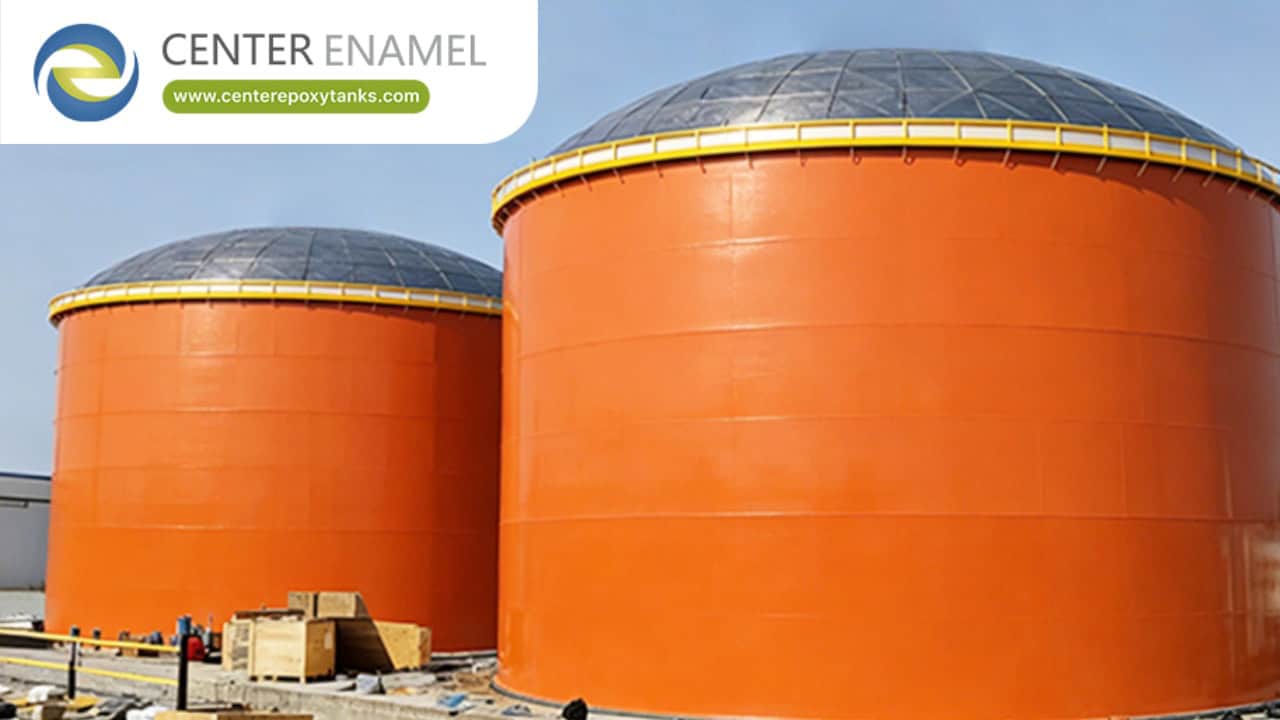
What is an API 620 Storage Tank?
An API 620 storage tank is a welded steel tank designed to API Standard 620 for operating pressures up to 15 psig and temperatures as low as -270°C. It stores liquefied gases, refrigerated products, and volatile liquids that exceed the atmospheric-pressure scope of API 650.API Standard 620 governs the design and construction of large, welded, low-pressure storage tanks — vessels that operate above atmospheric pressure but below the pressure-vessel threshold, and at temperatures from ambient down to cryogenic. Where API 650 stops at near-atmospheric oil service, API 620 begins, with combined-stress analysis replacing the simple one-foot method.
Typical API 620 tanks include horizontal and vertical cylindrical vessels for anhydrous ammonia, LPG under mild refrigeration, and refrigerated products such as LNG feedstocks. Dome roofs, thicker shells, and pressure-capable anchorage reflect a design regime where internal pressure is a primary load rather than an afterthought.
When API 620 Is the Only Correct Standard
Products stored above atmospheric pressure, or refrigerated to sub-zero temperatures, fall outside API 650's envelope. Choosing the wrong code creates a vessel that is either unsafe or uneconomic.
l Vapor pressure of stored product exceeds API 650 internal pressure limits.
l Refrigerated service demands materials and weld procedures qualified for low temperature.
l Combined loading from pressure, wind, and seismic requires true stress analysis.
The API 620 Engineering and Construction Path
API 620 projects follow a stress-analysis-driven sequence:
1. Process Envelope Definition: Product vapor pressure, operating and design temperatures, fill levels, and external loads define the governing design conditions.
2. Combined Stress Analysis: Shell, roof, and anchorage are analyzed for membrane and bending stresses under pressure plus liquid, wind, and seismic combinations per the standard.
3. Material and Weld Qualification for Temperature: Plate and weld metals are selected with impact testing to match the design metal temperature, with procedures qualified accordingly.
4. Pressure and Load Testing: Pneumatic or hydrostatic testing with settlement and foundation monitoring verifies the vessel before insulation and commissioning.
API 620 vs API 650 vs ASME Section VIII Vessels
Technical Parameter | API 620 Storage Tank | API 650 Storage Tank | ASME Section VIII Vessel |
Design Pressure Range | Up to 15 psig | Atmospheric plus limited Annex F pressure | Above 15 psig, full pressure-vessel rules |
Temperature Capability | Ambient down to -270C refrigerated service | Ambient and moderate heated service | Broad, defined by material stress tables |
Analysis Method | Combined stress analysis of shell and roof | Rule-based one-foot shell method | Full pressure-vessel design formulas |
Typical Products | Anhydrous ammonia, LPG, refrigerated gases | Crude and refined products | Process gases and high-pressure liquids |
API 620 Storage Tank Applications
l Anhydrous ammonia storage for fertilizer production and distribution
l Refrigerated LPG and butane storage at import terminals
l LNG feed and refrigerated hydrocarbon service at gas plants
l Liquid fertilizer and chemical storage above atmospheric pressure
l Volatile product storage requiring pressure-capable dome roofs
l Aerospace and industrial gas cryogenic applications
Key Advantages of API 620 Storage Tanks
1. Pressure Capability Without Full Vessel Cost
API 620 captures the 0 to 15 psig band with rigorous analysis but without the full burden of ASME VIII stamping — the economic sweet spot for low-pressure liquid storage.
2. Engineered for Extreme Temperatures
The standard's low-temperature material and impact-testing rules make refrigerated and cryogenic storage safe and predictable, extending the same auditability API 650 gives oil terminals.
3. Stress-Analysis Transparency
Documented combined-stress calculations let owners and reviewers see exactly how pressure, liquid, wind, and seismic loads interact — a decisive advantage in seismic regions and high-wind coastal sites.
Quality Standards and Proven References
Center Enamel engineers and manufactures welded steel storage tanks in accordance with API 650, API 620, and API 12F, with in-service repairs and alterations executed under API 653 discipline. Manufactured under ISO 9001 and ISO 45001 certified quality systems and certified to EN 1090, the company's tank projects span crude oil, refined product, chemical, and water service — with references including PetroChina and Sinopec and deliveries to more than 100 countries.
Frequently Asked Questions (FAQ)
Q: What pressure can an API 620 tank hold?
A: API 620 covers design pressures up to 15 psig internal; above that threshold the vessel falls under pressure-vessel codes such as ASME Section VIII.
Q: Can API 620 tanks store LNG?
A: API 620 Annex R addresses refrigerated tanks including LNG service, with material and testing requirements matched to cryogenic temperatures.
Q: Is API 620 more expensive than API 650?
A: An API 620 tank uses thicker shells, stress analysis, and low-temperature materials where required, so unit storage cost is higher — justified when the product's vapor pressure demands it.
Q: What is the expected lifespan of a professionally engineered steel tank?
A: Steel tanks designed and built to recognized codes (API 650, API 620, AWWA D100, or ASME Section VIII) and maintained under scheduled inspection, coating, and repair programs routinely deliver service lives exceeding 30 years — and tanks managed under API 653-class integrity programs commonly remain in safe service for 50 years or more.


