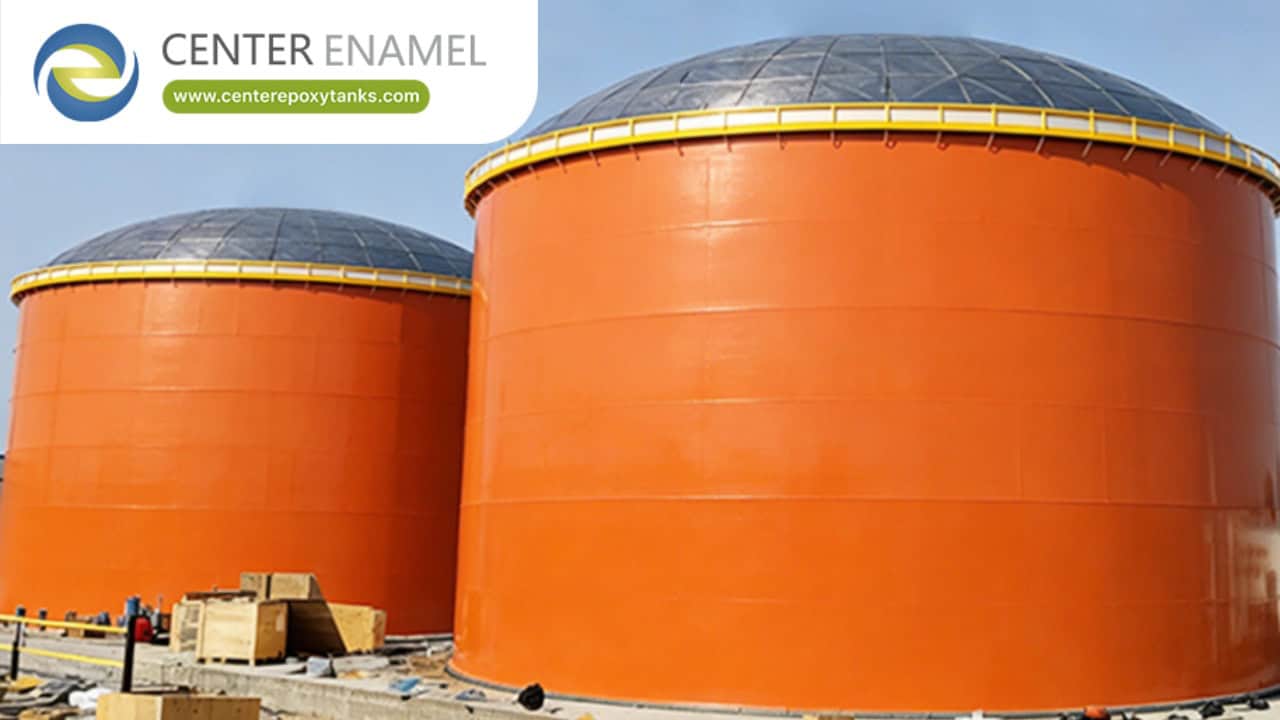
What is an API 12F Tank?
An API 12F tank is a shop-welded steel tank built to API Spec 12F in standardized capacities from 90 to 750 barrels for storing crude oil, produced water, and other liquids at upstream well sites, tank batteries, and small production facilities.API Specification 12F defines shop-fabricated, welded steel storage tanks in eight standard sizes — 90, 100, 150, 200, 210, 300, 400, and 500 barrels, plus the 750-barrel class in common industry use — for upstream petroleum service. Because dimensions, shell thicknesses, roof and bottom details, and fittings are standardized, 12F tanks can be ordered by size number and shipped to site ready to set on a simple foundation.
This standardization makes 12F the default choice for wellhead tank batteries, saltwater disposal, and temporary storage: predictable engineering, short lead times, interchangeable fittings, and straightforward API 653-aligned inspection later in life.
Why Upstream Operators Standardize on 12F
Oilfield storage rewards speed, predictability, and mobility. Custom field erection for a 300-barrel battery would be economically absurd; operators need code-recognition without engineering overhead.
l Drilling and completion schedules leave no time for custom tank engineering cycles.
l Leased sites and rapidly moving pads require relocatable, resalable assets.
l Insurance and state regulations still demand recognized fabrication standards.
How an API 12F Tank Is Built
12F tanks follow a streamlined shop fabrication flow:
1. Standard Design Release: The applicable 12F size is selected, with fitting options (heater, firetube, thief hatch, water drain) configured from the specification.
2. Shop Fabrication: Shell, bottom, and roof are cut, rolled, and welded in the shop under qualified procedures, with standard test and inspection points.
3. Shop Testing and Surface Preparation: Tanks are tested for fit and weld integrity, then abrasive blasted and coated internally and externally for oilfield service.
4. Delivery and Setting: The finished tank ships complete to site, is set on piers or a pad, and is tied into the battery — typically within days of arrival.
API 12F vs API 650 Field Tanks vs Fiberglass Oilfield Tanks
Technical Parameter | API 12F Shop-Welded Tanks | API 650 Field Erected Tanks | Fiberglass Oilfield Tanks |
Size Range | 90 to 750 barrels standard | 100 m3 to 50,000+ m3 custom | Small to mid capacities |
Delivery Model | Catalog sizes, ship complete, set in days | Site engineering and erection program | Shop-built, transportable |
Code Recognition | API 12F standard widely accepted by regulators | Full API 650 data book | ASTM and API 12P-style standards |
Service Life in Oilfield Duty | Decades with coating upkeep and API 653-style inspections | 30 to 50+ years managed life | Corrosion-free but UV and impact limitations |
API 12F Tank Applications
l Crude oil storage at individual wellheads and tank batteries
l Produced water and saltwater disposal storage
l Completion and workover fluid storage on pads
l Condensate and flowback storage at multi-well pads
l Temporary and leased-site storage requiring relocation
l Fuel and chemical storage at remote production facilities
Key Advantages of API 12F Tanks
1. Order-by-Number Simplicity
Standard sizes and fittings turn tank procurement into a catalog exercise — engineering hours approach zero, and delivery schedules compress to shop capacity rather than design cycles.
2. Fast Deployment and Relocation
Shipped complete and set with a crane in hours, 12F tanks move between pads as drilling programs advance, preserving asset value across leases.
3. Code Pedigree in a Small Package
API 12F fabrication meets the recognition regulators and insurers expect for hydrocarbon storage, giving small tanks the same standing as their field erected relatives.
Quality Standards and Proven References
Center Enamel engineers and manufactures welded steel storage tanks in accordance with API 650, API 620, and API 12F, with in-service repairs and alterations executed under API 653 discipline. Manufactured under ISO 9001 and ISO 45001 certified quality systems and certified to EN 1090, the company's tank projects span crude oil, refined product, chemical, and water service — with references including PetroChina and Sinopec and deliveries to more than 100 countries.
Frequently Asked Questions (FAQ)
Q: What sizes do API 12F tanks come in?
A: Standard 12F capacities are 90, 100, 150, 200, 210, 300, 400, and 500 barrels, with 750-barrel shop tanks also common in field practice.
Q: Can an API 12F tank hold produced water?
A: Yes. 12F tanks store produced water and saltwater routinely; interior coating selection is matched to the water chemistry and chloride content.
Q: How is an API 12F tank different from an API 650 tank?
A: 12F is a shop-welded, standardized-size specification for upstream oilfield use, while API 650 governs custom field erected tanks for terminal and refinery scale storage.
Q: What is the expected lifespan of a professionally engineered steel tank?
A: Steel tanks designed and built to recognized codes (API 650, API 620, AWWA D100, or ASME Section VIII) and maintained under scheduled inspection, coating, and repair programs routinely deliver service lives exceeding 30 years — and tanks managed under API 653-class integrity programs commonly remain in safe service for 50 years or more.


