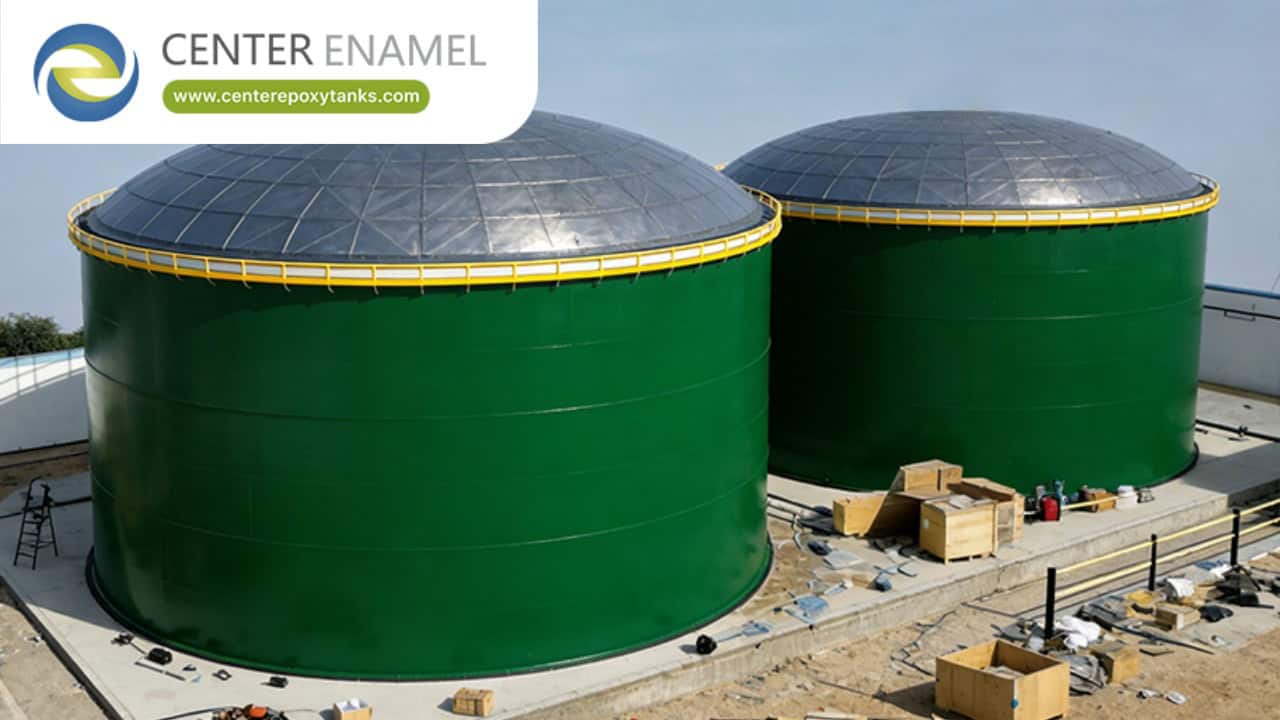
What Is an Above Ground Storage Tank (AST)?
An above ground storage tank (AST) is a storage vessel installed on or above the ground surface — vertical or horizontal, welded or bolted — holding oil, fuel, chemicals, or water at atmospheric pressure. ASTs range from 100 to over 50,000 cubic meters and are governed by API, UL, AWWA, and local containment rules.The AST family covers everything from a 200-gallon generator day tank to a 50,000-cubic-meter crude terminal vessel — the unifying traits are surface installation, atmospheric or low-pressure service, and visibility: every weld, coating, and fitting is inspectable without excavation. That inspectability is why regulators and insurers favor ASTs for high-volume and high-consequence products.
AST engineering centers on containment and integrity: secondary containment sized to the largest tank's volume, overfill prevention, venting and emergency relief, corrosion protection, and the inspection regimes of API 653, SPCC (40 CFR 112), and local codes. Within that envelope, buyers choose welded field-erected tanks, shop-built UL tanks, or bolted designs by capacity and service.
Why AST Ownership Is a Compliance Discipline
An AST is one of the most heavily regulated pieces of industrial equipment in existence. The tank itself is the easy part; the management system around it is what keeps the facility licensed.
l SPCC plans are mandatory for AST facilities above defined oil volumes.
l Containment, overfill, and leak detection requirements grow stricter with proximity to water.
l Inspection and repair documentation is auditable for the tank's whole life.
The AST Lifecycle Framework
A compliant AST program runs a continuous cycle:
1. Siting and Containment Design: Plot layout, separation distances, and secondary containment volume are engineered to code and SPCC criteria.
2. Code Construction and Registration: The tank is built to API 650/620, UL 142, or AWWA standards with a complete data book and registrations.
3. Operation with Safeguards: Overfill prevention, venting, cathodic protection, and leak detection run through the operating life.
4. Inspection, Repair, and Integrity Closure: API 653-class inspection intervals and documented repairs maintain fitness for service indefinitely.
AST Types and Their Niches
AST Type | Field Erected Welded (API 650) | Shop-Built UL 142 | Bolted Panel Tank |
Size Range | 100 to 50,000+ m3 | Up to ~200 m3 transportable | 20 to 60,000 m3 modular |
Typical Products | Crude, refined products, water | Diesel, fuel oil, lubricants | Water, wastewater, dry bulk |
Compliance Path | API 650 + API 653 + SPCC | UL listing + local fire code | AWWA D103 or EN standards |
Best Use | Terminal and refinery scale | Facility and generator fuel | Municipal and industrial liquids |
Above Ground Storage Tank Applications
l Petroleum terminals and refinery tankage
l Airport and municipal fuel farms
l Industrial chemical and process storage
l Fire protection and potable water reservoirs
l Generator and data center fuel systems
l Agricultural fertilizer and liquid storage
Key Advantages of Above Ground Storage Tanks
1. Total Inspectability
Every component is accessible for inspection, coating renewal, and repair — the structural reason ASTs achieve 30 to 50-year managed service lives.
2. Containment Engineering You Can See
Dikes, double bottoms, and leak detection make release prevention verifiable, which is exactly what SPCC and environmental regulators require.
3. Flexible Capacity and Product Change
ASTs are re-rated, relined, raised, and repurposed as business needs change — no excavation and no vessel replacement required.
Quality Standards and Proven References
Center Enamel engineers and manufactures welded steel storage tanks in accordance with API 650, API 620, and API 12F, with in-service repairs and alterations executed under API 653 discipline. Manufactured under ISO 9001 and ISO 45001 certified quality systems and certified to EN 1090, the company's tank projects span crude oil, refined product, chemical, and water service — with references including PetroChina and Sinopec and deliveries to more than 100 countries.
Frequently Asked Questions (FAQ)
Q: What does SPCC require for ASTs?
A: Facilities with aboveground oil storage above threshold volumes need a Spill Prevention, Control, and Countermeasure plan under 40 CFR 112, including containment, inspection, and personnel training provisions.
Q: How often are ASTs inspected?
A: Regulatory and integrity practice follows API 653 corrosion-rate-based intervals, commonly 5 to 10 years for external and up to 20 years for internal out-of-service inspection.
Q: Can an AST store drinking water?
A: Yes — water ASTs follow AWWA D100 (welded) or D103 (bolted) with NSF/ANSI 61 certified coatings and disinfection procedures.
Q: What is the expected lifespan of a professionally engineered steel tank?
A: Steel tanks designed and built to recognized codes (API 650, API 620, AWWA D100, or ASME Section VIII) and maintained under scheduled inspection, coating, and repair programs routinely deliver service lives exceeding 30 years — and tanks managed under API 653-class integrity programs commonly remain in safe service for 50 years or more.


