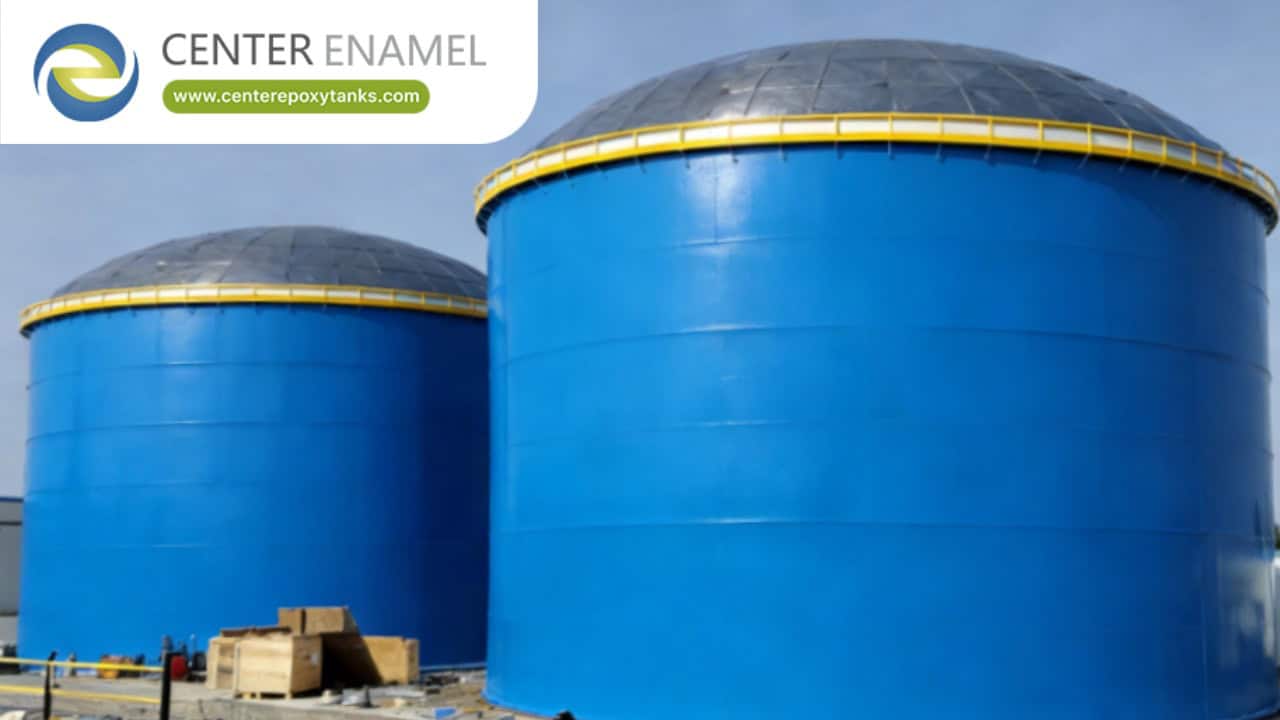
What Is a Vertical Steel Tank (100 to 60,000 m3)?
A vertical steel tank is a cylindrical, aboveground storage vessel standing on its base, with capacities from 100 to more than 60,000 cubic meters. Built to API 650, API 620, or AWWA D100, it stores oil, water, chemicals, and dry products with cone, dome, or floating roofs.
What Is a Vertical Steel Tank?
The vertical cylindrical tank is the default geometry of liquid bulk storage: a circle resists hydrostatic load evenly in every direction, so steel works equally around the circumference, and the footprint stays compact relative to stored volume. At 100 cubic meters it is a process day tank; at 60,000 cubic meters it is a crude terminal giant of roughly 80 meters diameter — the same code, wildly different engineering emphasis.
As capacity grows, everything scales: shell courses multiply and thicken at the base, foundations graduate from simple pads to engineered ringwalls and pile caps, and roof choice shifts from supported cones to self-supporting domes and external floating roofs for volatile products. The economics follow the same curve — cost per stored cubic meter falls steadily with size, which is why terminals consolidate volume into fewer, larger tanks.
Why Vertical Cylindrical Geometry Wins at Scale
Every alternative shape wastes material or land: rectangular vessels need stiffening, horizontal vessels multiply footprints, spheres demand pressure service to justify themselves. The vertical cylinder is optimal for atmospheric liquid storage — pure and simple.
l Hydrostatic pressure distributes uniformly, so plate thickness varies smoothly with depth.
l Single-roof coverage of a circular plan minimizes roof steel per stored volume.
l Uniform settlement behavior and simple instrumentation complete the practical case.
Sizing and Engineering a Vertical Steel Tank
Capacity drives the engineering sequence:
1. Capacity and Plot Optimization: Required volume is balanced against diameter-height plots, product evaporation, wind exposure, and pump suction needs to fix tank geometry.
2. Shell Course Engineering: Thicknesses follow the one-foot method course by course, with wind girder and seismic checks appropriate to the height-diameter ratio.
3. Roof and Annex Selection: Cone, dome, internal floating, or external floating roofs are matched to stored product and emission requirements.
4. Foundation Interface and Testing: Bearing loads feed the foundation design, and hydrotest settlement criteria close the engineering loop.
Vertical Steel Tank Across the Size Range
Technical Parameter | Small Vertical Tanks (100-1,000 m3) | Mid-Size Vertical Tanks (1,000-10,000 m3) | Large Vertical Tanks (10,000-60,000+ m3) |
Typical Diameter | 4 to 12 m | 12 to 40 m | 40 to 90 m |
Roof Types | Supported and self-supporting cones | Cones, domes, internal floating roofs | External floating roofs and large domes |
Foundation Type | Concrete slab or pad | Ringwall on competent soils | Engineered ringwall or pile-supported cap |
Cost per m3 Stored | Highest | Moderate | Lowest — scale economics dominate |
Vertical Steel Tank Applications
l Process day tanks and dosing vessels at plants
l Fuel storage for power generation and data centers
l Terminal crude and refined product storage
l Municipal potable and firewater reservoirs
l Food and beverage liquid storage at brewery scale
l Firefighting water and emergency reserves
Key Advantages of Vertical Steel Tanks
1. Scale Economics on Storage Cost
Cost per stored cubic meter falls continuously from 100 to 60,000 m3 — the structural argument behind terminal consolidation.
2. A Geometry Every Code Understands
The vertical cylinder is the native shape of API 650, AWWA D100, and EN 14015 design rules — the fastest path through engineering, approval, and inspection.
3. Capacity Flexibility by Course Addition
Shell courses can be added to many designs to increase height, and tank farms scale capacity tank by tank as demand grows.
Quality Standards and Proven References
Center Enamel engineers and manufactures welded steel storage tanks in accordance with API 650, API 620, and API 12F, with in-service repairs and alterations executed under API 653 discipline. Manufactured under ISO 9001 and ISO 45001 certified quality systems and certified to EN 1090, the company's tank projects span crude oil, refined product, chemical, and water service — with references including PetroChina and Sinopec and deliveries to more than 100 countries.
Frequently Asked Questions (FAQ)
Q: What is the largest practical vertical steel tank?
A: Field erected tanks above 60,000 m3 exist — diameters near and beyond 100 meters — with external floating roofs; practical limits are set by foundation economics and plot, not fabrication.
Q: Are small vertical tanks shop-built?
A: Tanks to roughly 200 to 400 m3 can ship complete by road; beyond that, panels are shop-fabricated and erected on site.
Q: Can vertical tanks store hot products?
A: Yes, with design temperature allowances in material selection, insulation, and detailing for thermal movement per the applicable code annexes.
Q: What is the expected lifespan of a professionally engineered steel tank?
A: Steel tanks designed and built to recognized codes (API 650, API 620, AWWA D100, or ASME Section VIII) and maintained under scheduled inspection, coating, and repair programs routinely deliver service lives exceeding 30 years — and tanks managed under API 653-class integrity programs commonly remain in safe service for 50 years or more.


