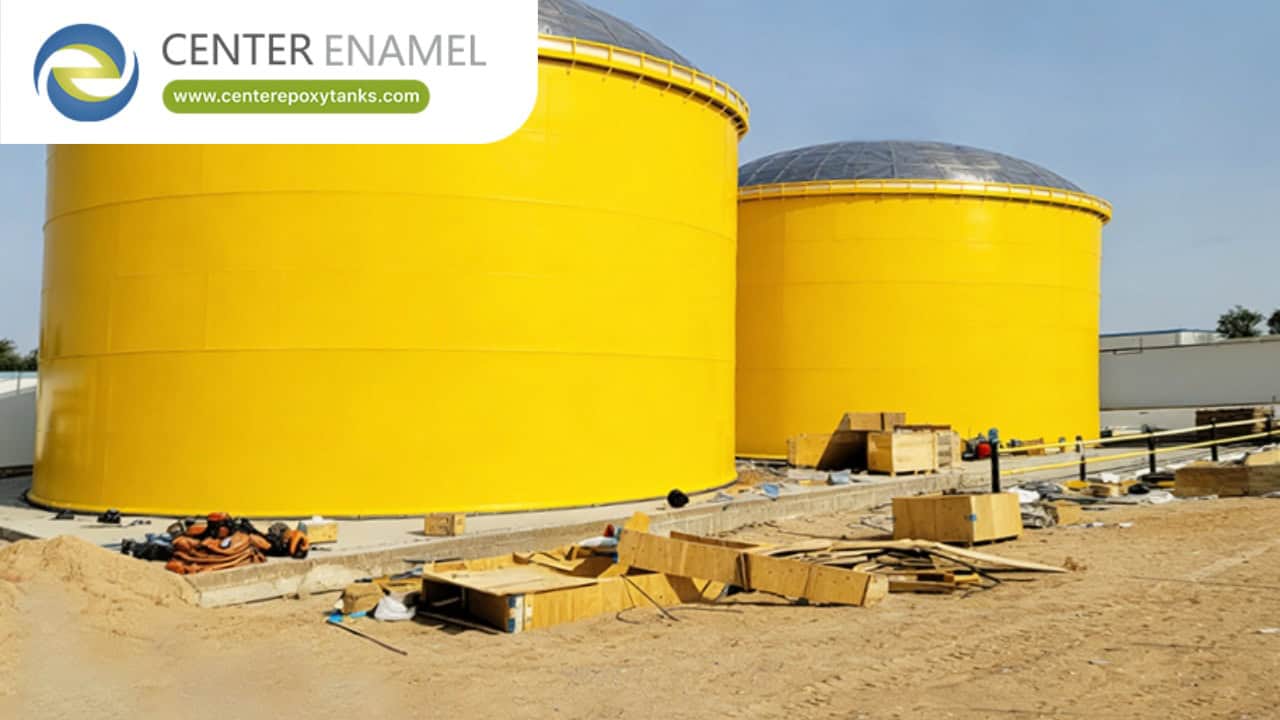
What Is a Turnkey Storage Tank Terminal?
A turnkey storage tank terminal is a bulk liquid storage facility delivered under a single contract — from site works, tankage, and piping to loading systems, instrumentation, and commissioning — with the contractor handing the owner an operational facility, not a set of components.
Terminals are systems, not collections of tanks. A fuel or chemical terminal interlocks tankage with transfer pipelines, metering, loading racks or marine manifolds, blending, vapor recovery, fire protection, containment, and a control system — each interface a potential failure point when contracted separately. Turnkey (EPC-style) delivery places engineering, procurement, and construction under one accountable party.
The turnkey model's value is interface elimination: one schedule, one quality system, one commissioning team, and one warranty. For owners in remote regions or entering new markets, it also transfers local-contracting risk to a contractor equipped to manage it, with performance guaranteed by contract rather than negotiated between vendors.
Why Multi-Contract Terminals Struggle
Every terminal delay worth studying traces to an interface: tanks ready with no piping contract awarded, power arriving after commissioning needed it, civil works failing tank tolerances. Turnkey exists to remove those seams.
l Interface gaps between tank, piping, and E&I contractors create commissioning chaos.
l Fragmented responsibility converts every problem into a blame negotiation.
l Owner-side engineering burden in multi-contract models consumes the intended savings.
The Turnkey Terminal Delivery Path
A turnkey program proceeds through owner-gated stages:
1. Concept and Definition: Throughput, product slate, berth or truck/rail interface, and plot strategy are fixed in a basis-of-design the owner approves.
2. Integrated Detailed Engineering: Civil, tank, piping, mechanical, electrical, and control design proceed as one model with clash-free interfaces.
3. Procurement and Construction: Long-lead equipment is ordered early; tanks, piping, and systems are constructed under a single site management structure.
4. Commissioning and Handover: Systems are energized, loops tested, and water-run before first product, closing with as-built documentation and operator training.
Turnkey EPC vs Multi-Contract Delivery
Delivery Aspect | Turnkey EPC Terminal | Multi-Contract Owner-Managed |
Accountability | One contractor answers for cost, schedule, and performance | Owner arbitrates between vendors |
Interface Risk | Engineered out within one design model | The primary source of delay and claims |
Owner Engineering Load | Minimal — owner manages one contract | Heavy owner-side engineering and expediting |
Schedule Certainty | Fixed-price and date-driven by contract | Cumulative float erosion across contracts |
Turnkey Terminal Applications
l Fuel import and distribution terminals with marine loading
l Inland tank farms on pipeline networks
l Chemical and LPG distribution terminals
l Renewable fuel and ethanol blending facilities
l Crude gathering and evacuation terminals
l Aviation fuel hydrant systems
Key Advantages of Turnkey Terminal Delivery
1. One Contract, One Throat to Choke
Interface failures — the dominant terminal risk — are absorbed by the contractor's organization instead of the owner's dispute process.
2. Compressed and Predictable Schedules
Early long-lead procurement and parallel construction disciplines under one plan deliver first-product dates owners can finance against.
3. Commissioned as a System
Water runs, loop tests, and integrated performance trials before handover mean the terminal starts earning on day one rather than debugging for a quarter.
Quality Standards and Proven References
Center Enamel provides design, fabrication, construction, and aftermarket services for storage tanks and silos under ISO 9001 and ISO 45001 certified quality systems, with EN 1090 structural steel certification. With three decades of experience and projects delivered to more than 100 countries — including biogas and wastewater references for Paques and Veolia and industrial references for PetroChina and Sinopec — the company supports tank assets from commissioning through decades of inspection-driven service.
Frequently Asked Questions (FAQ)
Q: What does a turnkey terminal contract include?
A: Typically site works, foundations, tanks, piping, pumps, loading systems, fire protection, E&I and control systems, buildings, and commissioning — everything from fence line to first product, per the agreed scope.
Q: How long does a terminal take to build?
A: A mid-size fuel terminal commonly delivers in 18 to 36 months from notice to proceed, driven by permitting, marine works, and tank count.
Q: Can turnkey delivery include operations support?
A: Yes — many EPC contractors offer operator training, initial operations assistance, and long-term maintenance programs as contract options.
Q: What is the expected lifespan of a professionally engineered steel tank?
A: Steel tanks designed and built to recognized codes (API 650, API 620, AWWA D100, or ASME Section VIII) and maintained under scheduled inspection, coating, and repair programs routinely deliver service lives exceeding 30 years — and tanks managed under API 653-class integrity programs commonly remain in safe service for 50 years or more.


