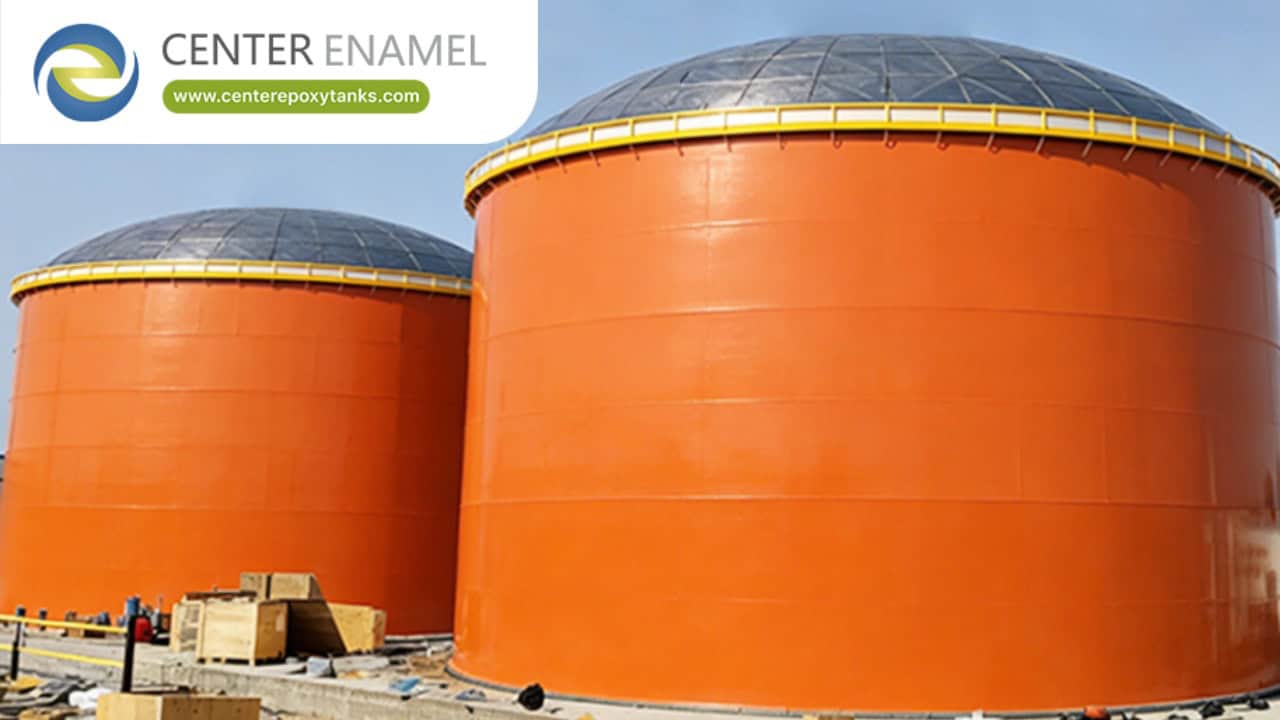
What Is a TES Tank (Thermal Energy Storage)?
A TES tank is a stratified thermal energy storage vessel — most commonly chilled water — that stores cooling capacity produced off-peak and releases it during peak demand. Diffusers at top and bottom preserve stratification between warm and cold water, letting a facility run smaller chillers at night and cut peak electrical demand dramatically.
What Is a Thermal Energy Storage Tank?
A chilled-water TES tank is a battery made of water physics: at 4°C, water is at its maximum density, so cold water introduced at the bottom of the tank sits stably beneath warmer water above. A thermocline — the stratification interface a meter or so thick — separates the two bodies, and carefully engineered diffusers keep charging and discharging from stirring the tank into useless uniformity.
The economics are compelling where power tariffs reward off-peak consumption: chillers run at night at high efficiency and low rates, storing millions of gallons of chilled water that carries campuses, districts, and data centers through afternoon peaks. Chiller plants shrink — sized for average rather than peak load — and demand charges fall with them.
Where TES Value Concentrates
Every facility with a sharp cooling peak and a power tariff that punishes it is a TES candidate; the sharper the peak and the rate spread, the faster the payback.
l District cooling systems with large diurnal demand swings.
l Data centers and campuses seeking redundancy plus demand-charge relief.
l Process plants with batch cooling loads and tariff spreads.
How a TES Tank Is Engineered
A stratified TES project follows a defined sequence:
1. Load and Tariff Modeling: Cooling load profiles against electricity tariffs establish the storage volume and dispatch strategy with quantified payback.
2. Tank and Diffuser Engineering: Tank geometry, diffuser design, and inlet temperature control are engineered to preserve the thermocline across thousands of cycles.
3. Coating and Insulation Package: Interior coatings protect the steel; insulation and vapor barriers limit thermal gain to a few percent of stored capacity.
4. Controls Integration and Commissioning: Charging and discharging sequences are integrated with the chiller plant and verified by thermocline profiling in operation.
Chilled Water TES vs Ice Storage vs Batteries
Storage Technology | Chilled Water TES | Ice Storage | Electrical Batteries |
Energy Density | Low (sensible heat) | High (latent heat) | Highest per volume |
Chiller Efficiency Impact | Standard or better at night operation | Lower — ice-making temperatures cut COP | None on chillers |
Capital Cost per Stored kWh | Lowest of the three | Moderate | Highest |
Cycle Life and Maintenance | Decades, minimal moving parts | Decades with coil care | Finite battery life cycles |
TES Tank Applications
l District cooling plants and energy transfer stations
l Data center cooling resilience and demand management
l University and corporate campus central plants
l Hospitals with high redundancy cooling requirements
l Industrial process cooling with batch profiles
l Airport and convention facility peak shaving
Key Advantages of TES Tanks
1. Demand Charges Slashed by Load Shifting
Moving chiller operation to off-peak hours cuts electrical peaks measurably — frequently the single largest utility line item TES eliminates.
2. Smaller Plants, Higher Reliability
Chillers sized for average rather than peak load cost less to buy and run, while stored cooling provides ride-through capacity during maintenance or outages.
3. Decades of Cycling, Minimal Degradation
Water does not degrade like batteries: a well-built stratified TES tank cycles daily for 30 years with nothing but coating maintenance.
Quality Standards and Proven References
Center Enamel provides design, fabrication, construction, and aftermarket services for storage tanks and silos under ISO 9001 and ISO 45001 certified quality systems, with EN 1090 structural steel certification. With three decades of experience and projects delivered to more than 100 countries — including biogas and wastewater references for Paques and Veolia and industrial references for PetroChina and Sinopec — the company supports tank assets from commissioning through decades of inspection-driven service.
Frequently Asked Questions (FAQ)
Q: How much cooling can a TES tank store?
A: A stratified chilled water tank stores roughly 8 to 12 kWh of cooling per cubic meter of volume between typical chilled and return temperatures — tank size follows directly from the load-shift strategy.
Q: What is thermocline stratification?
A: It is the stable density boundary between cold and warm water inside the tank; preserving it through diffuser engineering is what makes the stored cold usable on demand.
Q: Does TES work with existing chillers?
A: Yes — most TES projects integrate with existing plant configurations, using night hours of installed chillers that otherwise sit idle.
Q: What is the expected lifespan of a professionally engineered steel tank?
A: Steel tanks designed and built to recognized codes (API 650, API 620, AWWA D100, or ASME Section VIII) and maintained under scheduled inspection, coating, and repair programs routinely deliver service lives exceeding 30 years — and tanks managed under API 653-class integrity programs commonly remain in safe service for 50 years or more.


