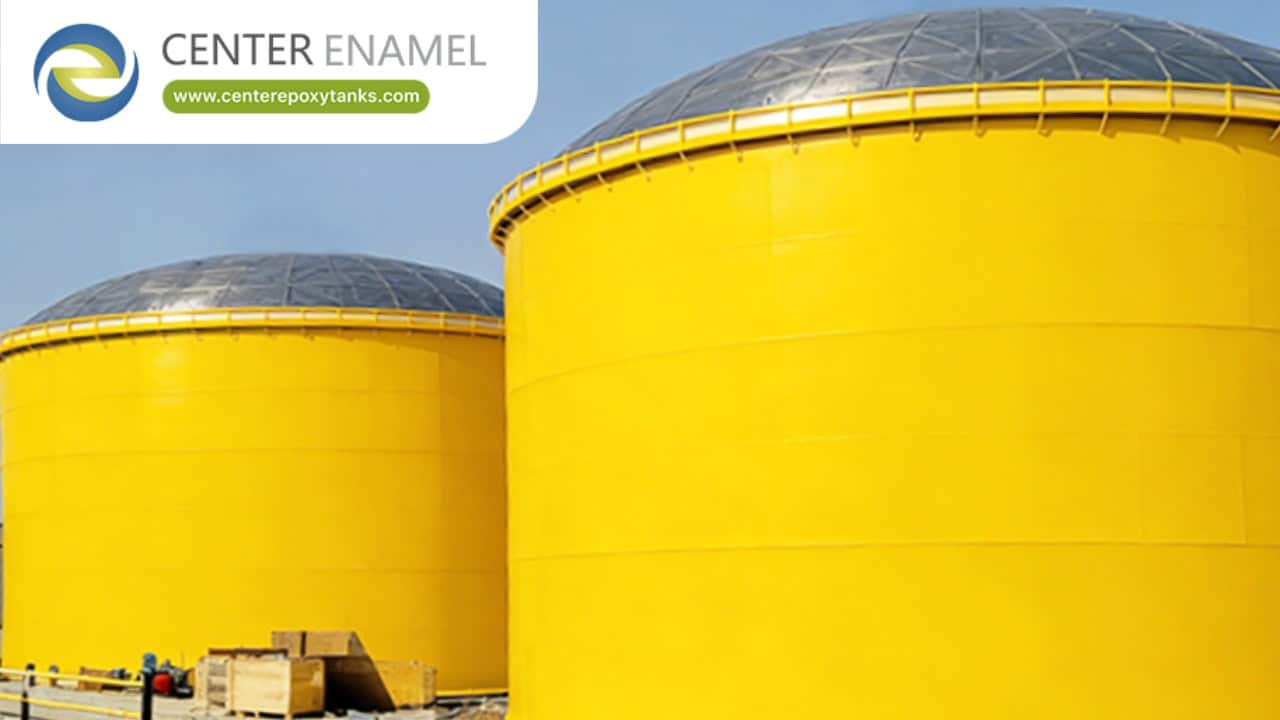
What is an API 650 Storage Tank?
An API 650 storage tank is a welded, aboveground steel tank built to API Standard 650 for storing crude oil, refined products, and compatible liquids at atmospheric pressure. Capacities commonly range from 100 to more than 50,000 cubic meters, with cone, dome, or floating roofs.An API 650 storage tank is the workhorse of the petroleum supply chain — the welded steel vessel specified at refineries, terminals, and production sites whenever liquid hydrocarbons must be held at near-atmospheric pressure. The standard defines materials, design, fabrication, erection, and testing so that any tank built to it, anywhere in the world, meets an identical integrity benchmark.
Tanks under the standard range from small process units to floating-roof giants storing crude in bulk terminals. What unifies them is the code pedigree: calculated shell thicknesses, qualified welding, radiographic examination, and hydrostatic testing, all documented in a data book that follows the tank for its entire life.
Why the Industry Standardizes on API 650 Tanks
Oil storage concentrates risk — product value, fire exposure, environmental liability, and business continuity in one asset. Owners mitigate that risk by specifying the single most auditable tank standard in existence.
l Insurers and lenders require recognized code construction before underwriting terminal assets.
l Floating roof and emission-control requirements attach naturally to API 650 scope.
l Operator integrity programs are built around API 653 re-inspection of API 650 data books.
From Order to Hydrotest: Building an API 650 Tank
Every API 650 tank passes through the same controlled build sequence:
1. Engineering to the Code: Shell courses, bottom, roof structure, nozzles, and annex items (seismic, internal pressure, floating roof) are engineered and approved.
2. Material Procurement with Mill Certificates: Plate to ASTM specifications arrives with traceable mill test reports and impact-test verification where required.
3. Fabrication and Field Welding: Plates are cut, rolled, and beveled, then erected and welded under qualified procedures with radiographic examination to the code shot plan.
4. Examination and Hydrostatic Test: Vacuum-box testing of bottoms, weld repair control, water fill to design level, settlement monitoring, and data-book closeout complete the tank.
API 650 Tank vs API 620 Tank vs Shop-Built UL 142 Tank
Technical Parameter | API 650 Storage Tank | API 620 Storage Tank | UL 142 Shop-Built Tank |
Design Pressure | Atmospheric with limited internal pressure by Annex F | Up to 15 psig, pressure-vessel-like analysis | Atmospheric, horizontal or vertical shop tanks |
Size Range | 100 m3 to 50,000+ m3 field erected | Mid-to-large spheres, spheroids, and cylinders | Transportable sizes typically under 200 m3 |
Stored Products | Crude, refined products, compatible liquids | Liquefied gases, refrigerated products | Fuel oil, diesel, lubricants at small scale |
Documentation Depth | Full code data book with NDE records | Full code data book with stress analysis | Listing mark and manufacturer certificate |
API 650 Storage Tank Applications
l Crude oil gathering and tank battery storage at oilfields
l Refinery feed, intermediate, and product tankage
l Bulk liquid terminals for gasoline, diesel, and jet fuel
l Heated heavy fuel oil and bitumen service with insulation
l Water draw-off and firewater tanks at hydrocarbon facilities
l Ethanol, biodiesel, and chemical storage adopting API 650 baselines
Key Advantages of API 650 Storage Tanks
1. Bankable, Auditable Integrity
The API 650 data book gives owners, buyers, and inspectors a complete record of design, materials, welding, and testing — the documentation backbone for financing, insurance, and API 653 lifetime management.
2. Proven Economics at Scale
Field erected welded construction achieves the lowest cost per stored cubic meter at terminal scale, and floating roof options cut evaporative losses on volatile products.
3. Built for a 30-Year-Plus Service Life
With engineered coatings, cathodic protection, and scheduled API 653 inspection, API 650 tanks routinely serve for decades — many remain in service after 50 years of managed operation.
Quality Standards and Proven References
Center Enamel engineers and manufactures welded steel storage tanks in accordance with API 650, API 620, and API 12F, with in-service repairs and alterations executed under API 653 discipline. Manufactured under ISO 9001 and ISO 45001 certified quality systems and certified to EN 1090, the company's tank projects span crude oil, refined product, chemical, and water service — with references including PetroChina and Sinopec and deliveries to more than 100 countries.
Frequently Asked Questions (FAQ)
Q: What is the difference between API 650 and API 620?
A: API 650 covers welded atmospheric tanks for oil storage; API 620 covers tanks designed for pressures up to 15 psig, including refrigerated and liquefied gas service.
Q: Do API 650 tanks need floating roofs?
A: Floating roofs are added for volatile products to control evaporative losses and emissions; fixed cone or dome roofs are standard for less volatile liquids.
Q: Can an API 650 tank store water?
A: Yes. Many operators choose API 650 for firewater and process water storage where petroleum-grade design and documentation discipline are desired.
Q: What is the expected lifespan of a professionally engineered steel tank?
A: Steel tanks designed and built to recognized codes (API 650, API 620, AWWA D100, or ASME Section VIII) and maintained under scheduled inspection, coating, and repair programs routinely deliver service lives exceeding 30 years — and tanks managed under API 653-class integrity programs commonly remain in safe service for 50 years or more.


