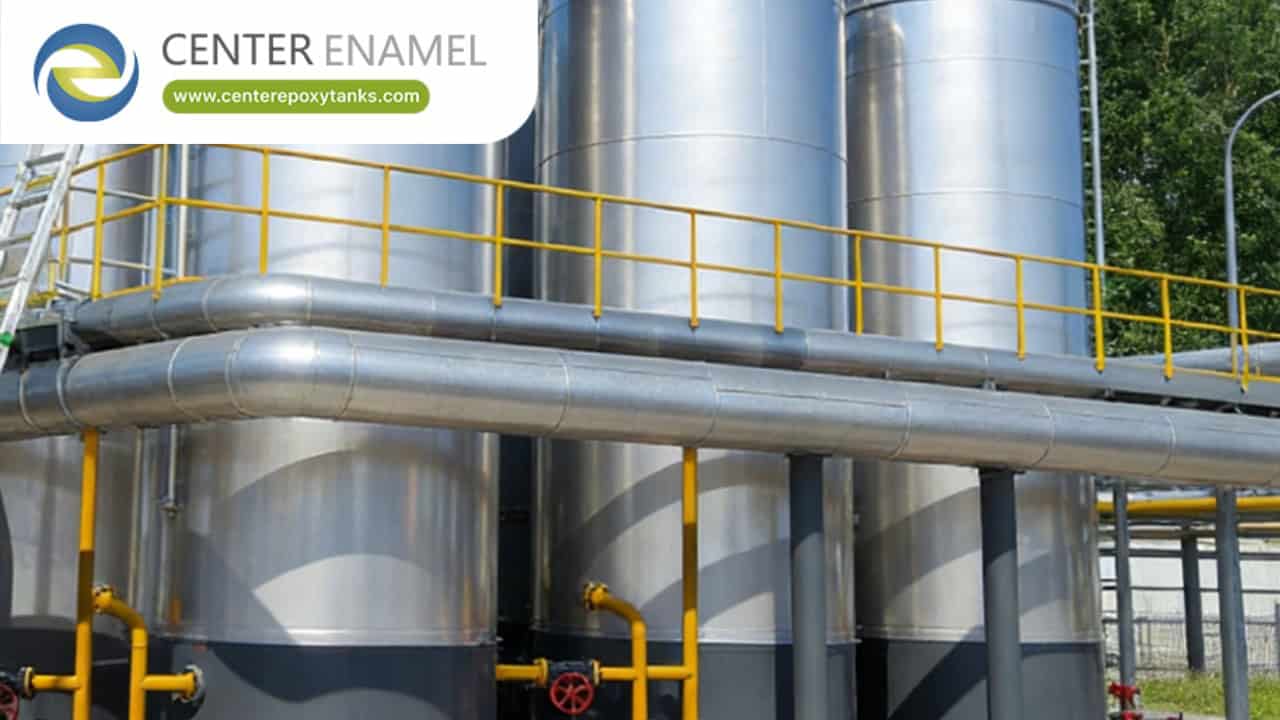
What Is an Alkali Storage Tank? Material Compatibility, Design Specifications, and Safety Guidelines
In pulp and paper manufacturing, municipal water treatment, chemical processing, petroleum refining, and soap production, strong alkaline chemicals serve as fundamental process reagents. Among these, sodium hydroxide (caustic soda, NaOH) and potassium hydroxide (KOH) are the most prominent. Because commercial-strength alkalis are intensely corrosive, chemically reactive, and hazardous to human tissue, storing them safely requires specialized containment engineering.
An alkali storage tank is a heavy-duty industrial containment vessel specifically engineered from chemically resistant cross-linked polymers, specialized carbon steels, or fiber-reinforced composites designed to safely store caustic liquids, manage high specific gravity loads, and prevent environmental degradation over long operational lifecycles.
1. Core Engineering Challenges in Alkali Storage
Designing a reliable alkali storage and distribution system requires navigating three distinct physical and chemical hurdles:
High Specific Gravity and Weight Loads: Concentrated alkaline solutions (such as 50% caustic soda) are considerably denser than water, featuring a specific gravity of approximately 1.52 SG. To prevent structural bulging or catastrophic wall failure, industrial alkali tanks must be engineered and certified to a minimum 1.9 specific gravity rating to account for hydrostatic hoop stress and added safety margins.
Thermal Management and Freezing Points: High-concentration caustic soda (50% NaOH) has a freezing point of approximately 54°F (12°C) and can solidify or deposit crystals if subjected to lower ambient conditions. Conversely, elevated temperatures above 100°F (38°C) can degrade polyethylene resins and accelerate metal stress corrosion.
Stress Corrosion Cracking (Caustic Embrittlement): Unprotected or improperly heat-treated carbon steel tanks storing hot caustic solutions ( 50% concentration at temperatures above 120°F) are highly susceptible to caustic embrittlement and microscopic cracking.
2. Approved Materials of Construction
Selecting the correct tank material depends heavily on chemical concentration, operating temperature, and structural requirements:
A. Cross-Linked Polyethylene (XLPE) & HDPE
Rotationally molded XLPE and HDPE tanks manufactured to ASTM D1998 standards are the industry standard for storing municipal and industrial caustic soda up to 50% concentration at ambient temperatures. They offer seamless construction and exceptional chemical inertness.
B. Carbon Steel
Unlined carbon steel built to API 650 specifications is frequently utilized for large-scale industrial bulk storage of 50% caustic soda solutions, provided operating temperatures remain below 120°F (49°C) and proper stress-relieving heat treatments are applied during fabrication.
C. Fiberglass-Reinforced Plastic (FRP)
For large-scale bulk containment exceeding standard polyethylene sizing limits, FRP tanks utilizing specialized vinyl ester resins with a chemical-resistant inner veil provide robust structural rigidity and alkali resistance.
Data Table: Alkali Storage Tank Material and Specification Matrix
Tank Material Option | Maximum Concentration Limit | Maximum Temperature Limit | Specific Gravity (SG) Rating | Governing Standards |
Cross-Linked Polyethylene (XLPE) | Up to 100% NaOH / KOH | 100°F (38°C) | Minimum 1.9 SG | ASTM D1998 |
High-Density Polyethylene (HDPE) | Up to 50% NaOH | 100°F (38°C) | Minimum 1.9 SG | ASTM D1998 |
Carbon Steel (Unlined) | Up to 50% NaOH | 120°F (49°C) | Engineered to load | API 650 / ASME |
Fiberglass-Reinforced Plastic (FRP) | Up to 50% NaOH | 140°F (60°C) | Custom engineered | ASME RTP-1 |
3. Mandatory Safety and Environmental Infrastructure
A compliant alkali storage facility incorporates several critical safety and control mechanisms:
Secondary Containment Systems: Because caustic solutions are hazardous "leak-seeking" chemicals, environmental regulations mandate secondary containment (such as double-wall tank designs or epoxy-coated concrete bunds) engineered to hold at least 110% of the volume of the primary vessel.
Venting and Atmospheric Protection: Caustic tanks require adequate vent and overflow lines (typically sized at least four times the cross-sectional area of the fill line) to prevent vacuum collapse or over-pressurization during truck unloading.
Frequently Asked Questions (FAQ)
Q: What is an alkali storage tank?
A: An alkali storage tank is a specialized industrial containment vessel built from corrosion-resistant polyethylene, carbon steel, or composite materials to safely store strong basic chemicals like sodium hydroxide and potassium hydroxide.
Q: Why do alkali storage tanks require a 1.9 specific gravity (SG) rating?
A: Concentrated caustic soda solutions are significantly denser than water. A 1.9 SG rating ensures the structural walls and lower fittings can safely support the heavy hydrostatic weight and hoop stress of the fluid without deforming.
Q: Can carbon steel be used to store sodium hydroxide?
A: Yes, carbon steel is widely used for storing 50% caustic soda at ambient temperatures below 120°F (49°C), but it requires careful thermal management to prevent stress corrosion cracking (caustic embrittlement).
Q: What are the secondary containment requirements for alkali storage tanks?
A: Regulatory standards require secondary containment dikes or double-walled tank systems capable of capturing at least 110% of the total volume of the primary storage tank to mitigate environmental spills.


