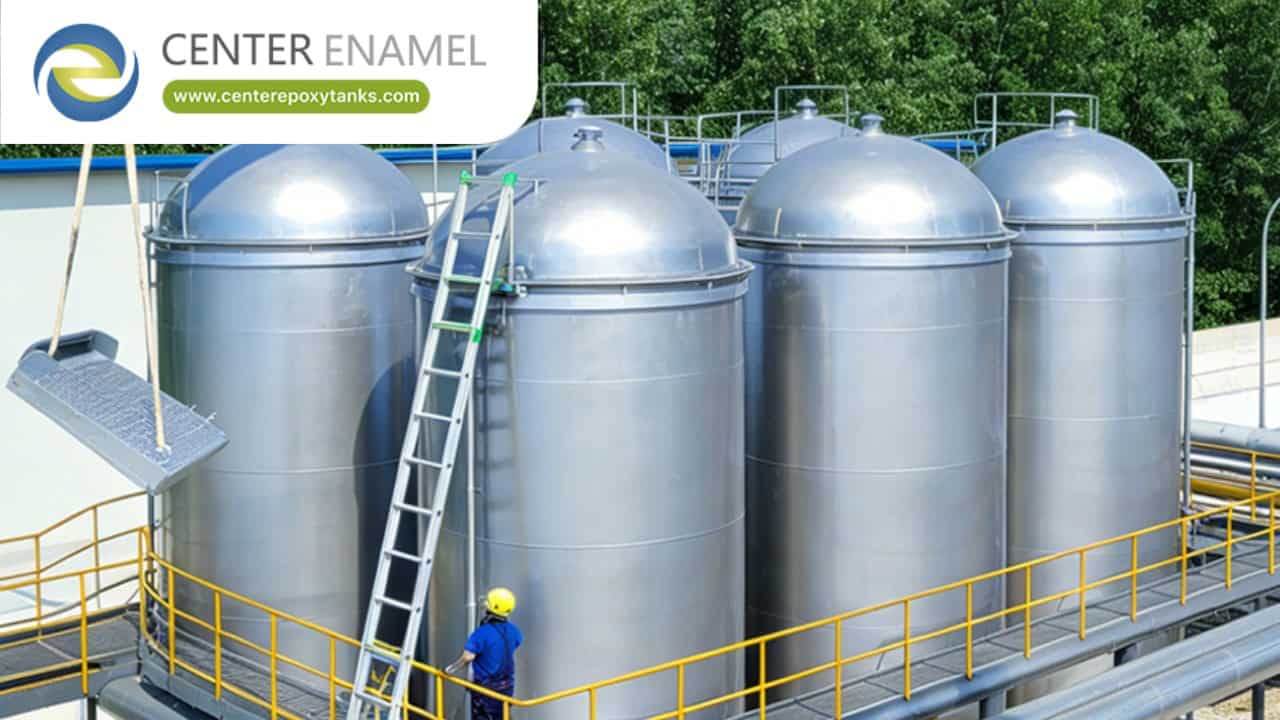
What Is an Acid Storage Tank? Material Compatibility, Concentration Mechanics, and Safety Guidelines
In chemical manufacturing, metal finishing, petroleum refining, fertilizer production, and municipal water treatment, strong acids serve as essential process reagents. However, because commercial-strength acids—such as sulfuric, hydrochloric, nitric, and phosphoric acid—are intensely corrosive, chemically aggressive, and hazardous to human health and the environment, storing them safely requires specialized containment engineering.
An acid storage tank is a heavy-duty industrial containment vessel specifically engineered from chemically inert polymers, corrosion-resistant carbon steels, or specialized composites designed to store liquid acids safely, control fugitive vapors, and withstand aggressive chemical attack over long operational lifecycles.
1. Core Engineering Challenges in Acid Storage
Designing a reliable acid storage system requires navigating three critical physical and chemical hurdles:
Concentration-Dependent Corrosiveness: Acid behavior varies drastically based on concentration. For example, concentrated sulfuric acid (93% to 98%) passivates carbon steel by forming a protective iron sulfate film, whereas dilute sulfuric acid aggressively dissolves carbon steel, necessitating non-metallic alternatives like cross-linked polyethylene (XLPE).
High Specific Gravity and Fluid Weight: Many industrial acids are significantly denser than water. Concentrated sulfuric acid, for instance, features a specific gravity of approximately 1.84 SG, exerting massive hydrostatic hoop stress on the lower third of the tank wall and requiring structural designs certified to a minimum 1.9 to 2.0 specific gravity rating.
Fuming and Hygroscopic Vapor Activity: Acids like hydrochloric acid continuously release toxic hydrogen chloride ($text{HCl}$) fumes that attack atmospheric hardware, while others like sulfuric acid are hygroscopic and absorb moisture from incoming air, requiring specialized desiccant breathers and vapor scrubbers.
2. Approved Materials of Construction
Selecting the correct tank material depends entirely on the specific chemical type, operating temperature, and concentration level:
A. Cross-Linked Polyethylene (XLPE)
Widely recognized as the industry standard for dilute to moderate acid storage (including hydrochloric acid up to 37% and dilute sulfuric or phosphoric acids). Rotationally molded XLPE tanks manufactured to ASTM D1998 standards offer seamless construction, high impact strength, and exceptional stress-cracking resistance.
B. Carbon Steel (For Specific Concentrated Acids)
Unlined carbon steel tanks built to API 650 standards are the premier choice for storing concentrated sulfuric acid (93% to 98%) and certain high-concentration organic acids at ambient temperatures due to the formation of a protective passive iron oxide layer.
C. Fiberglass-Reinforced Plastic (FRP)
For large-scale industrial bulk storage exceeding 10,000 gallons, FRP tanks utilizing specialized vinyl ester or epoxy novolac resins featuring a resin-rich interior corrosion barrier provide superior structural rigidity and chemical inertness.
Data Table: Acid Storage Tank Material and Specification Matrix
Acid Type & Common Grade | Concentration Range | Approved Tank Materials | Specific Gravity (SG) Rating | Governing Standards |
Sulfuric Acid (H2SO4) | 93% to 98% (Concentrated) | Carbon Steel (Unlined) | Minimum 1.9 to 2.0 SG | API 650 / ASTM D1998 |
Sulfuric Acid (H2SO4) | Below 90% (Dilute) | XLPE, FRP, Rubber-Lined Steel | Minimum 1.9 to 2.0 SG | ASTM D1998 / ASME RTP-1 |
Hydrochloric Acid (HCl) | Up to 37% (Muriatic) | XLPE, FRP, Rubber-Lined Steel | 1.65 to 1.9 SG | ASTM D1998 / ASME RTP-1 |
Phosphoric Acid (H3PO4) | Up to 85% | XLPE, FRP, 316L Stainless Steel | 1.7 to 1.8 SG | ASTM D1998 |
3. Mandatory Safety and Environmental Infrastructure
A compliant acid storage installation incorporates several mandatory safety features to protect plant personnel and local ecosystems:
Secondary Containment Dikes: Under EPA and OSHA environmental regulations, secondary containment systems (such as double-wall tank designs or epoxy-coated concrete bunds) must be engineered to hold at least 110% of the volume of the largest primary tank.
Incompatibility Isolation: Acid storage tanks must be physically separated from bases and caustics (such as sodium hypochlorite or sodium hydroxide) by at least 10 feet to prevent violent, exothermic neutralization reactions in the event of a simultaneous spill.
Frequently Asked Questions (FAQ)
Q: What is an acid storage tank?
A: An acid storage tank is a heavy-duty industrial containment vessel built from chemical-resistant polymers, carbon steel, or composite materials to safely store corrosive industrial acids.
Q: Why can carbon steel be used for concentrated sulfuric acid but fail with dilute acid?
A: Concentrated sulfuric acid (93-98%) reacts with carbon steel to form a protective iron sulfate passive film that stops further corrosion. Dilute acid dissolves this film instantly, causing rapid, catastrophic metal corrosion.
Q: What manufacturing standard governs polyethylene acid storage tanks?
A: Rotationally molded polyethylene chemical storage tanks are typically engineered, fabricated, and tested in accordance with ASTM D1998 standards to guarantee proper wall thickness and resin performance under heavy chemical loads.
Q: What are the secondary containment requirements for acid storage tanks?
A: Regulatory standards mandate that secondary containment structures must be capable of holding at least 110% of the volume of the largest primary storage container to prevent environmental leaks and chemical spills.


