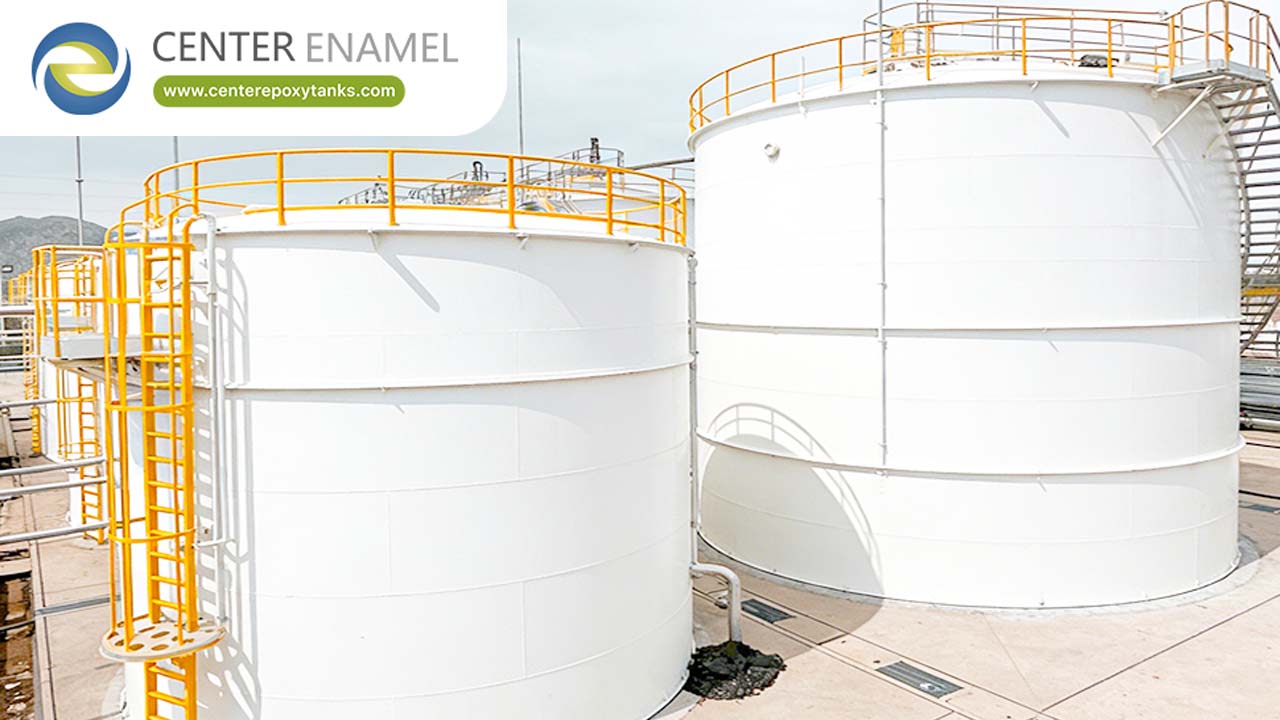
Storage Tanks for Industrial Wastewater Treatment Plants: Materials, Design, and Effluent Management
Unlike municipal sewage, which features relatively predictable biological compositions, industrial wastewater generated by chemical manufacturing, petroleum refining, food processing, textile production, and metal plating is intensely complex, highly variable, and aggressively corrosive. Effluents often contain extreme pH levels, heavy metals, volatile organic compounds (VOCs), and high total dissolved solids (TDS), making standard water containment systems wholly inadequate.
An industrial wastewater storage tank is a heavy-duty, chemically engineered containment vessel designed to balance, neutralize, store, and treat aggressive industrial effluent across various phases of an industrial wastewater treatment plant (IWTP).
1. Key Roles of Storage Tanks in Industrial Wastewater Treatment
Industrial wastewater treatment trains rely on specialized storage infrastructure to stabilize incoming streams before biological or chemical processing:
Equalization (Buffer) Tanks: Industrial production cycles create massive hydraulic and chemical surges. Equalization tanks temporarily store peak flows to provide a uniform, blended wastewater stream to downstream biological reactors or chemical treatment units.
Neutralization and pH Adjustment Tanks: Because industrial effluents frequently swing between extreme acidic and alkaline states, dedicated tanks store and meter neutralizing reagents (H2SO4, NaOH) to bring water within allowable discharge limits (pH 6.0 to 9.0).
Clarification and Sludge Holding Tanks: Designed to hold secondary biological sludge or chemical precipitates prior to mechanical dewatering via centrifuges or filter presses.
2. Advanced Materials of Construction for Corrosive Effluents
Selecting the correct tank material is vital to prevent catastrophic wall degradation and environmental leaks:
Fusion Bonded Epoxy (FBE) Bolted Steel Tanks: Widely favored for modern industrial wastewater applications. Utilizing thermoset epoxy powder thermally fused to steel substrates, FBE tanks offer outstanding chemical stability across a wide pH range (3 to 13), combined with rapid modular assembly.
Glass-Fused-to-Steel (GFS) Tanks: Fusing inert glass enamel to high-strength steel creates an ultra-smooth, highly chemical-resistant surface that withstands aggressive industrial effluents and eliminates interior recoating maintenance.
Stainless Steel (Grade 304/316L): Deployed for specialized corrosive chemical streams, high-purity industrial filtrate, and localized wastewater treatment skids.
Reinforced Concrete (with Chemical Linings): Massive cast-in-place concrete basins are used for large-scale primary settling, provided they are coated with chemical-resistant epoxy or polyurethane liners to prevent biogenic and acid degradation.
Data Table: Industrial Wastewater Storage Tank Comparison Matrix
Tank Material Option | Typical pH Tolerance Range | Estimated Service Life | Primary Industrial Applications | Governing Standards |
Fusion Bonded Epoxy (FBE) | pH 3 to 13 | 20+ Years | Chemical effluents, municipal wastewater, industrial runoff | AWWA D103-09 / ISO 28765 |
Glass-Fused-to-Steel (GFS) | pH 1 to 12 | 30+ Years | Leachate storage, aggressive industrial wastewater, anaerobic digesters | AWWA D103 / ISO 28765 |
Stainless Steel (316L) | Broad chemical range | 30+ Years | Specialized chemical wastewater, high-purity filtrate holding | ASME / API 650 |
Lined Concrete Basins | Dependent on coating | 50+ Years (requires recoating) | Large primary clarifiers, massive equalization basins | ACI / EPA standards |
3. Critical Engineering and Regulatory Compliance
Designing storage tanks for industrial effluent management mandates adherence to rigorous safety codes:
Secondary Containment Mandates: Under EPA and OSHA environmental regulations, secondary containment systems (such as double-wall tank designs or epoxy-coated concrete dikes) must be engineered to hold at least 110% of the volume of the largest primary tank.
Vapor and Odor Control: Industrial wastewater containing sulfides or volatile organics often requires gastight geodesic dome roofs and dedicated carbon scrubbers to capture fugitive emissions and toxic fumes.
Frequently Asked Questions (FAQ)
Q: What is an industrial wastewater storage tank?
A: An industrial wastewater storage tank is an engineered containment vessel built from corrosion-resistant materials like fusion bonded epoxy or glass-fused-to-steel to safely hold, equalize, and neutralize aggressive industrial effluents.
Q: Why are equalization storage tanks critical in industrial wastewater treatment plants?
A: Equalization tanks smooth out variable industrial discharge surges and chemical concentrations, ensuring a stable, uniform hydraulic loading rate for downstream biological or chemical treatment processes.
Q: What pH range can Fusion Bonded Epoxy (FBE) tanks withstand?
A: High-performance FBE bolted steel tanks are chemically stable and engineered to withstand aggressive industrial fluid environments across a wide pH range of 3 to 13.
Q: How do modular bolted steel tanks compare to concrete tanks for industrial wastewater projects?
A: Modular bolted steel tanks (such as FBE and GFS systems) can be erected in a fraction of the time required for cast-in-place concrete, offer superior factory-controlled coating quality, and eliminate weather-sensitive on-site curing delays.


