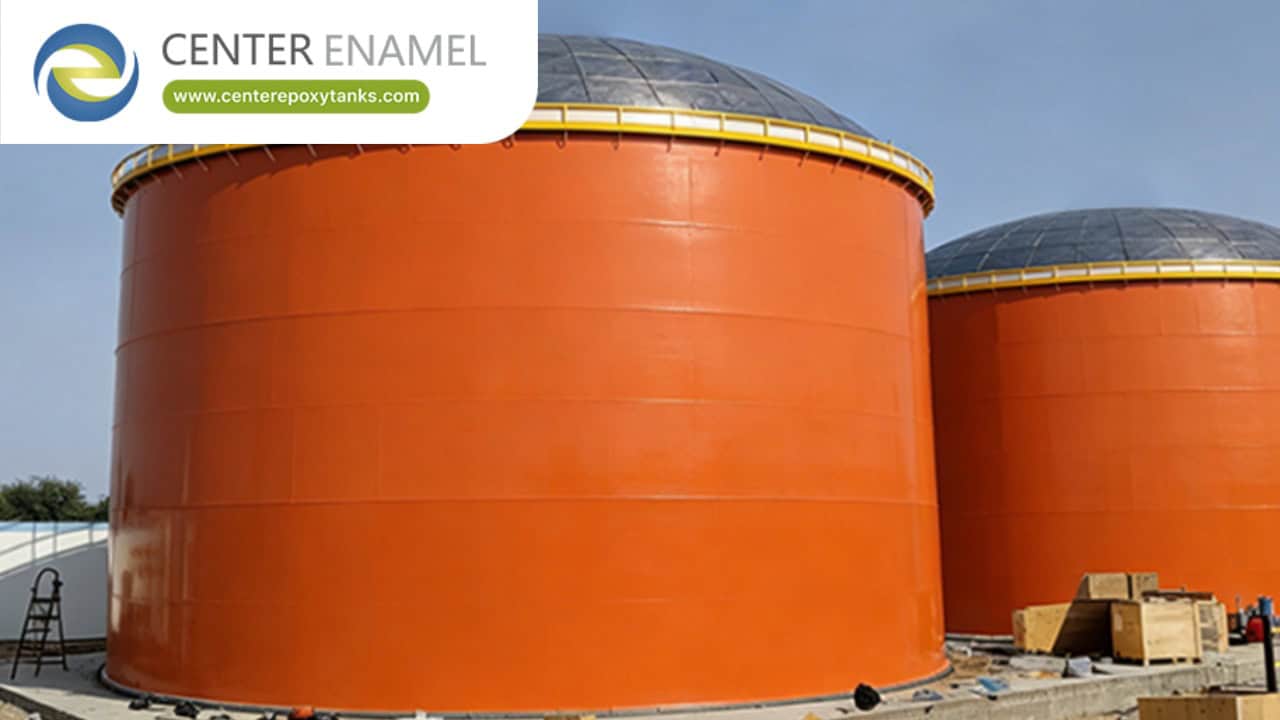
What Is a Welded Steel Sludge Holding Tank? Engineering, Applications, and Benefits
In municipal wastewater treatment plants and industrial effluent facilities, managing concentrated solid byproducts requires specialized, highly durable containment infrastructure. As primary and secondary clarifiers separate suspended solids from liquid waste streams, they generate thick, biologically active, and often corrosive semi-solid residues known as sludge. To store, stabilize, and equalize these materials prior to dewatering or disposal, facilities rely on a critical containment asset: the welded steel sludge holding tank.
Fabricated from heavy-duty carbon or stainless steel plates joined through continuous, full-penetration shop or field welding, these tanks provide a monolithic, hermetically sealed enclosure engineered to withstand aggressive chemical environments, biological activity, and intense hydrodynamic loads. As a globally trusted leader in advanced liquid storage manufacturing, Shijiazhuang Zhengzhong Technology Co., Ltd. (Center Enamel) delivers precision-engineered welded steel sludge holding tanks designed in strict compliance with international environmental engineering standards.
The Core Functions of a Sludge Holding Tank
Sludge holding tanks are far more than passive storage vessels; they function as active, vital process components within a wastewater treatment layout:
1.
Flow Equalization and Buffering: Wastewater plants produce sludge at variable, fluctuating rates. A holding tank acts as a buffer reservoir, allowing facilities to smooth out surges and feed downstream dewatering equipment (such as filter presses or centrifuges) at a steady, efficient rate.
2.
3.
Sludge Thickening and Gravity Separation: By providing quiet residence time, the tank allows solids to naturally settle and densify through gravity, increasing the total solids concentration and minimizing the liquid volume requiring subsequent treatment.
4.
5.
Biological Stabilization: Holding tanks enable partial aerobic or anaerobic digestion, reducing volatile solid volumes and breaking down pathogens before final biosolid disposal.
6.
Engineering Superiority: Why Welded Construction Excels in Sludge Service
Sludge storage environments present severe engineering hurdles, including abrasive grit, variable pH, and volatile gases like hydrogen sulfide (H2S). Welded steel construction offers unmatched structural advantages:
·
Monolithic Leak-Tight Integrity: Continuous welding fuses steel plates into a unified, seamless shell. This completely eliminates joint leakage pathways, protecting surrounding soil and groundwater from hazardous environmental contamination.
·
·
Gas-Tight Enclosure for Odor and Emission Control: Biological decomposition in sludge tanks often produces noxious gases (H2S and methane). Welded steel structures support airtight covers and vapor extraction systems, preventing fugitive odor releases and ensuring regulatory compliance.
·
·
High Resistance to Abrasive and Corrosive Slurries: Welded interiors can be lined with high-build, chemical-resistant barrier coatings (such as 100% solids epoxies) or fabricated from specialized stainless steels to resist chemical attack and physical scouring from abrasive grit.
·
Data Table: Comprehensive Comparison of Sludge Storage Technologies
Technical Parameter | Field-Erected Welded Steel Sludge Tanks | Bolted Steel Storage Tanks | Cast-in-Place Concrete Basins |
Structural Integrity | Monolithic welded steel shell; absolute zero-leak performance | High-strength bolted panels utilizing perimeter elastomeric gaskets | Massive monolithic structure; vulnerable to micro-cracking over time |
Gas & Odor Containment | Superior gas-tight integrity for odor control and vapor management | Moderate; gasket seals require careful maintenance under gas pressure | High mass, but susceptible to micro-cracks that allow gas or liquid seepage |
Corrosion Defense | High-build industrial epoxy systems or specialized stainless steel | Factory-applied powder coatings or glass-fused ceramic bonds | Vulnerable to sulfuric acid attack (H2S crown corrosion) and spalling |
Installation Profile | Precision field-erection, heavy lifting, and rigorous NDE weld testing | Rapid modular panel assembly using high-tensile hardware | Slow, multi-month multi-stage pouring, formwork, and curing |
Primary Wastewater Application | Heavy municipal sludge holding, anaerobic digestion, and thickener basins | Secondary sludge storage, aerobic digestion, and balance tanks | Large municipal primary clarifiers and massive digestion complexes |
Key Applications Across Wastewater Sectors
Welded steel sludge holding tanks are utilized across diverse industrial and municipal processes:
1.
Municipal Sewage Treatment Plants: Buffering primary and waste activated sludge (WAS) prior to mechanical dewatering or truck hauling.
2.
3.
Industrial Effluent Pretreatment: Storing heavy chemical or food-processing sludge before neutralization and specialized disposal.
4.
5.
Biogas and Digestion Facilities: Acting as sealed digester feed or sludge holding vessels equipped with mixing mechanisms and gas recovery lines.
6.
Frequently Asked Questions (FAQ)
Q: What is a welded steel sludge holding tank?
A: It is a heavy-duty, industrial-grade containment vessel constructed from continuous welded steel plates, designed to temporarily store, equalize, and thicken sludge generated during wastewater treatment.
Q: Why is welded construction preferred over bolted designs for certain sludge applications?
A: Welded construction provides a seamless, monolithic, and absolute gas-tight structure, which is crucial for preventing odor leaks, managing hazardous gases like hydrogen sulfide (H2S), and handling dense, non-Newtonian slurries.
Q: How do welded sludge tanks protect against interior corrosion?
A: Interior surfaces are abrasive-blasted and coated with specialized, high-performance barrier linings—such as 100% solids epoxy—or built using stainless steel alloys to withstand aggressive chemical environments and abrasive grit.
Q: What design standards govern welded steel wastewater tanks?
A: High-quality welded sludge holding tanks are engineered in accordance with rigorous industry standards, including AWWA D100, API 650, and ISO 9001 quality management protocols.


