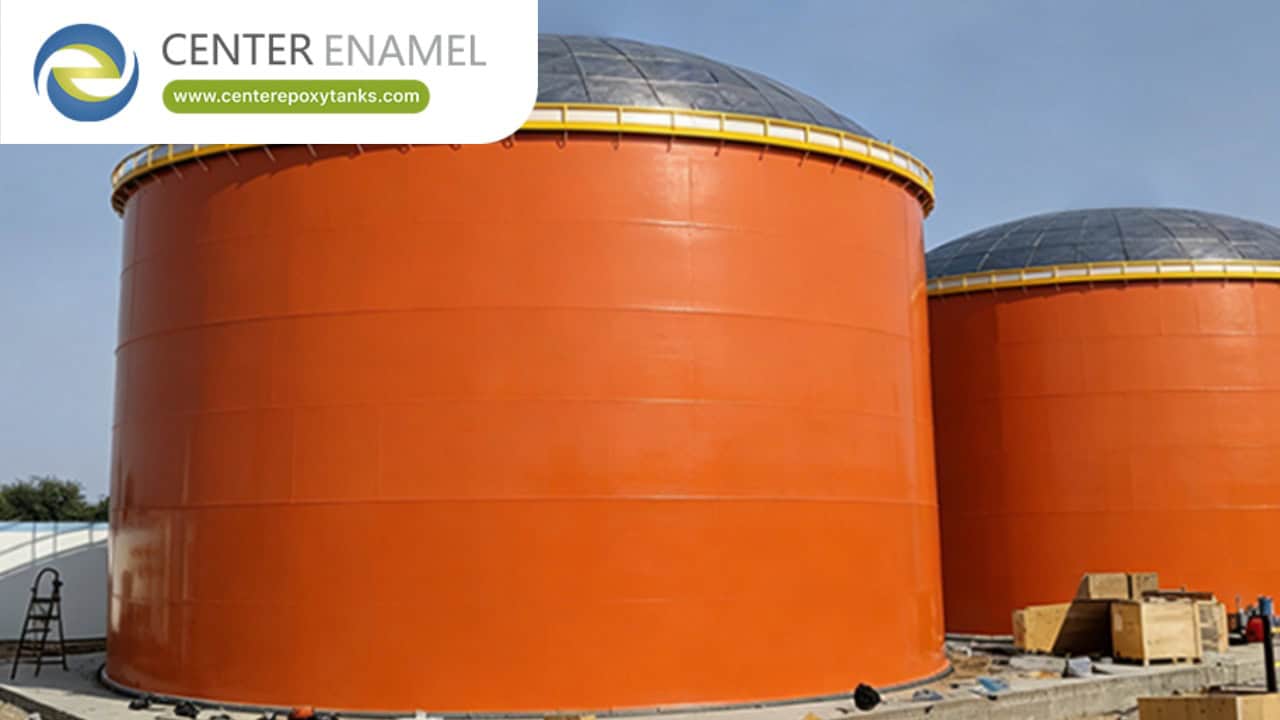
What Is a Welded Steel Aeration Tank? The Biological Heart of Wastewater Treatment Explained
In municipal wastewater treatment plants, industrial effluent processing facilities, and chemical manufacturing complexes, purifying high-strength organic wastewater requires advanced biological mechanisms. At the center of this purification cycle is the activated sludge process, where aerobic microorganisms break down complex organic pollutants. To maintain optimal microbial activity, massive amounts of controlled oxygen must be continuously introduced into the liquid matrix. For projects demanding absolute structural durability, quick deployment, and leak-free reliability, engineers specify the welded steel aeration tank.
Fabricated from high-grade carbon or stainless steel plates joined through continuous, full-penetration shop or field welding, these specialized tanks provide a monolithic, robust enclosure engineered to handle constant mechanical agitation, intense airflow pressure, and aggressive chemical environments. As a globally trusted leader in advanced liquid storage and containment manufacturing, Shijiazhuang Zhengzhong Technology Co., Ltd. (Center Enamel) delivers precision-engineered welded steel aeration tanks designed to optimize biological wastewater purification worldwide.
Core Functions of an Industrial Aeration Tank
Unlike standard storage reservoirs, an aeration tank functions as an active biochemical reactor:
1.
Oxygen Mass Transfer: Blowers and diffused aeration systems inject pressurized air through fine or coarse bubble grids, maintaining high dissolved oxygen (DO) levels necessary for aerobic bacteria to thrive.
2.
3.
Continuous Biomass Suspension: Vigorous mechanical or pneumatic mixing keeps activated sludge flocs uniformly suspended, maximizing surface contact between microorganisms and dissolved organic pollutants (reducing BOD and COD).
4.
5.
Nutrient and Odor Control: Efficient biological oxidation breaks down volatile organic compounds, preventing septic, anaerobic conditions and eliminating foul odors.
6.
Engineering Superiority: Why Welded Steel Excels in Biological Treatment
Wastewater aeration environments expose infrastructure to moisture, constant bubbling, biological activity, and corrosive treatment chemicals. Welded steel construction provides distinct structural advantages:
·
Monolithic Structural Integrity: Full-penetration continuous welding fuses steel plates into a seamless, unified shell, completely eliminating joint gasket failures and liquid seepage risks common in alternative container designs.
·
·
Advanced Metallurgy and Protection: Built using high-grade stainless steel (such as 304 or 316L) or carbon steel treated with high-performance industrial coatings, welded tanks resist chemical attack, sulfur corrosion, and biological spalling.
·
·
Seamless Equipment Integration: Welded steel walls readily support heavy internal attachments, including air header pipes, diffuser grids, mechanical agitators, and effluent weir troughs without structural compromise.
·
Data Table: Comprehensive Comparison of Aeration Tank Technologies
Technical Parameter | Welded Steel Aeration Tanks | Cast-in-Place Concrete Basins | Bolted Steel Storage Tanks |
Structural Integrity | Monolithic welded steel shell; absolute zero-leak performance and high seismic flexibility | Massive monolithic structure; highly prone to concrete micro-cracking and spalling over time | Modular panels utilizing perimeter elastomeric gaskets and sealing compounds |
Corrosion & Chemical Resistance | Superior when fabricated from stainless steel or high-performance protective epoxy linings | Moderate; requires specialized internal acid-resistant coatings to prevent degradation | Dependent on panel coating quality and gasket chemical compatibility |
Installation & Commissioning Profile | Efficient shop fabrication with precise field erection and NDE weld testing | Slow, multi-month multi-stage formwork, pouring, and curing timeline | Rapid modular panel assembly using high-tensile structural hardware |
Primary Wastewater Application | Municipal activated sludge processes, industrial biological treatment, and SBR systems | Large municipal wastewater treatment plants and massive primary clarifiers | Compact package wastewater plants and regional equalization basins |
Frequently Asked Questions (FAQ)
Q: What is a welded steel aeration tank?
A: It is a heavy-duty industrial vessel constructed from continuously welded steel plates, designed to house biological wastewater treatment processes where oxygen is injected to support organic-eating microorganisms.
Q: Why is welded construction preferred over concrete for aeration basins?
A: Welded steel tanks offer faster installation timelines, zero structural porosity, superior resistance to chemical spalling, and enhanced structural flexibility under dynamic aeration loads compared to traditional concrete.
Q: How does oxygen get introduced into a welded steel aeration tank?
A: Oxygen is typically introduced via blower-driven diffuser grids (fine or coarse bubble diffusers) mounted along the tank floor or via mechanical surface aerators to maintain optimal dissolved oxygen levels for aerobic bacteria.
Q: What materials are used to protect welded steel aeration tanks from corrosion?
A: Tanks are either fabricated using corrosion-resistant stainless steel grades (such as 316L) or constructed from robust carbon steel finished with specialized industrial-grade epoxy or glass-fused barrier coatings.


