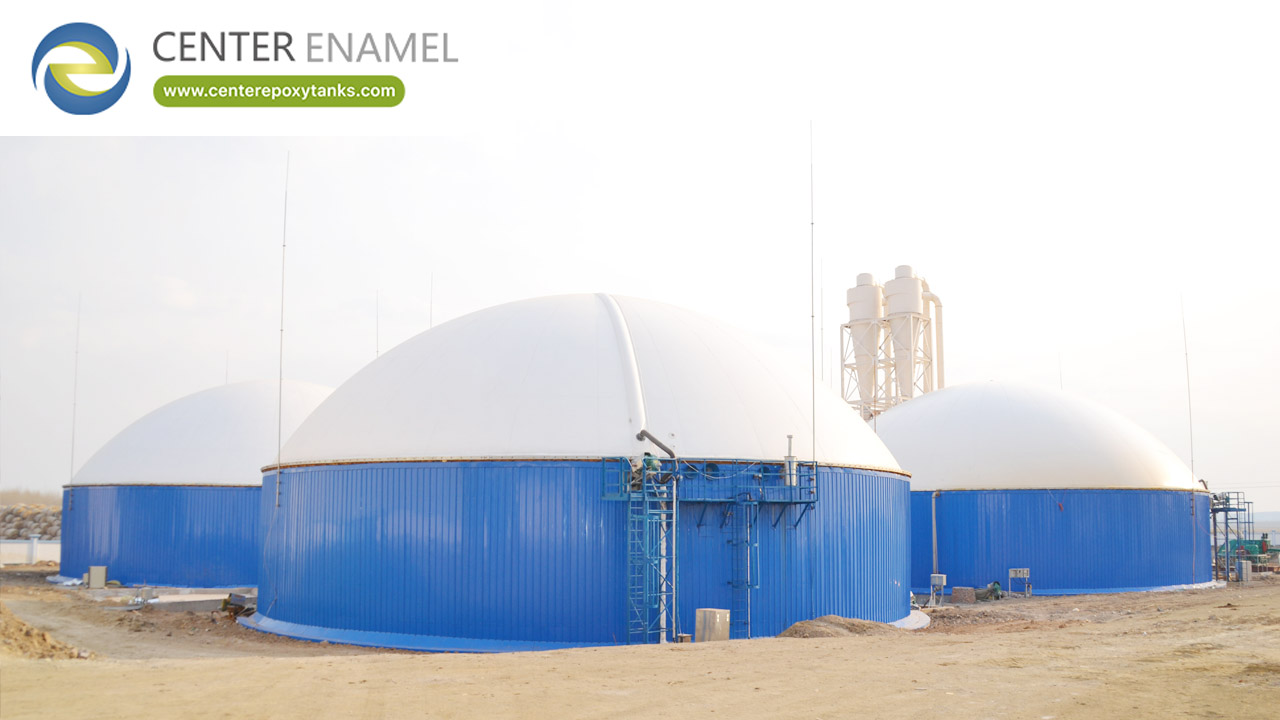
What Is a Welded Steel Biogas Tank? Anaerobic Digestion, Gas Containment, and Engineering Standards
In the global transition toward carbon neutrality and decentralized renewable energy, converting organic waste into usable power has become a cornerstone of sustainable infrastructure. Municipal wastewater treatment plants, large-scale agricultural farms, and industrial food processing facilities increasingly rely on anaerobic digestion (AD) to stabilize waste and recover valuable methane-rich gas. At the structural heart of every successful waste-to-energy operation lies the digester and gas containment system. For applications requiring absolute hermetic sealing, intense structural durability, and high-pressure head space management, engineers specify the welded steel biogas tank.
Constructed from heavy-gauge carbon or stainless steel plates joined through continuous, full-penetration shop or field welding, these specialized tanks form a monolithic, gas-tight enclosure engineered specifically to withstand the aggressive biochemical volatility of anaerobic digestion. As a globally trusted leader in advanced liquid and gas containment manufacturing, Shijiazhuang Zhengzhong Technology Co., Ltd. (Center Enamel) delivers precision-engineered welded steel biogas tanks designed to maximize methane yield and ensure decades of safe, maintenance-free operation.
Core Functions of a Biogas Digester and Storage Tank
Unlike standard water or wastewater storage containers, a biogas tank must perform dual mechanical and biochemical functions:
1.
Strictly Controlled Anaerobic Environment: The tank isolates organic slurry (such as sewage sludge, livestock manure, or food waste) from atmospheric oxygen, allowing methanogenic microorganisms to break down complex organic matter into biogas (primarily methane and carbon dioxide).
2.
3.
Headspace Biogas Containment: The upper portion of the structure securely houses generated biogas under controlled pressure prior to extraction, purification, or energy cogeneration.
4.
5.
Thermal and Mixing Regulation: Welded steel tanks easily integrate thermal heating jackets and heavy mechanical or pneumatic stirring equipment (such as CSTR agitators) to maintain optimal mesophilic or thermophilic digestion temperatures.
6.
Engineering Superiority: Conquering the Biogas Environment
Anaerobic digestion produces a harsh chemical cocktail containing moisture, volatile fatty acids, ammonia (NH3), and hydrogen sulfide (H2S), which can rapidly degrade inferior materials. Welded steel engineering provides critical advantages:
·
Absolute Gas-Tight Integrity: Continuous full-penetration welding eliminates potential leakage pathways, guaranteeing zero biogas escape and maintaining the necessary internal pressure head.
·
·
Advanced Metallurgy and Coatings: Utilizing high-grade stainless steels (such as AISI 304 or 316L) or specialized factory-applied fusion-bonded epoxy (FBE) coatings ensures exceptional resistance to sulfur and acid corrosion.
·
·
Structural Resilience: Designed to handle dynamic loads, internal gas pressure fluctuations, and extreme external wind or seismic forces through rigorous Finite Element Analysis (FEA).
·
Data Table: Comprehensive Comparison of Biogas Tank Technologies
Technical Parameter | Welded Steel Biogas Tanks | Glass-Fused-to-Steel (GFS) Bolted Tanks | Reinforced Concrete Digester Basins |
Hermetic Gas-Tightness | Monolithic welded steel shell; absolute zero-leak performance for high-pressure methane | Modular bolted panels utilizing specialized high-grade perimeter gaskets and sealants | Massive monolithic structure; prone to micro-cracking and gas seepage over time |
Corrosion Resistance | Superior when fabricated from stainless steel (316L) or lined with high-performance epoxy | Excellent glass-steel fusion barrier against biological acids and H2S | Poor; vulnerable to acid etching and concrete spalling from hydrogen sulfide attack |
Structural Elasticity & Load Management | High structural flexibility; easily accommodates pressure fluctuations and seismic loads | Moderate flexibility; highly reliable under standard industrial wind and seismic conditions | Low; massive dead weight makes structures rigid and vulnerable to shifting or cracking |
Installation & Commissioning Profile | Precision shop-fabrication combined with rigorous field-welding and NDE testing | Rapid modular panel assembly minimizing on-site construction timelines | Slow, multi-month multi-stage pouring, formwork, and curing |
Primary Biogas Application | High-pressure industrial anaerobic digesters and centralized gas storage silos | Commercial agricultural biogas plants, wastewater sludge digesters, and energy hubs | Large municipal wastewater treatment digestion basins and ground reservoirs |
Frequently Asked Questions (FAQ)
Q: What is a welded steel biogas tank?
A: It is a heavy-duty industrial storage vessel constructed from continuously welded steel plates, designed to house anaerobic digestion processes and safely contain generated methane-rich biogas.
Q: Why is gas-tightness critical in a welded biogas tank?
A: Methane is a potent greenhouse gas and a valuable fuel source. Absolute gas-tight integrity prevents dangerous gas leaks, avoids environmental contamination, and preserves the internal pressure required for efficient gas recovery.
Q: How do these tanks resist corrosion from hydrogen sulfide (H2S)?
A: Welded steel biogas tanks utilize corrosion-resistant materials such as austenitic stainless steel (AISI 316L) or high-performance barrier coatings that protect the metal from the acidic byproducts of organic decomposition.
Q: Can welded steel biogas tanks be integrated with flexible membrane roofs?
A: Yes. Many modern biogas installations feature steel sidewalls topped with double-membrane gas holder roofs, combining rigid structural digestion capacity with flexible, high-volume gas storage.


