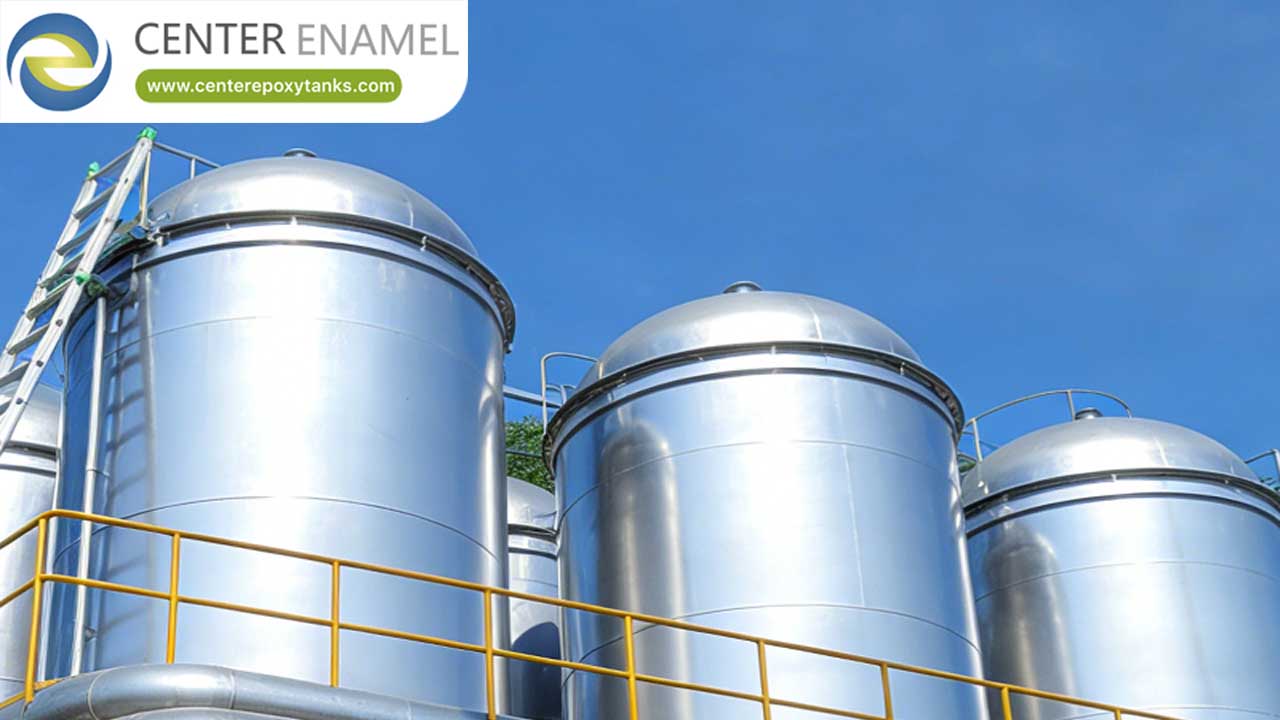
What Is a Welded Steel Production Line Water Tank? Industrial Process Water Storage Explained
In modern smart manufacturing plants, automated assembly lines, heavy metal processing mills, and chemical synthesis facilities, uninterrupted access to clean process water is just as critical as raw materials or electrical power. Whether supplying industrial cooling towers, high-pressure equipment rinsing circuits, or emergency plant utility loops, factories require robust containment vessels that can handle continuous operational cycles without risk of failure. To meet these rigorous demands, industrial operators rely on the welded steel production line water tank.
Fabricated from heavy-gauge carbon or stainless steel plates joined through continuous, high-precision full-penetration welding, these tanks provide a monolithic, hermetically sealed enclosure engineered specifically for factory utility and process water integration. As a globally trusted leader in advanced liquid storage and containment manufacturing, Shijiazhuang Zhengzhong Technology Co., Ltd. (Center Enamel) delivers precision-engineered welded steel tanks built to support demanding industrial manufacturing environments worldwide.
Core Functions of a Production Line Water Tank
Unlike standard municipal water towers or rural storage reservoirs, a production line water tank functions as an active hydraulic buffer directly tied to industrial machinery:
1.
Industrial Cooling Loop Support: Heavy machinery, induction furnaces, laser cutters, and air compressors generate immense heat. Process water tanks maintain a steady head of cooling water, feeding heat exchangers and closed-loop chillers continuously.
2.
3.
Hydraulic Surge and Pressure Buffering: Manufacturing lines experience rapid fluctuations in water demand as automated valves open and close. The tank acts as a buffer vessel, stabilizing line pressure and preventing water hammer effects.
4.
5.
Rinse and Washdown Water Supply: In automotive manufacturing, metal finishing, and food processing lines, these tanks feed high-volume surface treatment, washing, and chemical rinse stations.
6.
Engineering Superiority: Why Welded Construction Excels in Factories
Factory environments subject storage assets to severe mechanical vibration, thermal cycling, and continuous pressure fluctuations. Welded steel fabrication delivers distinct advantages:
·
Monolithic Leak-Tight Integrity: Continuous shop or field welding fuses steel plates into a unified shell. This entirely eliminates joint leakage pathways, protecting sensitive factory floors and electrical infrastructure from water damage.
·
·
Seamless Integration with Plant Pumping Skids: Welded steel structures accommodate heavy flanged nozzles, recirculation piping, automated level sensors, and booster pump skids without structural compromise.
·
·
Advanced Internal Corrosion Defense: Interior walls can be lined with specialized industrial barrier coatings (such as 100% solids epoxies) or fabricated from stainless steel alloys to prevent scaling and rust, ensuring clean process water delivery.
·
Data Table: Comprehensive Comparison of Factory Water Storage Solutions
Technical Parameter | Welded Steel Production Line Water Tanks | Bolted Steel Storage Tanks | Fiberglass Reinforced Plastic (FRP) Tanks |
Structural Integrity | Monolithic welded steel shell; absolute zero-leak performance | Modular panels utilizing perimeter rubber gaskets; prone to gasket aging | Molded polymer composite shell; vulnerable to point impacts |
Piping & Skid Integration | Exceptional structural rigidity for heavy flanged nozzles and booster skids | Standard nozzle attachments; requires engineered reinforcement brackets | Limited load capacity for heavy attached industrial piping systems |
Thermal & Pressure Tolerance | Excellent tolerance for fluctuating process temperatures and high static loads | Standard industrial thermal ratings; dependent on panel hardware | Lower tolerance for high-temperature water loops or severe thermal shock |
Installation Profile | Precision shop-fabrication or efficient field-erection | Rapid modular panel assembly requiring extensive hardware fastening | Single-piece factory molding requiring careful structural placement |
Primary Industrial Application | Central factory cooling loops, process water buffers, and utility feeds | General plant water storage and secondary fire utility reserves | Chemical wash tanks and minor auxiliary utility service |
Frequently Asked Questions (FAQ)
Q: What is a welded steel production line water tank?
A: It is an industrial-grade storage vessel constructed from continuously welded steel plates, designed to supply, buffer, and stabilize process water directly integrated into manufacturing and factory production lines.
Q: Why is welded construction preferred over bolted designs for manufacturing plants?
A: Welded construction provides a seamless, monolithic structure that eliminates gasket leaks, supports heavy attached booster pumps and piping skids, and withstands continuous industrial vibration without joint loosening.
Q: How do these tanks support factory cooling systems?
A: They serve as central reservoirs that store and circulate cooling water for heavy machinery, heat exchangers, and chillers, ensuring stable thermal regulation across the manufacturing floor.
Q: What maintenance is required for industrial process water tanks?
A: Routine maintenance involves inspecting interior protective coatings for wear, checking level sensors and valves, monitoring water quality parameters, and verifying structural anchor stability.


