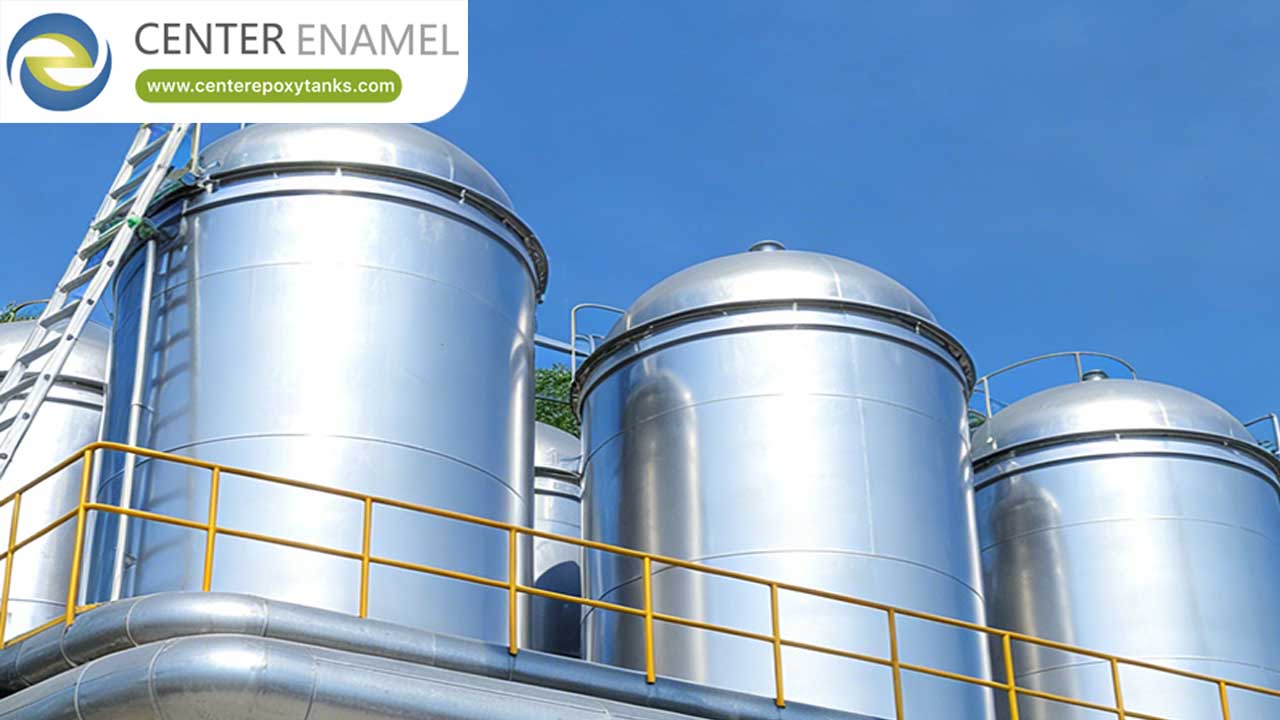
What is a Welded Steel Oil Tank?
A welded steel oil tank is an industrial storage vessel constructed by fusing steel plates together through arc-welding techniques to create a continuous, monolithic structure. Designed specifically for the petroleum industry to meet API 650 standards, these tanks store crude oil and refined petroleum products at atmospheric or near-atmospheric pressure. Unlike modular or bolted storage systems, welded steel tanks offer superior leak resistance, structural rigidity, and longevity, making them the industry-standard choice for refineries, terminals, and critical energy infrastructure.
Why Welded Steel is the Industry Standard
In the oil and gas sector, storage vessels must balance extreme environmental exposure with the high-stakes need for containment security. Welded steel is chosen for several technical reasons:
1. Monolithic Structural Integrity
Welded construction removes the need for mechanical fasteners like bolts, gaskets, and rubber seals. By fusing the steel plates at the molecular level, the tank acts as one single piece of metal. This eliminates "leak points"—the areas where bolted panels would naturally be most vulnerable to stress, temperature cycles, and eventual seal degradation.
2. Adherence to API 650
The American Petroleum Institute (API) 650 standard is the global benchmark for these tanks. It mandates rigorous engineering controls, including:
● Material Selection: Use of carbon or stainless steel grades with verified ductility and notch toughness.
● Weld Quality Assurance: All primary seams are subjected to Non-Destructive Testing (NDT), such as X-ray (radiography) or ultrasonic testing, to ensure the tank is free of internal porosity or cracks before it enters service.
● Load Calculations: The design must account for site-specific hydrostatic pressure, wind loads, snow loads, and seismic activity.
3. Versatility and Customization
Because these tanks are often field-erected (built on-site), they can be customized to fit the exact footprint of a facility. Whether a client needs complex internal heating coils for high-viscosity crude or specialized floating roofs to minimize vapor emissions, welded steel provides the flexibility that pre-fabricated, modular tanks cannot match.
Technical Comparison: Welded vs. Bolted Steel Tanks
Feature | Welded Steel Tanks (API 650) | Bolted Steel Tanks (Modular) |
Integrity | Monolithic (No gaskets) | Panelized (Relies on seals) |
Leak Risk | Near-zero (Fusion welded) | Risk at panel/bolt interfaces |
Lifespan | Long-term (50–100 years) | Moderate (20–30 years) |
Maintenance | Minimal (Coating upkeep) | Periodic gasket/bolt checks |
Best Use | Refineries, Terminals, High-Pressure | Remote/Temporary installations |
Frequently Asked Questions (FAQ)
1. Why is API 650 the mandatory standard for these tanks?
API 650 is the consensus code that balances safety, structural efficiency, and environmental risk. Regulatory bodies and insurance providers worldwide require compliance with this standard to mitigate the legal and environmental liabilities associated with oil spills.
2. Can welded steel oil tanks be built on-site?
Yes. In fact, most large-scale oil storage tanks are "field-erected." Because the tanks are too large to transport on public roads, steel plates are fabricated in a shop, shipped to the job site, and then welded together on the final foundation under strict quality control protocols.
3. How is the quality of the welds verified?
Professional manufacturers use Non-Destructive Testing (NDT). Before a tank is commissioned, qualified inspectors use X-ray or ultrasonic sound waves to "see" inside the weld seams, verifying that there are no hidden cracks or weaknesses that could cause a future failure.
4. Are these tanks fire-resistant?
Yes. Steel is a non-combustible material. Additionally, API 650 design parameters include specific safety features, such as emergency venting and thermal management, which help the tank maintain structural integrity even during external fire exposure.
5. Can I use a welded tank for chemicals other than oil?
Absolutely. While they are "oil tanks" by design, the API 650 framework is frequently used to store biofuels, fertilizers, process water, and a wide variety of industrial chemicals. The internal lining and steel grade are simply adjusted to match the chemical compatibility of the substance being stored.


