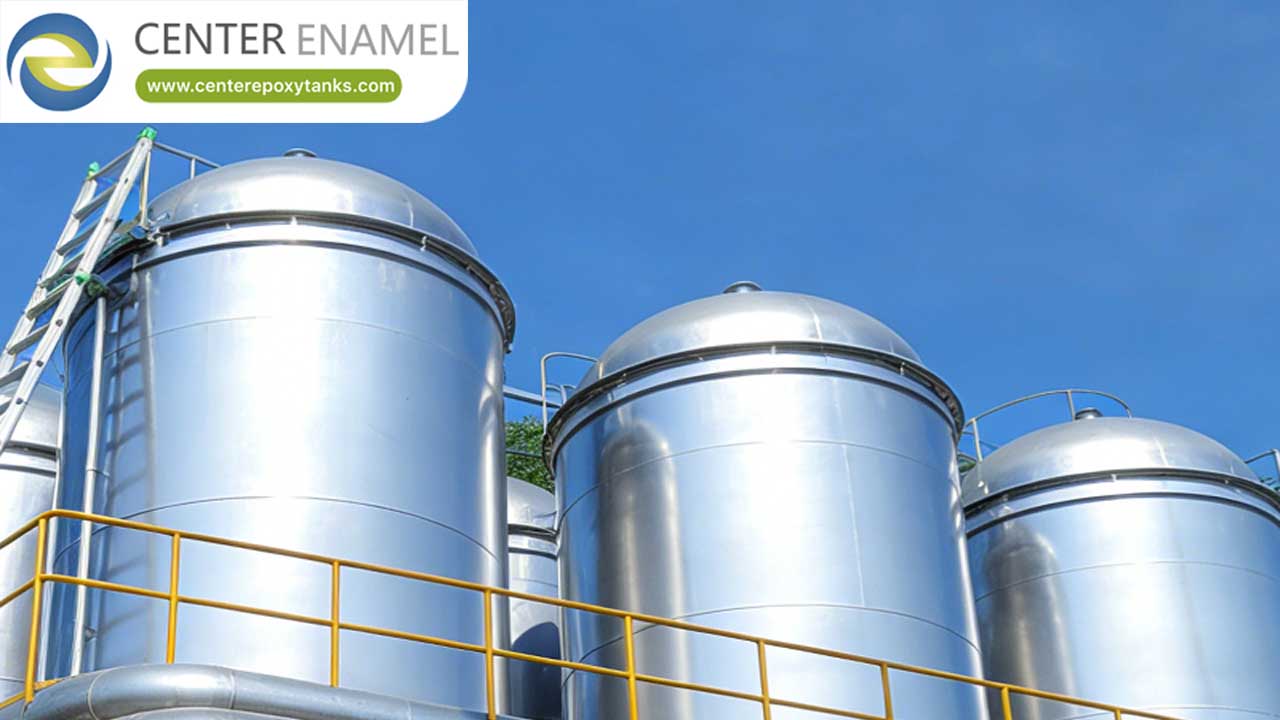
Welded Steel Tanks for Water Storage: The Standard for Municipal and Industrial Reliability
Welded steel tanks are the premier choice for large-scale water storage, engineered primarily to the AWWA D100 (American Water Works Association) standard. Unlike bolted or concrete alternatives, welded steel tanks provide a monolithic, leak-proof structure ideal for municipal potable water, fire protection, and industrial process water. They offer a superior service life, often exceeding 100 years with proper maintenance, due to their ability to be re-coated and repaired in the field.
Why AWWA D100 is the Industry Benchmark
The AWWA D100 standard governs the design, fabrication, and erection of welded carbon steel tanks. It ensures that the tank is not just a container, but an engineered asset capable of withstanding local seismic, wind, and environmental loads.
● Structural Integrity: Being a field-welded, monolithic structure, these tanks eliminate the risk of leaks associated with bolted gaskets and panels.
● Regulatory Compliance: AWWA D100 is widely adopted by state and local building codes for public water systems. When combined with NSF/ANSI 61 coatings, it meets strict safety requirements for potable water.
● Seismic Resilience: The standard includes rigorous requirements for hydrodynamic analysis, ensuring tanks perform reliably in seismic zones—a critical factor for municipal water security.
Technical Comparison: Welded vs. Bolted Steel Tanks
Feature | Welded Steel Tanks | Bolted Steel Tanks |
Construction | Field-welded, monolithic | Prefabricated, modular panels |
Leak Risk | Minimal (Seam-welded) | Higher (Gasket/seal degradation) |
Lifespan | 100+ years (with maintenance) | ~30 years |
Repairability | Highly repairable via welding | Often requires panel replacement |
Best Use | Long-term municipal/industrial | Temporary or rapid-deployment |
Maintenance | Re-coat every 20–30 years | Inspect seals/gaskets frequently |
Lifecycle Advantages
For stakeholders managing long-term capital assets, the primary argument for welded steel is Total Cost of Ownership (TCO).
1. Lower Lifetime Costs: While the upfront cost of field-welding can be higher, the avoidance of expensive panel replacements and the ability to maintain the tank indefinitely with simple re-coating makes it the most economical choice over a 50+ year horizon.
2. Customization: Every welded tank is custom-engineered to site-specific requirements, allowing for unique dimensions, ladder placements, and internal accessories (such as mixing systems or baffle designs) that off-the-shelf bolted tanks cannot accommodate.
Frequently Asked Questions (FAQ)
1. Why choose AWWA D100 over API 650 for water?
API 650 is designed primarily for petroleum and hazardous chemicals, focusing on vapor containment and fire safety. AWWA D100 is purpose-built for water, incorporating specific requirements for water quality (potable safety), tank venting, and municipal seismic codes. Using AWWA D100 is the standard practice for water utility compliance.
2. How often do welded steel water tanks need inspection?
While construction is governed by AWWA D100, operational maintenance follows AWWA M42 or local utility standards. Typically, a visual exterior inspection is recommended annually, and a thorough interior/exterior structural inspection is performed every 3 to 5 years.
3. Can welded tanks store fire protection water?
Yes. In fact, fire protection water tanks often must meet both AWWA D100 (for general steel construction) and NFPA 22 (Standard for Water Tanks for Private Fire Protection). Many industrial facilities use "dual-service" tanks that meet both standards to provide both process water and fire suppression reserves.
4. Are welded steel tanks suitable for harsh climates?
Yes. Because they are custom-fabricated, they can be engineered to handle extreme wind loads, heavy snow loads, and even high-seismic activity. Insulation and heating systems can also be integrated into the design to prevent freezing in cold climates.
5. Can a welded tank be relocated?
Generally, no. Welded steel tanks are designed as permanent, field-erected structures. If mobility or relocation is a priority for your project, a bolted tank may be a more appropriate, albeit shorter-term, solution.
Are you currently evaluating tank construction options for a new project, or are you looking to optimize maintenance protocols for an existing fleet of assets?


