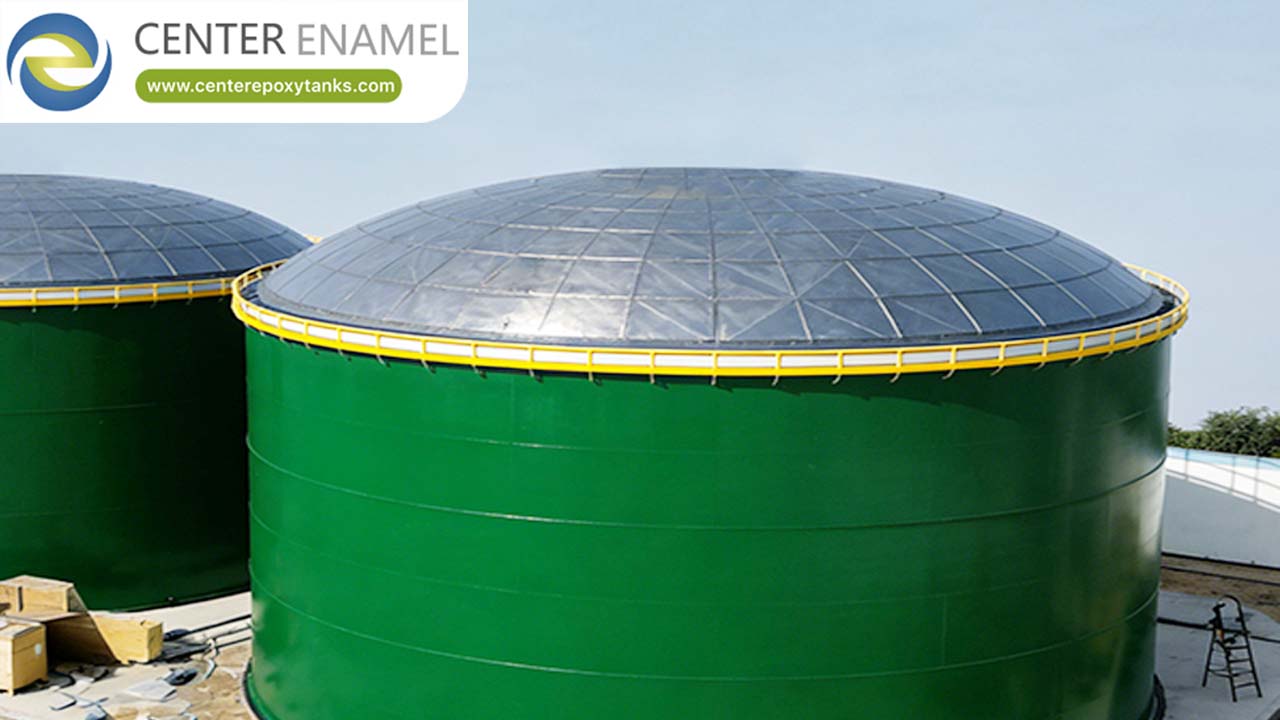
Welded Steel Tanks for Oil Storage: Industry Standards & Engineering Excellence
Welded steel tanks are the industry-standard vessels for the safe, large-scale storage of crude oil and refined petroleum products. Engineered to meet the API 650 standard, these tanks provide a monolithic, leak-proof containment structure designed to withstand specific hydrostatic loads, seismic activity, and environmental corrosion. Unlike modular or bolted systems, welded tanks are fabricated to offer maximum structural integrity and long-term durability, making them the preferred solution for oil terminals, refineries, and critical fuel supply infrastructure.
Why Welded Steel is the Gold Standard for Oil Storage
In the energy sector, storage infrastructure must handle high-pressure variables and volatile chemical profiles. Welded steel remains the dominant technology for several key reasons:
1. Monolithic Structural Integrity
Welded construction fuses steel plates into a continuous shell. This eliminates the mechanical joints, gaskets, and bolt holes inherent in modular tanks. For petroleum products, where even minor leakage or vapor release poses environmental and fire risks, the seam-welded structure provides a superior "fail-safe" barrier.
2. Adherence to API 650 Compliance
The American Petroleum Institute (API) 650 is the non-negotiable benchmark for oil storage. This standard dictates:
● Material Certification: Use of specific carbon steel grades with verified ductility and notch toughness.
● Weld Quality: Mandatory Non-Destructive Testing (NDT)—such as Radiographic (RT) and Ultrasonic (UT) testing—to ensure every weld seam is free of subsurface porosity.
● Design Loadings: Mathematical models that ensure the tank remains stable under localized wind, snow, and seismic events.
3. Versatility and Longevity
Welded steel tanks are highly customizable. They can be engineered with internal/external floating roofs to reduce vapor emissions, or equipped with advanced heating coils for heavy crude that requires viscosity management. With proper maintenance (ISO 12944 compliant coating systems), these tanks can operate reliably for 50+ years.
Comparative Analysis: Welded vs. Alternative Storage
Engineering Parameter | Welded Steel Tanks (API 650) | Bolted Steel Tanks (Modular) |
Structural Design | Monolithic (Field-welded) | Panelized (Gasket-reliant) |
Leak Risk | Near-Zero | Risk at seam/gasket points |
Maintenance | Low (Coating focused) | Moderate (Seal inspection) |
Customization | Infinite (Site-specific) | Limited to panel geometry |
Best Used For | Oil Terminals/Refineries | Remote/Rapid deployment sites |
The Role of Field Erection vs. Shop Fabrication
Because crude oil storage tanks are often massive, they are rarely shipped fully built.
● Field Erection: Specialized teams transport steel plates to the site, assemble the tank, and perform the welding and NDT verification on the final foundation. This ensures the tank is built to the exact dimensions required by the terminal's footprint.
● Shop Fabrication: For smaller fuel storage (e.g., backup generators or fueling stations), tanks are fully fabricated, tested, and coated in a controlled factory environment before being shipped, ensuring the highest possible quality control.
Frequently Asked Questions (FAQ)
1. Why is API 650 the mandatory standard for oil storage?
API 650 is the global consensus code that balances safety, environmental protection, and structural economics. Most insurance providers, regulatory bodies, and global oil companies mandate API 650 compliance to mitigate the massive liability associated with oil spills and fires.
2. How is the quality of a welded tank verified?
The fabrication process includes rigorous Non-Destructive Testing (NDT). This allows engineers to "see" inside the steel and the weld seams without damaging the tank. Common tests include Radiographic (X-ray) testing for internal weld integrity and Vacuum Box testing for plate/joint tightness.
3. Can welded steel tanks handle different types of crude oil?
Yes. Through internal lining selection and thermal management systems (like heating coils), welded tanks can be adapted to store everything from light, low-viscosity condensates to heavy, sour crude oils that require temperature control to prevent clogging.
4. Are welded steel tanks fire-resistant?
Yes. Steel is non-combustible and maintains its structural integrity at temperatures where other materials would fail. Furthermore, API 650 design parameters include fire protection features, such as specific venting requirements to manage pressure increases during an external fire event.
5. What is the difference between API 650 and API 653?
It is a matter of the tank's lifecycle. API 650 is the construction code used to design and build the tank. API 653 is the maintenance code used to inspect, repair, and alter the tank once it is already in service.


