Bolted vs. Welded Steel Tanks: An EPC Selection Guide
For EPC managers and procurement teams, the choice between welded steel tanks and bolted steel tanks is rarely about preference—it is about mission-critical performance, site logistics, and lifecycle cost.
While bolted tanks offer rapid, modular deployment, welded tanks provide the monolithic structural integrity required for high-pressure, hazardous, or long-term industrial applications. This guide breaks down the selection criteria for your next project.
The Decision Matrix: When to Choose Which
To make the right choice, evaluate your project against these four critical vectors:
Selection Criteria | Welded Steel Tanks | Bolted Steel Tanks |
Structural Integrity | Monolithic (High pressure/Hazardous) | Modular (Atmospheric pressure) |
Leak Risk | Near-Zero (Fusion welded) | Potential at gasket interfaces |
Installation Speed | Moderate (Requires site welding) | Rapid (Modular assembly) |
Project Location | Best for accessible/fixed sites | Best for remote/constrained sites |
Lifespan | Long-term (Permanent asset) | Medium-term (Component-based) |
Maintenance | Low (Coating/Visual inspection) | Moderate (Bolt/Gasket checks) |
Welded Steel Tanks: The "Permanent" Choice
Welded steel tanks are engineered for projects where failure is not an option. They are the standard for refineries, chemical plants, and high-demand municipal infrastructure.
● Engineering Standards: Typically built to API 650, API 620, or ASME Section VIII. These standards require rigorous material certification and weld verification.
● The EPC Advantage: Welded tanks are a "set and forget" asset. Because they lack mechanical fasteners, they do not suffer from gasket fatigue or bolt loosening.
● Best For: Crude oil, volatile chemicals, high-purity water, and applications requiring zero-leakage performance.
Bolted Steel Tanks: The "Agile" Choice
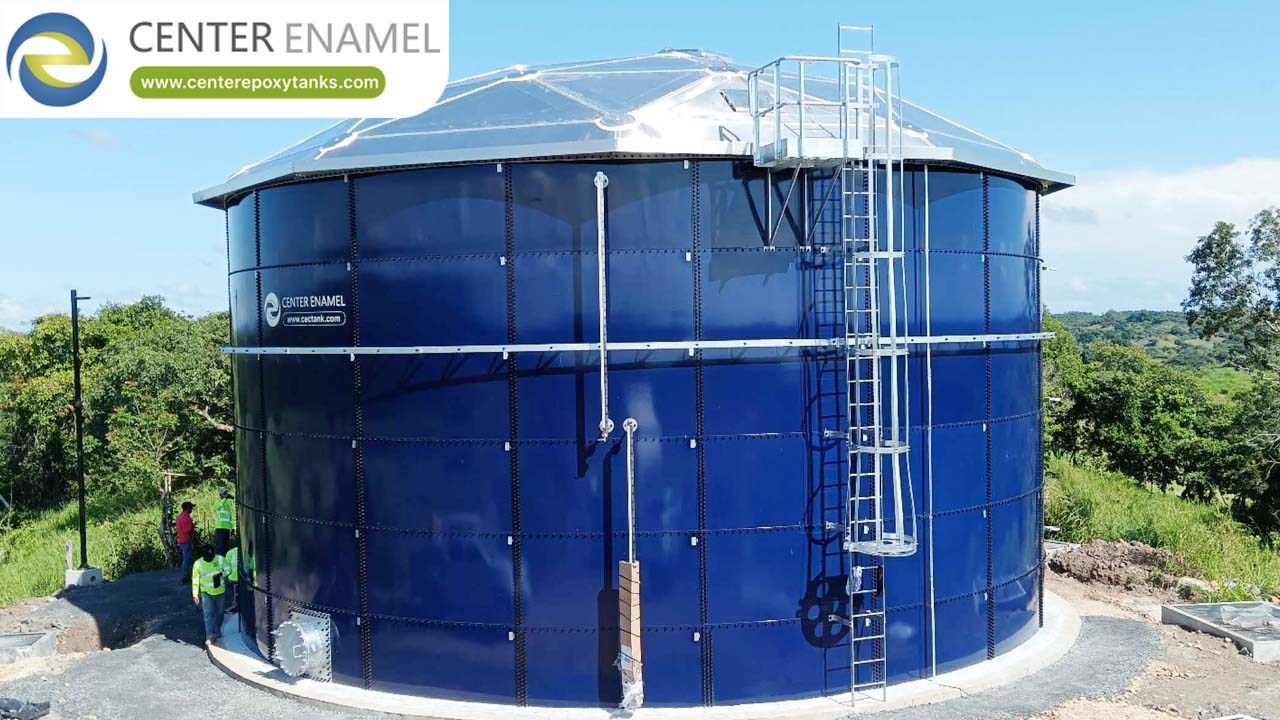
Bolted tanks utilize factory-coated steel panels assembled on-site with gaskets and fasteners. They are the "workhorse" for bulk storage where the primary driver is time-to-market.
● Engineering Standards: Commonly aligned with AWWA D103 (for water) or specific proprietary vendor standards.
● The EPC Advantage: Significant reduction in on-site labor and equipment costs. Because panels are mass-produced in a factory, quality consistency is high, and the modular nature allows for construction in locations where cranes or specialized welding rigs cannot reach.
● Best For: Bulk water storage, fire protection, dry bulk/silo applications, and projects with aggressive construction schedules.
Critical Selection Factors for EPC Managers
1. Site Accessibility and Logistics
If your project is located in a remote area with limited crane access or restricted space for large equipment, bolted tanks are generally easier to transport and assemble. If the site is a standard industrial plant with heavy equipment access, welded tanks are the preferred choice.
2. Nature of the Stored Medium
● Hazardous/Toxic: If storing flammable hydrocarbons or corrosive chemicals, welded steel is the industry standard. The monolithic shell provides the best containment for hazardous materials.
● Non-Hazardous/Bulk: If storing non-potable water, grain, or agricultural feedstock, bolted steel provides the best balance of cost and performance.
3. Total Cost of Ownership (TCO)
Do not let the lower upfront price of bolted tanks mislead you. While bolted tanks have a lower initial capital expenditure (CAPEX), they often have higher operational expenditure (OPEX) due to the need for periodic gasket and seal replacements. Welded tanks have a higher initial cost but offer a lower TCO over a 50-year asset lifecycle.
Frequently Asked Questions (FAQ)
1. Can bolted tanks ever store hazardous chemicals?
In some specific applications, yes, but they are almost never used for volatile hydrocarbons or high-pressure applications. Welded steel is the mandatory requirement for safety compliance in most petrochemical environments.
2. Which tank is faster to install?
Bolted tanks are significantly faster to install. They are "kit-based" and do not require the time-intensive process of field-welding and non-destructive testing (NDT) required for welded tanks.
3. Can I upgrade a bolted tank to a welded tank later?
No. These are two completely different structural designs. You must select the technology at the initial engineering design phase.
4. Which is better for seismic zones?
Both can be engineered for seismic zones, but welded tanks are generally preferred for high-seismic areas because they are more structurally rigid and lack the vulnerable mechanical joints that can fail under extreme lateral movement.
5. How do I decide which one to quote for my project?
If you are an EPC manager, start by looking at your fluid type (e.g., oil = welded) and project timeline (e.g., ultra-fast = bolted). If you are still unsure, consult with an EPC partner who has experience in both fabrication types to perform a value engineering analysis on your site requirements.


