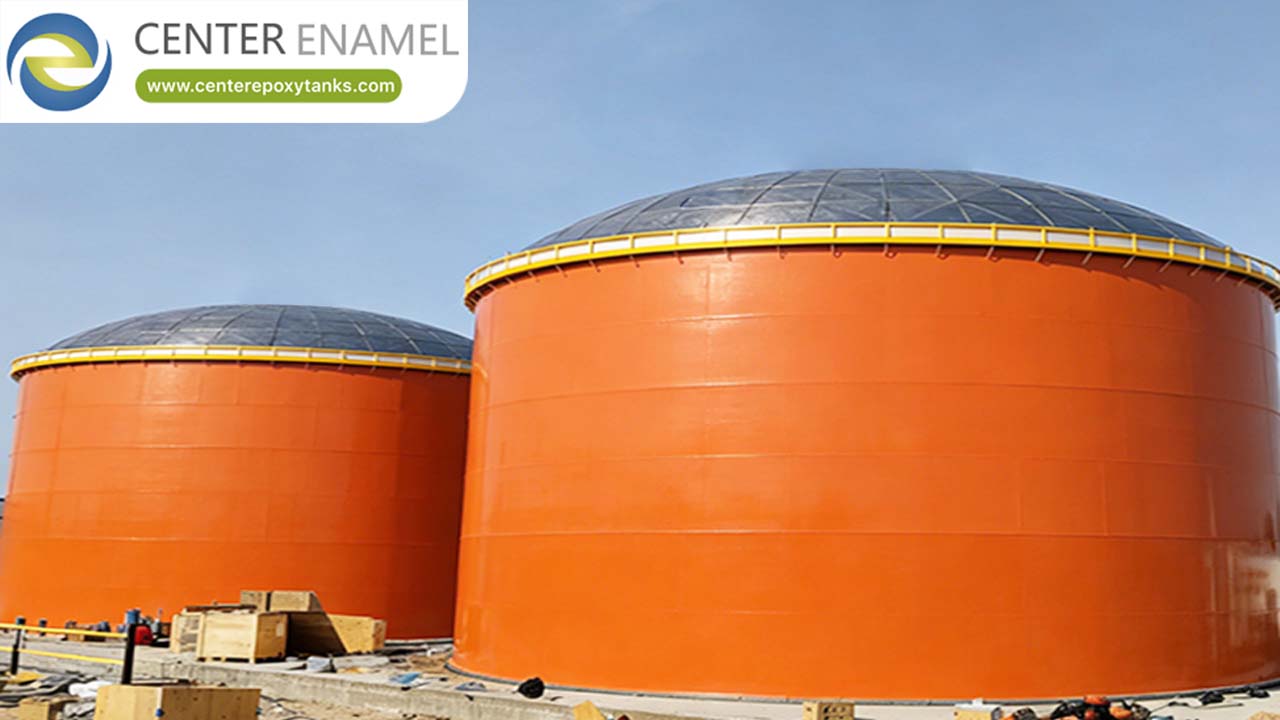
What Is a Welded Steel Agricultural Water Tank? Heavy-Duty Irrigation and Farm Storage Explained
In modern commercial farming, greenhouse operations, livestock management, and expansive crop irrigation networks, reliable water access is the lifeblood of agricultural productivity. As weather patterns become increasingly unpredictable and water conservation regulations tighten, agricultural enterprises require ultra-durable, high-capacity liquid containment systems capable of withstanding harsh outdoor environments. To satisfy these rigorous multi-season demands, large-scale farming operations specify the welded steel agricultural water tank.
Fabricated from heavy-gauge carbon or stainless steel plates joined through continuous, full-penetration shop or field welding, these tanks form a monolithic, hermetically sealed containment structure engineered to store vast volumes of irrigation water, livestock supply, or emergency fire suppression reserves. As a globally trusted leader in advanced liquid storage manufacturing, Shijiazhuang Zhengzhong Technology Co., Ltd. (Center Enamel) delivers precision-engineered welded steel tanks designed specifically to meet the demanding requirements of modern agricultural infrastructure worldwide.
Core Functions of an Agricultural Water Storage Tank
Unlike residential rain barrels or light-duty poly tanks, welded steel agricultural tanks serve as critical, centralized infrastructure hubs across farming complexes:
1.
Massive-Scale Irrigation Buffering: Modern center-pivot and drip irrigation systems demand high-volume, continuous water delivery. A central welded steel tank stores water pumped from wells or canals, ensuring constant pressure and flow during peak crop-watering cycles.
2.
3.
Livestock Hydration and Feeding Support: Large dairy, poultry, and cattle operations require uninterrupted, hygienic water supplies for thousands of animals daily, making structural reliability non-negotiable.
4.
5.
On-Farm Fire Protection Reserves: Many agricultural facilities utilize dual-purpose welded steel tanks that store dedicated water volumes complying with fire protection standards (NFPA 22) to protect valuable farm buildings and equipment.
6.
Engineering Superiority: Why Welded Construction Excels in Agriculture
Agricultural settings subject storage vessels to extreme weather fluctuations, intense ultraviolet radiation, soil settling, and mechanical stress. Welded steel engineering provides unmatched structural advantages:
·
Monolithic Leak-Proof Integrity: Continuous welding permanently fuses steel plates into an absolute seamless envelope, eliminating structural joint leakage and protecting surrounding topsoil from erosion.
·
·
Exceptional Structural Strength and Wind Resilience: Open agricultural fields expose tanks to high winds and heavy snow loads. Welded steel structures provide superior rigidity and load-bearing capacity compared to light modular alternatives.
·
·
Custom Protective Coatings: Interior surfaces can be treated with specialized, non-toxic liquid barrier coatings or glass-fused finishes to resist mineral buildup, algae growth, and corrosive elements present in well water or liquid fertilizer blends.
·
Data Table: Comprehensive Comparison of Agricultural Water Storage Options
Technical Parameter | Welded Steel Agricultural Water Tanks | Bolted Steel Storage Tanks | Corrugated Galvanized Steel Tanks | High-Density Polyethylene (HDPE) Tanks |
Structural Integrity | Monolithic welded steel shell; absolute zero-leak performance | High-strength bolted panels utilizing perimeter elastomeric gaskets | Modular corrugated panels with flexible inner membrane liners | Rotationally molded single-piece polymer; vulnerable to extreme point impacts |
Capacity Scalability | Massive industrial volumes ranging from 50,000 to over 10,000,000 gallons | High-capacity modular scaling up to multi-million gallon limits | Medium to high capacities, heavily dependent on internal liner durability | Typically restricted to smaller volumes (under 20,000 gallons per unit) |
Environmental & Weather Resilience | Superior wind, snow, and seismic resistance; 40+ year lifespan | High structural strength with scheduled hardware and gasket maintenance | Vulnerable to structural deformation under extreme storm or wind loading | Susceptible to thermal expansion/contraction and UV degradation over time |
Primary Agricultural Application | Commercial crop irrigation hubs, dairy complexes, and fire protection reserves | Regional farm district storage and large-scale greenhouse water networks | General farm utility water and seasonal rainwater harvesting | Small-scale livestock watering, pesticide mixing, and localized storage |
Frequently Asked Questions (FAQ)
Q: What is a welded steel agricultural water tank?
A: It is a heavy-duty industrial storage vessel constructed from continuously welded steel plates, designed to provide high-capacity, reliable water storage for farm irrigation, livestock operations, and agricultural fire protection.
Q: Why choose a welded steel tank over plastic or bolted tanks for farming?
A: Welded steel tanks offer superior structural strength, massive volume capacity, absolute joint leak-tightness, and an operational lifespan exceeding 40 to 50 years with minimal maintenance.
Q: Can welded steel agricultural tanks store water mixed with fertilizers or additives?
A: Yes. When equipped with specialized chemical-resistant interior barrier linings or constructed from stainless steel, these tanks can safely store specialized agricultural solutions, liquid fertilizers, and treated irrigation water.
Q: How do welded steel agricultural tanks withstand severe outdoor weather?
A: Built to strict engineering standards (such as AWWA D100 and NFPA 22), these tanks feature heavy-gauge structural steel, reinforced anchor foundations, and high wind/seismic load tolerances to endure harsh rural environments.


