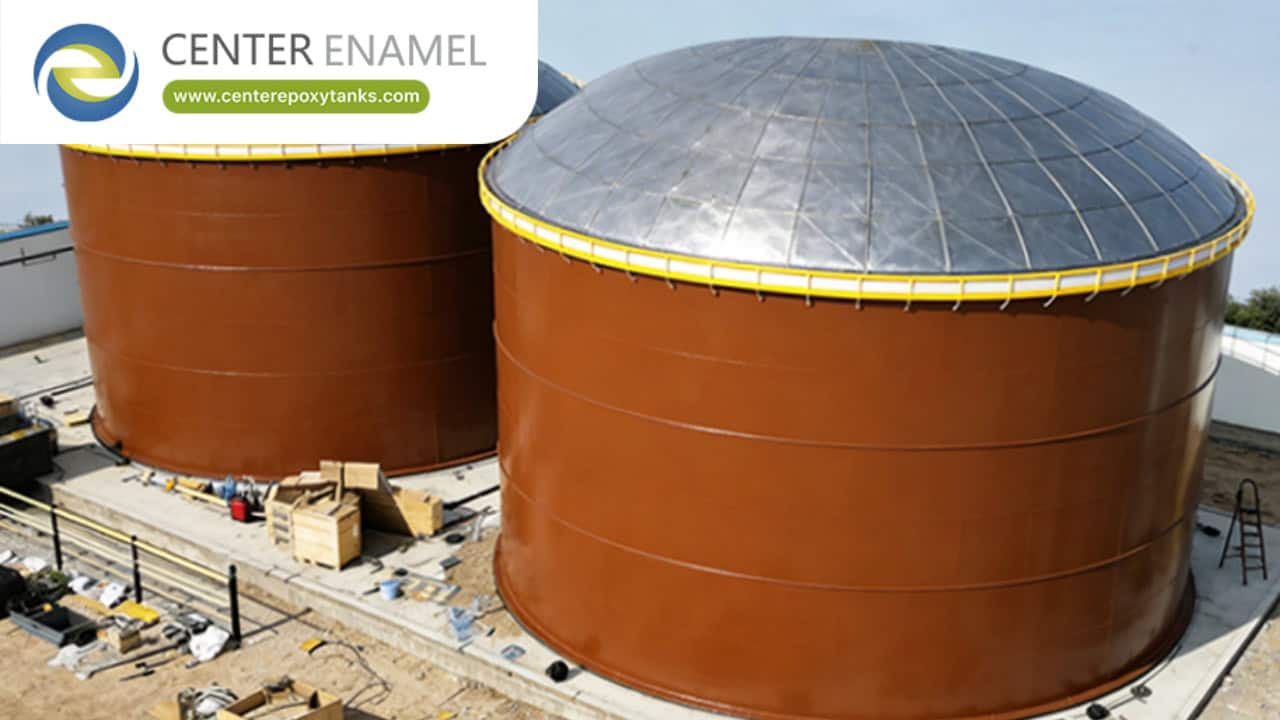
What Is a Welded Steel Drinking Water Tank? Engineering, Standards, and Monolithic Reliability
In municipal water distribution networks, suburban community supply systems, and large-scale industrial facilities, maintaining a secure, uncompromised supply of safe drinking water is a fundamental public health requirement. As populations expand and municipal infrastructure faces strict environmental and sanitary oversight, specifying the correct storage vessel is paramount. For high-capacity requirements and absolute structural integrity, the welded steel drinking water tank (commonly referred to as a welded potable water reservoir or standpipe) represents the gold standard of modern civil engineering.
Constructed from high-strength carbon steel plates joined through continuous, full-penetration field or shop welding, these tanks form a monolithic, hermetically sealed containment envelope engineered to resist intense hydrodynamic forces, seismic activity, and environmental weathering. As a globally trusted leader in advanced liquid storage manufacturing, Shijiazhuang Zhengzhong Technology Co., Ltd. (Center Enamel) delivers precision-engineered welded steel drinking water tanks designed in strict compliance with the world's most rigorous sanitary and structural codes.
The Core Anatomy of a Welded Potable Water Reservoir
Unlike modular or bolted container options, a welded steel drinking water tank functions as a continuous, unified structural unit:
1.
Monolithic Field-Welded Shell: Every steel plate is fused together via precision welding and thoroughly verified using non-destructive examination (NDE), completely eliminating joint leakage pathways and gasket degradation.
2.
3.
Certified Sanitary Linings: Interior walls are abrasive-blasted to near-white metal specifications (SSPC-SP10) and coated with high-build, 100% solids epoxy systems that provide a glass-like, non-reactive barrier.
4.
5.
Active Water Quality Management: Tanks incorporate screened frost-proof pressure/vacuum vents and active mixing configurations to prevent thermal stratification and eliminate stagnant zones where bacteria could otherwise proliferate.
6.
Governing Engineering Standards: AWWA D100 and NSF/ANSI 61
To guarantee public health safety and long-term structural viability, welded steel drinking water tanks are governed by rigorous international frameworks:
·
AWWA D100 Compliance: The American Water Works Association standard dictates the engineering, fabrication, and erection criteria for welded carbon steel tanks used in water storage, covering minimum wall thicknesses, wind load safety, and seismic design coefficients.
·
·
NSF/ANSI/CAN 61 Certification: Interior barrier coatings and component materials must pass stringent health effects testing to ensure that harmful volatile organic compounds (VOCs) or heavy metals never leach into the drinking water supply.
·
·
Cathodic Protection Systems: To prevent long-term corrosion, tanks integrate sacrificial anodes or impressed current cathodic protection (ICCP) systems, safeguarding the steel structure over decades of continuous water immersion.
·
Data Table: Comprehensive Comparison of Drinking Water Storage Technologies
Technical Parameter | Welded Steel Drinking Water Tanks (AWWA D100) | Bolted Steel Storage Tanks | Cast-in-Place Concrete Reservoirs |
Structural Integrity | Monolithic welded steel shell; absolute zero-leak performance | High-strength bolted panels utilizing perimeter rubber gaskets | Massive monolithic structure; vulnerable to micro-cracking over time |
Health & Sanitary Certification | Full NSF/ANSI 61 and NSF 372 lead-free compliance | Certified internal membrane liners or specialized powder coatings | Concrete surfaces require specialized food-grade epoxy linings |
Seismic Ductility & Safety | Superior structural flexibility; absorbs seismic shock without fracturing | Standard structural bracing; relies heavily on high-tensile hardware | High mass, but susceptible to structural cracking and shifting during major earthquakes |
Installation Profile | Precision field-erection, heavy lifting, and rigorous NDE weld testing | Rapid modular panel assembly using high-tensile hardware | Slow, multi-month multi-stage pouring, formwork, and curing |
Primary Municipal Application | Large municipal water towers, drinking reserves, and high-capacity clearwells | Community water storage, booster stations, and rural reserves | Large underground clearwells, municipal water treatment basins, and ground reservoirs |
Frequently Asked Questions (FAQ)
Q: What is a welded steel drinking water tank?
A: It is a heavy-duty municipal storage reservoir constructed from continuously welded steel plates, designed specifically to store safe, treated potable water in compliance with strict sanitary and structural codes.
Q: Why is welded construction preferred over bolted designs for drinking water storage?
A: Welded construction creates a seamless, monolithic shell that eliminates joint gaskets and bolt lines, offering absolute zero-leakage performance, lower maintenance overhead, and superior seismic resilience.
Q: How do welded steel tanks ensure drinking water remains uncontaminated?
A: They feature certified NSF/ANSI 61 interior epoxy barrier coatings that prevent chemical leaching, stainless steel screened air vents to block debris, and active mixing systems to maintain water freshness.
Q: What is the expected operational lifespan of a welded steel water tank?
A: When built in accordance with AWWA D100 standards and maintained with proper cathodic protection and periodic coating inspections, a welded steel drinking water tank can deliver a service life exceeding 40 to 50 years.


