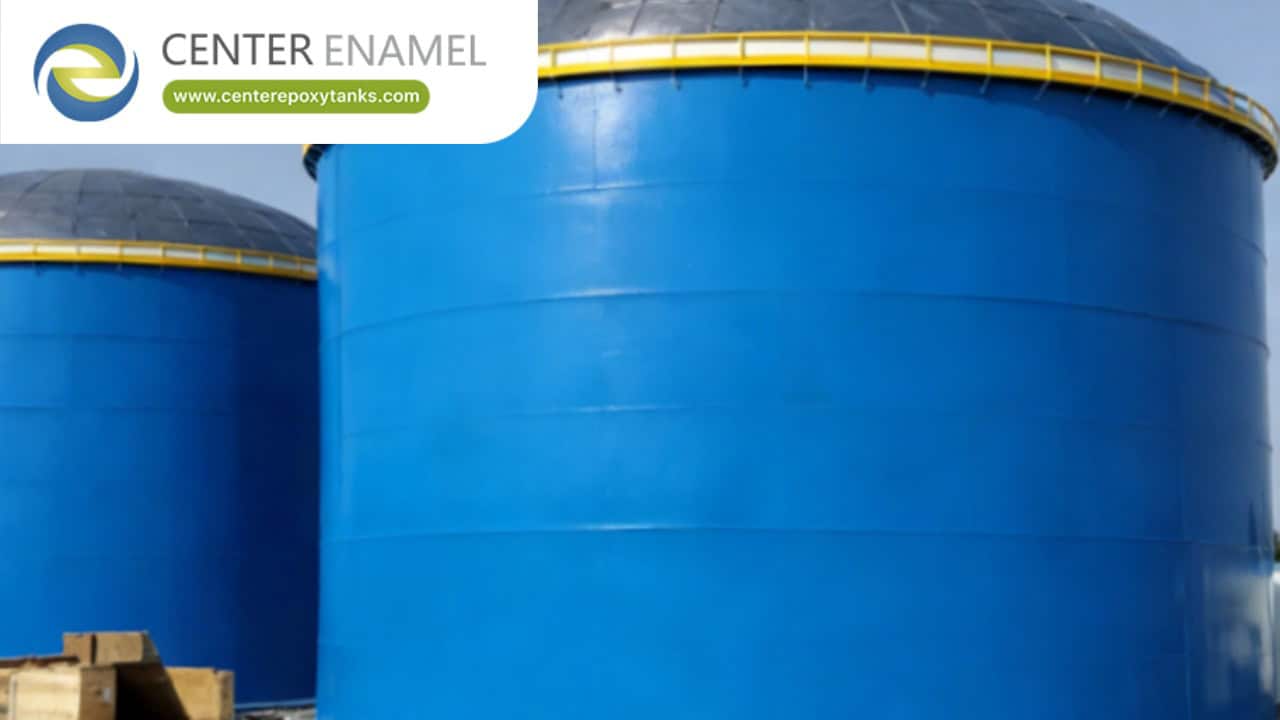
Welded Steel Water Tanks: High-Performance Engineering for Municipal and Industrial Water Storage
In municipal water distribution networks, fire suppression reserves, agricultural irrigation systems, and heavy industrial facilities, maintaining a safe, reliable, and abundant water supply is paramount. As communities expand and industrial demands increase, the infrastructure used to store treated, raw, or fire-protection water must deliver decades of zero-leak service under varying environmental pressures. To meet these stringent requirements, engineers specify welded steel water tanks.
Fabricated from high-grade carbon steel plates joined through continuous, full-penetration field or shop welding, these tanks provide a monolithic, hermetically sealed structural envelope. As a globally recognized leader in advanced liquid storage manufacturing, Shijiazhuang Zhengzhong Technology Co., Ltd. (Center Enamel) delivers precision-engineered welded steel water storage solutions built in strict compliance with international engineering and potable water standards.
Engineering Superiority: Governing Standards and Structural Integrity
Water storage infrastructure requires absolute structural reliability and safety compliance to protect public health and ensure operational continuity:
·
AWWA D100 Compliance: Large-scale water storage reservoirs, standpipes, and elevated structures are engineered in strict alignment with AWWA D100 (Welded Carbon Steel Tanks for Water Storage) guidelines, ensuring precise wall thickness sizing, wind load safety, and rigorous foundation design.
·
·
Potable Water Safety (NSF/ANSI 61): Interior lining systems comply with NSF/ANSI 61 certifications, ensuring that protective barrier coatings do not leach harmful chemicals or volatile compounds into drinking water supplies.
·
·
Monolithic Field-Welded Seams: Continuous welding fuses steel plates into a unified shell, completely eliminating joint gasket degradation and joint leakage pathways common in modular container designs.
·
·
Seismic and Wind Load Resilience: Engineered to withstand extreme environmental forces, welded steel structures feature comprehensive structural anchoring and robust shell thickness design to maintain stability during seismic events and high winds.
·
Data Table: Comprehensive Comparison of Water Storage Tank Technologies
Technical Parameter | Welded Steel Water Tanks (AWWA D100) | Bolted Steel Storage Tanks | Cast-in-Place Concrete Basins |
Structural Integrity | Monolithic welded steel shell; absolute zero-leak performance | High-strength bolted panels utilizing perimeter rubber gaskets | Massive monolithic structure; vulnerable to micro-cracking over time |
Potable Water Certification | Full NSF/ANSI 61 compliance via specialized interior coatings and linings | Certified internal membrane liners or specialized powder-coated panels | Concrete surfaces require food-grade epoxy or polymer coatings |
Seismic & Wind Resistance | Superior structural flexibility and strength under dynamic wind/seismic loads | Standard structural bracing; dependent on hardware integrity | High mass, but susceptible to cracking and shifting during major seismic events |
Installation Profile | Precision field-erection, heavy lifting, and rigorous NDE weld testing | Rapid modular panel assembly using high-tensile hardware | Slow, multi-month multi-stage pouring, formwork, and curing |
Primary Water Application | Municipal drinking water storage, fire suppression tanks, and industrial reserves | Regional water storage, agricultural irrigation, and rural systems | Large municipal treatment clarifiers, clearwells, and raw water basins |
Key Municipal and Industrial Applications
Welded steel water tanks serve as vital infrastructure assets across diverse sectors:
1.
Municipal Water Distribution Networks: Acting as elevated water towers or ground-level standpipes to maintain stable water pressure and provide reserve capacity during peak consumption hours.
2.
3.
Fire Protection Systems: Storing dedicated high-volume water reserves for industrial fire suppression loops and commercial sprinkler systems.
4.
5.
Industrial Process Water Reservoirs: Supplying continuous, clean process water for manufacturing plants, power generation cooling towers, and mining operations.
6.
Frequently Asked Questions (FAQ)
Q: Why choose a welded steel tank for potable water storage?
A: Welded steel tanks offer unmatched structural integrity, absolute leak-tightness, long service lifecycles, and full compliance with stringent American Water Works Association (AWWA D100) standards.
Q: How do welded water tanks maintain drinking water safety?
A: Tanks are lined with certified NSF/ANSI 61 interior coatings and corrosion-resistant systems that protect water quality, prevent microbial growth, and ensure complete safety for human consumption.
Q: How are structural welds tested during tank construction?
A: All field and shop welds undergo strict Non-Destructive Examination (NDE)—including radiographic testing (RT), ultrasonic testing (UT), and vacuum box testing—conducted by certified inspectors to guarantee structural soundness.
Q: Can welded steel water tanks be custom-designed for seismic zones?
A: Yes. Engineering calculations account for local seismic coefficients and wind loads, incorporating robust anchor bolt chairs, shell stiffeners, and specialized foundation designs to withstand severe natural events.


