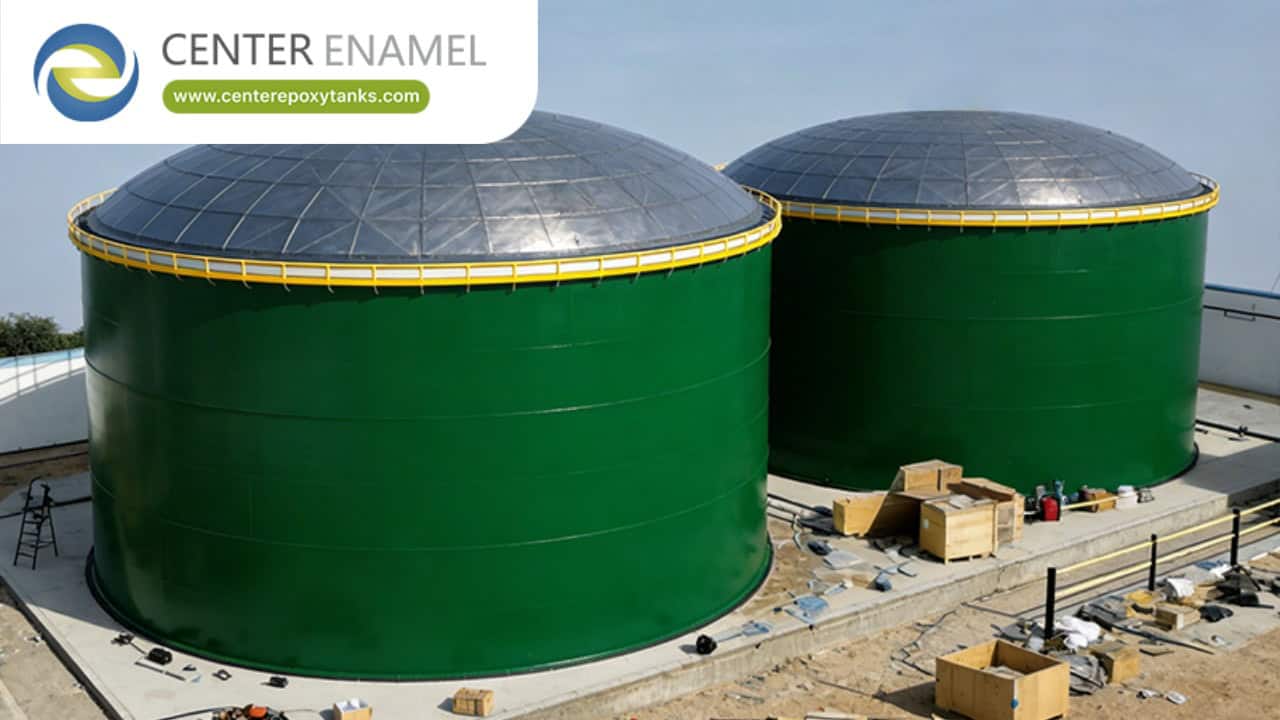
Welded Steel Wastewater Holding Tanks: Monolithic Engineering for Industrial Effluent and Municipal Sewage Management
In municipal wastewater treatment, chemical processing, food and beverage production, and heavy manufacturing, managing variable wastewater streams requires robust and dependable containment infrastructure. Facilities frequently encounter peak hydraulic surges, toxic chemical washdowns, and corrosive effluents that can compromise substandard containment systems. To prevent environmental contamination and ensure uninterrupted plant operations, engineers specify welded steel wastewater holding tanks.
Constructed from heavy-duty carbon or stainless steel plates joined through continuous, full-penetration welding, these tanks provide a monolithic, hermetically sealed enclosure engineered to withstand aggressive chemical environments and intense structural loads. As a globally trusted leader in advanced liquid storage manufacturing, Shijiazhuang Zhengzhong Technology Co., Ltd. (Center Enamel) delivers precision-engineered welded steel wastewater tanks designed in strict compliance with international engineering and environmental safety standards.
Engineering Superiority: Why Welded Construction Excels in Wastewater Holding
Wastewater holding and equalization tanks operate under demanding mechanical and chemical conditions. Welded steel fabrication provides distinct structural advantages over alternative construction methods:
·
Absolute Leak-Tight Integrity: Unlike bolted panels that rely on gaskets or mechanical seals, continuous shop or field welding fuses steel plates into a unified shell. This eliminates joint leakage pathways, ensuring complete containment of hazardous wastewater and foul-smelling effluent liquors.
·
·
Resistance to Corrosive Chemistry and Gases: Wastewater holding environments frequently harbor volatile fatty acids and hydrogen sulfide ($H_2S$) gas, which can trigger aggressive chemical attack. Welded steel tanks can be paired with high-performance industrial barrier linings (such as 100% solids epoxies) to resist chemical degradation.
·
·
High Load-Bearing Capacity for Auxiliary Equipment: Industrial wastewater systems often require bridge-mounted mixers, aeration headers, level sensors, and heavy inlet/outlet piping. The structural tensile rigidity of welded steel accommodates these heavy dynamic loads without structural deflection.
·
·
Custom Geometries for Flow Control: Field-erected welded tanks can be custom-fabricated with specialized floor slopes, internal baffles, and anti-vortex configurations to optimize hydraulic retention times and prevent solid settling in holding basins.
·
Data Table: Comprehensive Comparison of Wastewater Holding Tank Technologies
Technical Parameter | Field-Erected Welded Steel Holding Tanks | Bolted Steel Storage Tanks | Cast-in-Place Concrete Basins |
Structural Integrity | Monolithic welded steel shell; absolute zero-leak performance | High-strength bolted panels utilizing perimeter sealing gaskets | Massive monolithic structure; prone to micro-cracking over time |
Corrosion Defense | High-build industrial epoxy systems or stainless steel options | Factory-applied powder coatings or glass-fused ceramic bonds | Vulnerable to sulfate attack, acid corrosion, and concrete spalling |
Installation & Erection | Precision field-erection, heavy lifting, and rigorous NDE testing | Rapid modular panel assembly using high-tensile hardware | Slow, multi-month multi-stage pouring, formwork, and curing |
Mechanical Equipment Support | Exceptional rigidity for heavy bridge-mounted mixers and aeration gear | Suitable for standard loads; requires engineered mounting brackets | High compressive rigidity, but rigid and inflexible for post-pour modifications |
Primary Wastewater Application | High-volume industrial equalization, municipal surge holding, and leachate containment | Balanced flow equalization basins and stormwater retention | Large municipal clarifiers, aeration basins, and clearwells |
Key Industrial and Municipal Applications
Welded steel wastewater holding tanks serve as critical process units across a wide spectrum of industries:
1.
Municipal Wastewater Treatment Plants: Acting as flow equalization (EQ) basins to buffer peak hydraulic surges and stabilize influent characteristics before secondary treatment.
2.
3.
Industrial Effluent Pretreatment: Collecting high-strength wastewater from chemical plants, textile mills, and food processing facilities prior to neutralization and discharge.
4.
5.
Landfill Leachate Containment: Safely holding highly toxic, chemically complex leachate runoffs while preventing ground contamination.
6.
Frequently Asked Questions (FAQ)
Q: Why choose a welded steel tank for wastewater holding applications?
A: Welded steel tanks offer a seamless, monolithic structure with absolute leak-tightness, superior resistance to aggressive chemicals, and high load-bearing capacity for heavy mixing and aeration equipment.
Q: How do welded wastewater tanks protect against internal corrosion?
A: Interior surfaces are abrasive-blasted and coated with high-performance, chemical-resistant barrier linings—such as 100% solids epoxy—or fabricated from corrosion-resistant stainless steel alloys to withstand harsh industrial effluents.
Q: Can welded steel holding tanks be customized with internal baffles and mixers?
A: Yes. Welded tanks can be fully engineered with custom internal baffles, diffuser support brackets, and mixing equipment mounts to optimize flow patterns and prevent solids accumulation.
Q: What quality control standards govern the fabrication of welded wastewater tanks?
A: High-quality welded holding tanks are engineered in strict compliance with globally recognized standards, including AWWA D100, API 650, and ISO 9001 quality management protocols.


