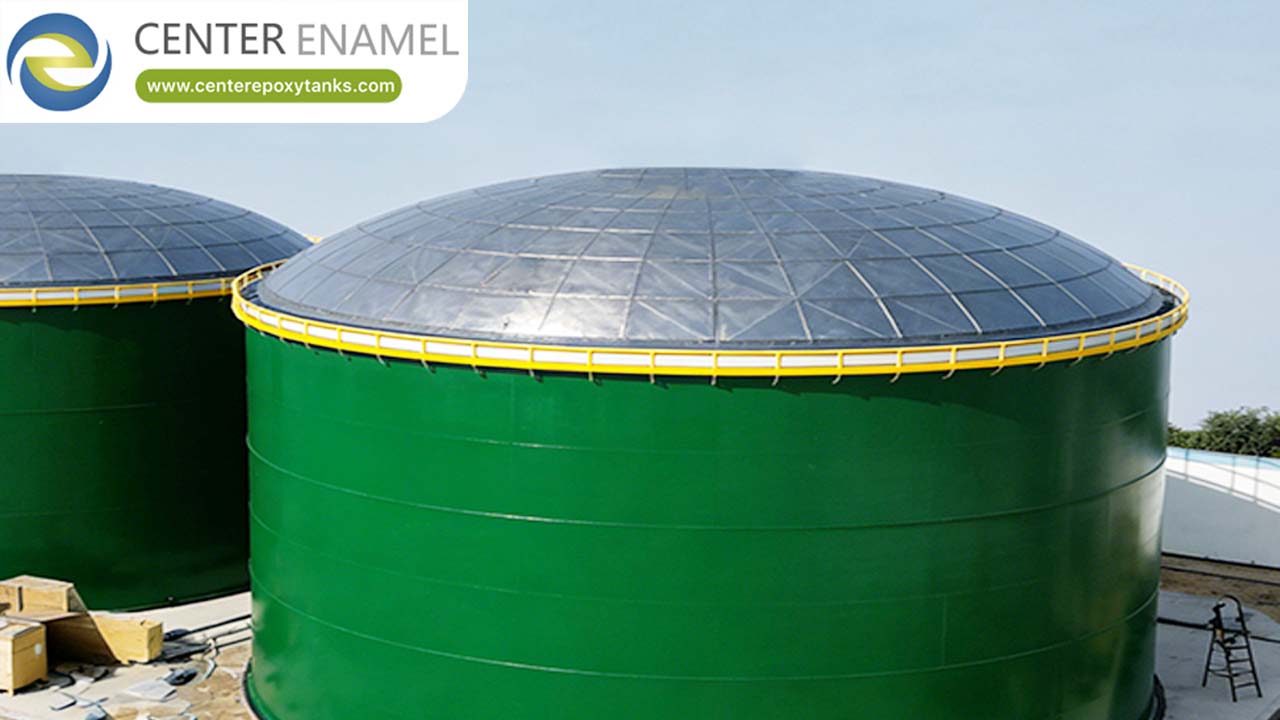
What is a Thermal Energy Storage (TES) Tank?
A Thermal Energy Storage (TES) tank is an industrial storage vessel used to store energy in the form of hot or cold thermal media—typically water or phase-change materials—for use at a later time. By decoupling energy generation from energy consumption, these tanks allow building and industrial facilities to generate cooling or heating during off-peak hours (when electricity is cheaper and demand is low) and release that stored energy during peak hours. This strategy, known as peak load shifting, significantly reduces operational costs, decreases the size requirements for chillers and boilers, and enhances the overall energy efficiency of large-scale HVAC and industrial cooling systems.
How It Works: The Mechanics of Efficiency
The fundamental goal of a TES tank is to store "thermal capacity." The most common method in modern commercial building design is Chilled Water Storage.
1. Stratification
Most chilled water TES tanks rely on thermocline stratification. Because cold water is denser than warm water, the tank maintains a natural separation layer.
● Charging Phase: During the night, the chiller cools water and pumps it into the bottom of the tank, while warmer return water is removed from the top.
● Discharging Phase: During the day, chilled water is drawn from the bottom of the tank to cool the building, while the warmed water returns to the top, maintaining the stratification layers.
2. Phase Change Materials (PCM / Ice Storage)
Some systems use ice storage. By freezing water at night, the tank stores the "latent heat of fusion." This is highly effective because it requires much less volume than chilled water to store the same amount of cooling energy.
Strategic Benefits for Facilities
Implementing a TES tank is rarely just about storage; it is about changing the economics of energy consumption.
● Peak Shaving & Cost Savings: By shifting the cooling load to off-peak hours, facilities can capitalize on lower "Time-of-Use" electricity rates, leading to substantial reductions in monthly utility bills.
● System Redundancy: The TES tank acts as a massive thermal battery. If a chiller system fails, the tank provides a buffer of cooling capacity that can keep critical systems running while repairs are performed.
● Decarbonization: By reducing the peak demand on the electrical grid, TES tanks help flatten the power load curve, which is a critical component of modern green building certifications (e.g., LEED, BREEAM).
Comparative Matrix: Storage Technologies
Feature | Chilled Water TES | Ice Storage TES |
Medium | Liquid Water | Solid Ice / Slurry |
Storage Density | Low (requires large tanks) | High (compact footprint) |
Complexity | Simple (Hydronic) | Moderate (Requires heat exchangers) |
Best Application | Large-scale campuses/District cooling | Space-constrained buildings/Retrofits |
Maintenance | Minimal | Moderate (Ice coil maintenance) |
Frequently Asked Questions (FAQ)
1. Can a TES tank be used for heating?
Yes. While cooling (chilled water) is the most common application, "Hot Water Thermal Storage" is used in industrial processes and district heating systems. The tank stores hot water generated during low-demand periods to be used for space heating or industrial processes during the day.
2. Is a TES tank expensive to install?
The upfront capital cost (CAPEX) can be higher than a standard system because you are adding a large storage vessel. However, because the tank allows you to install smaller chillers (since they don't have to meet the absolute "peak" load anymore), the overall project cost can often be offset by the smaller mechanical plant equipment.
3. Does a TES tank require a lot of space?
It depends on the technology. Chilled water tanks can be quite large, which is why they are often buried underground or located in mechanical basements. Ice storage tanks are significantly more compact because ice holds more energy density than water.
4. How long does the energy last in a TES tank?
Modern, well-insulated TES tanks can hold thermal energy for 24 hours with very low "thermal decay." The loss is negligible, meaning the energy you store at night is almost entirely available for the next day's cooling cycle.
5. Can I retroactively add a TES tank to an existing building?
Yes, though it is easier if you are already planning an HVAC upgrade. If you are replacing your chillers, that is the ideal time to evaluate whether adding a TES tank allows you to downsize the new chiller plant, potentially saving money on the equipment upgrade while adding efficiency.
Are you evaluating the feasibility of a TES system for a new construction project, or are you exploring how to optimize the energy costs of an existing cooling infrastructure?


