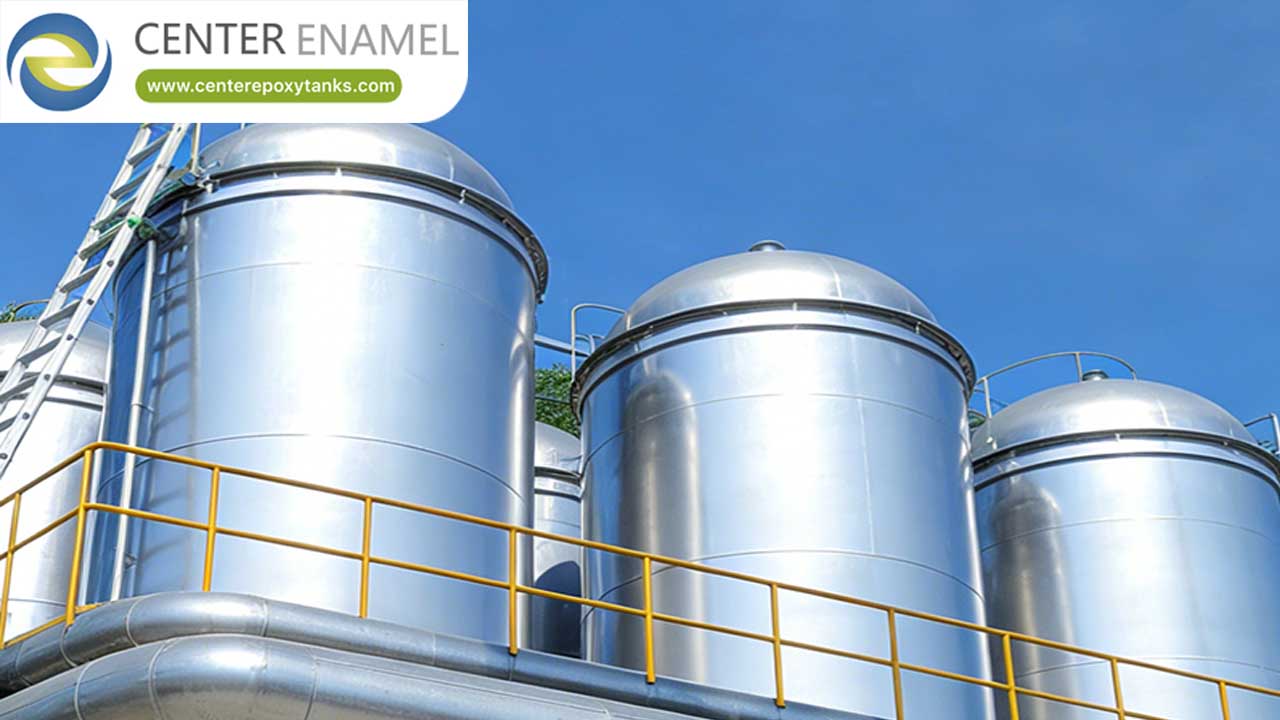
What is a Molten-Salt Energy Storage Tank?
A Molten-Salt Energy Storage (MSES) tank is an industrial-grade vessel designed to store thermal energy by holding inorganic salts—typically a eutectic mixture of sodium nitrate and potassium nitrate—in a liquid state at very high temperatures (often ranging from 290°C to 565°C+). Primarily utilized in Concentrated Solar Power (CSP) plants, these tanks act as a "thermal battery," allowing facilities to store solar energy collected during the day as sensible heat and discharge it on demand to generate electricity via steam turbines, even during the night or overcast periods.
Technical Architecture: The Two-Tank System
Unlike chemical batteries (like Lithium-ion) that store energy electrochemically, MSES tanks utilize sensible heat storage. The salt itself acts as both the heat transfer fluid and the storage medium.
1. The Two-Tank Design
Most industrial-scale CSP facilities employ a two-tank configuration:
● Cold Tank: Stores the "used" salt at approximately 290°C.
● Hot Tank: Stores the high-temperature salt at 565°C or higher, ready to be pumped through a heat exchanger to produce superheated steam for power generation.
2. Materials and Design Challenges
Because these tanks operate at extreme temperatures and contain fluids that can be corrosive, their construction is highly specialized:
● Metallurgy: Hot tanks typically use austenitic stainless steel (e.g., SS 347H or 316L) or nickel-based alloys like Inconel 625 to resist high-temperature oxidation and corrosion.
● Insulation: Multi-layer thermal insulation, consisting of ceramic fibers or mineral wool, is vital to minimize heat loss, which is typically kept below 1% per day.
● Structural Considerations: Engineers must manage "thermal ratcheting" and wall bending stresses caused by the massive temperature gradients, often limiting practical tank diameters to around 20–35 meters to ensure structural stability over a 30-year lifespan.
Strategic Benefits for the Energy Grid
Feature | Impact on Operations |
Grid Stability | Provides dispatchable power, smoothing out the intermittency of solar and wind generation. |
Long-Duration Storage | Capable of storing energy for 10–24+ hours, outperforming chemical batteries for long-term discharge. |
Lifespan | Long service life (30+ years) with minimal degradation compared to lithium-ion counterparts. |
Sustainability | Low environmental footprint; nitrate salts are abundant and often recyclable. |
Challenges: The "Freezing" Risk
The most critical operational challenge for an MSES system is preventing the salt from solidifying. If the temperature in the tank or the connecting pipes drops below the salt’s "liquidus" temperature (typically ~220°C–250°C), the salt will freeze into a solid rock, which is extremely difficult and expensive to re-melt. Therefore, these systems are equipped with redundant trace heating and sophisticated control systems to ensure the salt remains liquid at all times.
Frequently Asked Questions (FAQ)
1. Why use molten salt instead of standard batteries?
While lithium-ion batteries are excellent for short-term (1–4 hour) storage, molten salt thermal storage is significantly more cost-effective and efficient for long-duration storage (10+ hours). Because it stores energy as heat rather than through electrochemical reactions, it does not suffer from the same cycle-life degradation and is cheaper per kWh at scale.
2. Is the salt in these tanks the same as table salt?
No. While it is a type of inorganic salt, it is a specialized blend of nitrates (e.g., "Solar Salt," a 60/40 mix of sodium nitrate and potassium nitrate). This specific composition ensures the salt remains stable at high temperatures and doesn't decompose or become overly corrosive.
3. How much energy can one tank store?
Capacity is massive. A typical CSP plant with two molten salt tanks can store 1,000 MWh or more of thermal energy, which is enough to power tens of thousands of homes for several hours after sunset.
4. Are these tanks considered "pressure vessels"?
Generally, they are designed as atmospheric storage tanks. However, because they handle molten material at high temperatures and involve complex fluid dynamics, they are designed following stringent codes (similar to API 650 or ASME standards) to prevent structural failure due to thermal expansion or mechanical stress.
5. Can molten salt storage be used for things other than solar power?
Yes. Industries that require high-temperature process heat—such as metal smelting, cement production, and chemical processing—are increasingly looking at molten salt thermal energy storage to replace fossil-fuel-based heating systems, helping them stabilize energy costs and reduce carbon emissions.
Are you currently exploring MSES for an industrial process integration, or are you investigating the feasibility of long-duration grid-scale storage?


