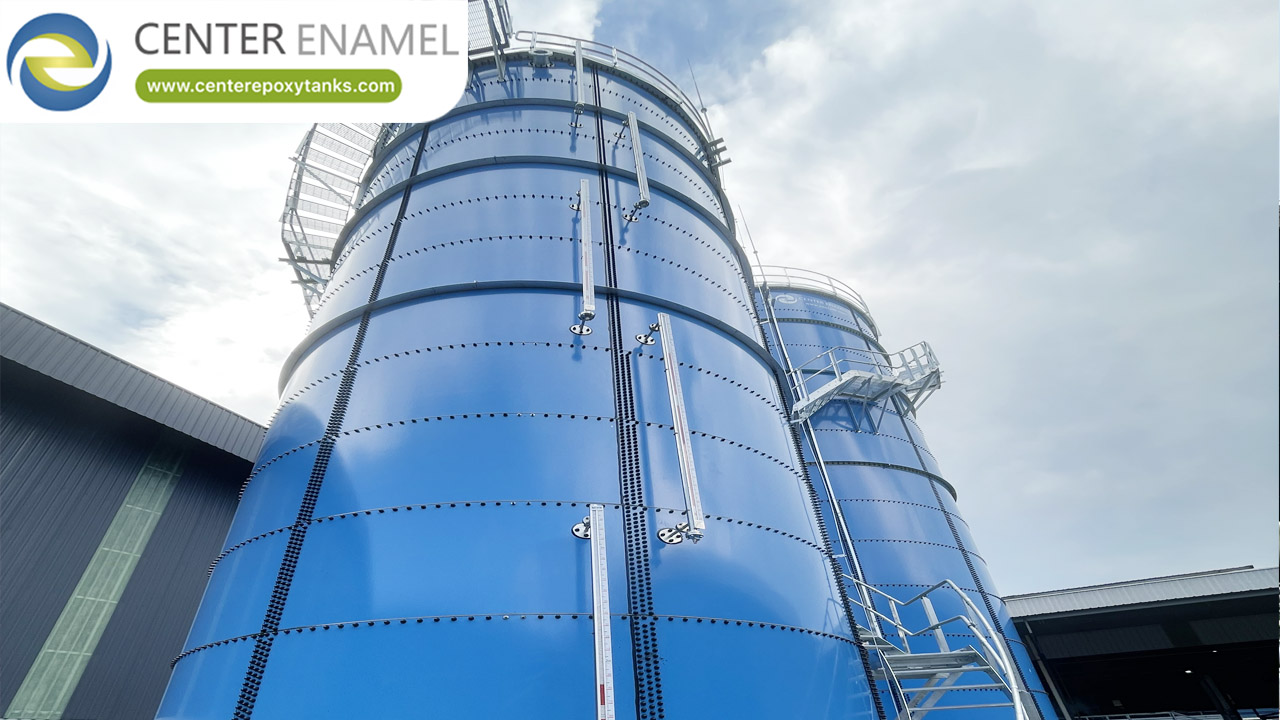
What is a Starch Silo? Design, Function, and Industrial Applications
A starch silo is a specialized, food-grade bulk containment vessel designed to store, condition, and meter fine organic powders—such as native or modified corn starch, wheat starch, potato starch, or cassava (tapioca) starch. Essential to commercial bakeries, food processing plants, paper mills, corrugated board factories, and textile facilities, these vertical cylindrical structures shield bulk starch from humidity and biological contamination while providing an automated, uninterrupted feed to production machinery.
Because starch is an ultra-fine, cohesive powder with a strong tendency to absorb moisture and form explosive dust clouds, a starch silo is far more than a basic storage bin. It functions as an engineered process vessel featuring specialized fluidization discharge systems, sanitary surface finishes, and certified explosion suppression systems.
The Critical Engineering Challenges of Starch Storage
Bulk handling of dry starch presents three distinct physical and chemical hurdles that demand custom silo engineering:
1. Severe Dust Explosion Hazard (Class St 2)
Starch dust suspended in air is highly explosive. Native corn starch carries a high explosivity index , classifying it as a Class St 1 or St 2 combustible dust. A static spark, overheating bearing, or electrical arcing inside an unvented silo can trigger a devastating dust explosion.
2. Cohesive Material Flow & Bridging
Starch particles are microscopic and carry high inter-particle friction. When stored under their own bulk weight, starch granules easily form "bridges" or "arches" across the hopper outlet, or form vertical "ratholes" where only the central core discharges while material along the walls remains static.
3. Moisture Sensitivity & Hygiene (FDA / EHEDG)
Starch is highly hygroscopic. Absorbing ambient humidity causes starch to compact and spoil, creating ideal conditions for mold, yeast, and bacterial growth. Furthermore, because starch is widely consumed in food products, all internal silo surfaces must satisfy strict international food contact regulations.
How a Starch Silo System Operates
A modern automated starch storage system coordinates pneumatic filling, continuous moisture prevention, and controlled aeration during unloading:
Pneumatic Tanker Transfer: Bulk starch is delivered via bulk tanker trucks and blown into the top of the silo using oil-free, dry compressed air.
Top Air Filtration & Venting: A top-mounted pulse-jet dust collector equipped with anti-static filter bags captures fine starch particles during pneumatic filling, venting only clean, filtered air to the atmosphere.
Fluidized Hopper Discharge: To overcome bridging, the 60° bottom cone uses fluidizing air pads or permeable canvas bottoms. Low-pressure dry air is injected through micro-porous membranes, surrounding the starch particles with a cushion of air that turns the cohesive powder into a liquid-like, free-flowing state.
Dosing & Pneumatic Delivery: The aerated starch passes through a sanitary rotary airlock valve or volumetric screw feeder, discharging directly into positive-pressure or vacuum pneumatic transport lines that feed ingredient mixers or paper coating systems.
Technical Specifications & Silo Material Matrix
Selecting the proper starch silo configuration depends on whether the material is food-grade, the storage location (indoor vs. outdoor), and regional safety codes:
Technical Parameter | Engineering Standard / Feature | Operational Impact |
Material Construction | 304 / 316L Stainless Steel or Coated Carbon Steel | Ensures non-corrosive, non-contaminating product contact zones meeting FDA/EHEDG rules. |
Internal Surface Finish | Smooth polished welds | Eliminates micro-crevices where starch buildup, bacteria, or insect larvae could accumulate. |
Explosion Protection | ATEX Zone 20/22 / NFPA 68 & 69 Vents & Flameless Arrestors | Safely channels explosive overpressures outward away from personnel and buildings. |
Flow Aid Mechanics | Fluidization bottoms, vibrating bin activators, air cannons | Prevents bridging and ratholing, ensuring consistent first-in, first-out (FIFO) material discharge. |
Dehumidification System | Dry air sweep in headspace (< 50% RH) | Prevents ambient humidity from causing surface caking and bacterial contamination. |
Key Benefits of Dedicated Starch Silos
Upgrading from manual 25 kg bags or 1-ton big bags (FIBCs) to an automated vertical starch silo delivers immediate operational savings:
Key Takeaway: Transitioning to bulk starch silo delivery reduces raw material purchasing costs by 10% to 18%, eliminates bag-disposal waste, and fully automates ingredient batching for processing lines.
Total Explosion & Plant Safety: Certified explosion relief panels and grounding systems protect facility infrastructure and workers against combustible dust risks.
Zero Product Spoilage: Airtight construction, stainless steel contact surfaces, and dry-air sweeps prevent humidity damage, insect infestation, and bacterial contamination.
Fully Automated Batch Weighing: Integrated load cells under the silo legs provide real-time inventory monitoring and precise, automated dosing into recipe mixing tanks.
Frequently Asked Questions (FAQ)
Q: Why are starch silos considered high dust explosion risks?
A: Fine starch particles suspended in air have a high surface area-to-volume ratio. When oxygen and a small ignition source (such as static electricity or mechanical friction) are present inside a confined silo, the suspension can ignite instantly, creating a powerful explosion.
Q: How do you prevent starch from bridging inside a silo hopper?
A: Bridging is prevented by equipping the silo cone with fluidization pads or a vibrating bin activator. Injecting low-pressure dry air into the base of the hopper reduces particle-to-particle friction, allowing the starch to flow freely through gravity.
Q: What is the difference between storing native starch and modified starch?
A: Native starches (such as pure corn or potato starch) have predictable bulk densities (0.55to 0.70 t/m3). Modified starches or pre-gelatinized starches can be significantly more hygroscopic and sticky, often requiring steeper hopper angles (65° to 70°) and continuous dry air conditioning.
Q: Can starch silos be installed outdoors?
A: Yes. Outdoor starch silos are common in large bakeries and paper mills. However, they require double-wall thermal insulation and electric trace heating around the hopper cone to prevent outdoor temperature drops from creating condensation inside the vessel.


