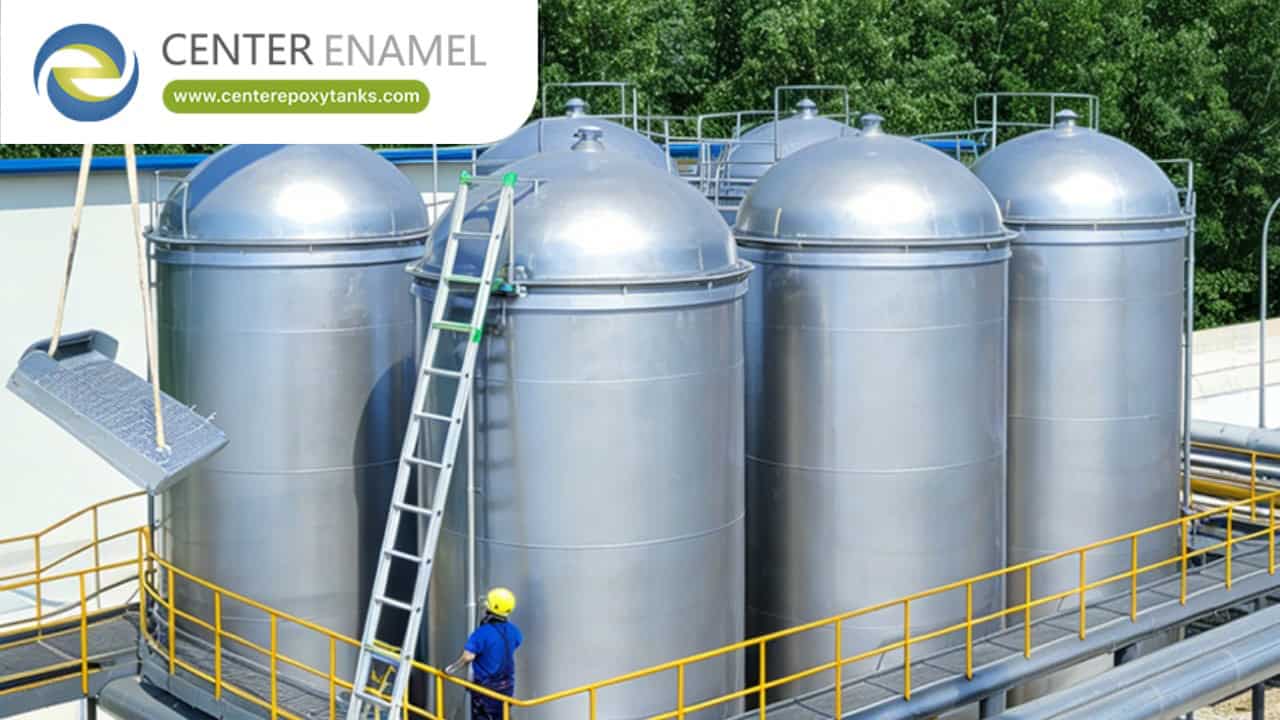
What is a Stainless Steel Chemical Tank?
A stainless steel chemical tank is an industrial storage vessel manufactured from iron alloys containing a minimum of 10.5% chromium. This chromium content reacts with oxygen to form a thin, invisible, and self-healing layer of chromium oxide, which provides the steel with exceptional resistance to corrosion, rust, and chemical degradation.
In industrial settings, stainless steel tanks are engineered to store, process, and transport hazardous or high-purity chemical substances. Unlike carbon steel, which requires heavy coatings or linings to prevent rust, stainless steel provides inherent corrosion resistance, making it the preferred solution for industries where product purity, hygiene, and long-term asset integrity are non-negotiable.
Why Choose Stainless Steel for Chemical Storage?
The adoption of stainless steel in chemical processing is driven by its unique metallurgical properties. Unlike materials that can leach toxins or degrade under chemical exposure, stainless steel maintains its structural and chemical integrity over long periods.
Key Advantages:
Superior Corrosion Resistance: The passive chromium oxide layer protects the tank from a wide array of acids, alkalis, and solvents.
High-Purity Standards: Stainless steel is non-porous and easy to sanitize, making it the standard in pharmaceutical, food-grade, and biotechnology chemical applications.
Thermal Stability: It retains its mechanical strength and structural reliability across a wide range of temperatures, from cryogenic storage to high-heat processing.
Reduced Maintenance: Because it does not rely on external coatings or linings that can chip or wear away, stainless steel tanks generally require less frequent maintenance and offer a lower total cost of ownership over their lifespan.
Understanding Stainless Steel Grades: 304 vs. 316
Selecting the correct grade is the most critical design decision in chemical storage. While many grades exist, 304 and 316 are the industry standards.
Feature | 304 Stainless Steel | 316 Stainless Steel |
Composition | Standard Chromium/Nickel | Chromium/Nickel + Molybdenum |
Corrosion Resistance | Excellent for general use | Superior (especially against chlorides/acids) |
Common Use | Food, beverage, mild water storage | Pharmaceutical, marine, aggressive chemicals |
Cost | More cost-effective | Higher (due to Molybdenum content) |
The Role of Molybdenum: The inclusion of 2-3% Molybdenum in 316 stainless steel significantly boosts resistance to pitting and crevice corrosion, particularly when exposed to harsh chemicals or saline environments. For most chemical processing plants, 316L (low carbon) is the specified standard.
Design and Regulatory Standards
Stainless steel chemical tanks must be built to rigorous international standards to ensure safety and compliance with environmental regulations.
API 650: The global benchmark for large, field-erected welded storage tanks. While often used for carbon steel, API 650 includes specific appendices for the design and fabrication of stainless steel tanks.
ASME Section VIII: If the chemical tank is designed to operate under pressure (exceeding 15 psig), it must be built as a pressure vessel in accordance with ASME Section VIII, Division 1.
ASTM International: Governs the specific material specifications (such as ASTM A240) for stainless steel plate used in pressure vessels and general applications.
Frequently Asked Questions (FAQ)
Q: Is stainless steel better than carbon steel for chemical tanks?
A: "Better" depends on the application. Stainless steel offers superior corrosion resistance, purity, and aesthetic quality, making it ideal for chemicals, food, and pharmaceuticals. Carbon steel is significantly cheaper and stronger, but it requires protective coatings or linings to survive in most chemical environments.
Q: How do I know if I need 304 or 316 stainless steel?
A: If you are storing mild process water or non-corrosive liquids, 304 is usually sufficient. However, if your chemicals involve acids, chlorides, or are stored in coastal/high-salt environments, 316 is the mandatory choice to prevent localized corrosion and pitting.
Q: Can stainless steel chemical tanks be cleaned with harsh chemicals?
A: Yes, one of the primary benefits of stainless steel is its compatibility with "Clean-in-Place" (CIP) systems. It can withstand aggressive alkaline and acidic cleaning agents that would destroy the coatings of a lined carbon steel tank.
Q: What is the lifespan of a stainless steel chemical tank?
A: If correctly specified and maintained, a stainless steel tank can easily exceed 30 to 50 years of service. Its self-healing passive layer means that, unlike lined tanks, it does not suffer from "peeling" or "de-lamination" of protective coatings.
Q: Are stainless steel tanks environmentally friendly?
A: Yes. Stainless steel is 100% recyclable and does not leach harmful chemicals into the environment, making it a sustainable choice for companies aiming to meet green building or environmental safety certifications.


