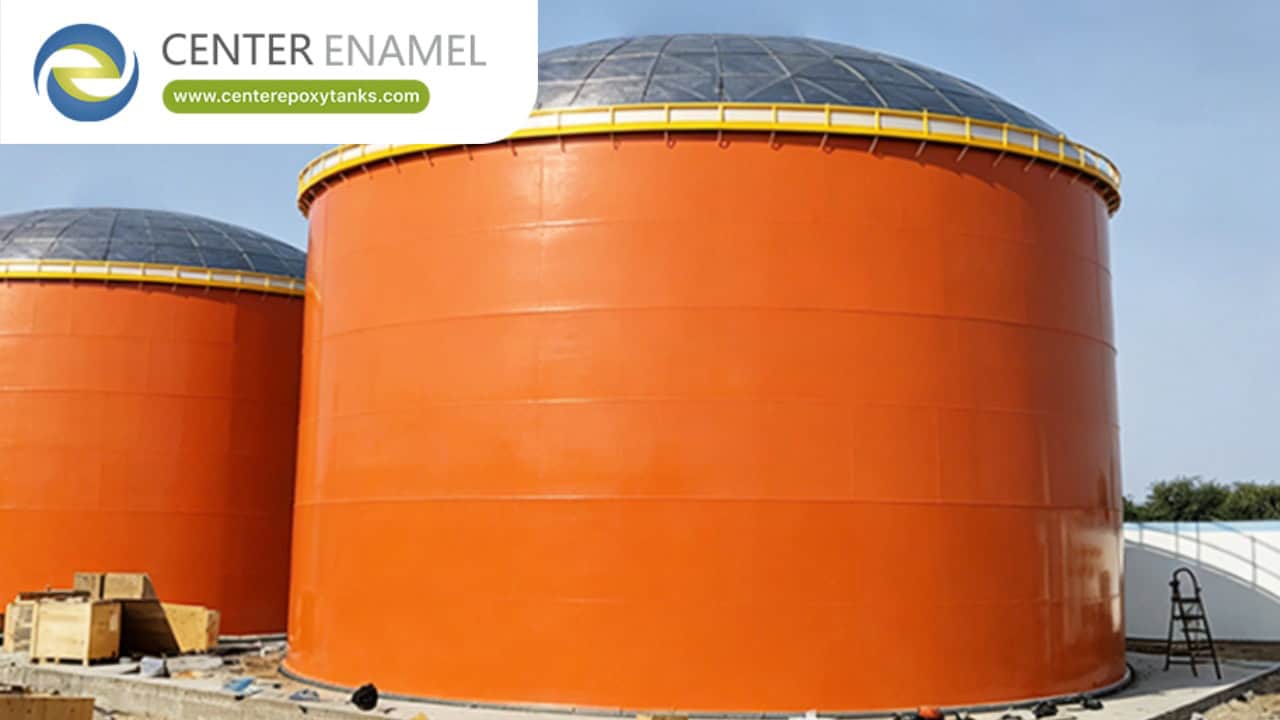
What is a Slurry Silo? Design, Agitation, and Industrial Applications
A slurry silo (also known as a slurry storage tank) is a specialized, leak-proof industrial containment vessel designed to store liquid-solid mixtures—commonly known as slurries—such as livestock manure, mining tailings, biogas digestate, or municipal sludges.
Unlike conventional dry powder silos that rely on gravity discharge through a conical bottom, a slurry silo is engineered as a liquid-tight structure equipped with continuous or automated agitation systems. These mixers prevent suspended solid particles from settling out of the liquid and forming dense, unpumpable sludge beds at the bottom of the tank.
Technical Challenges Solved by Slurry Silos
Storing slurry presents unique mechanical and chemical demands that standard water or dry bulk tanks cannot handle:
1. Solid-Liquid Separation & Settling
Slurries contain organic or mineral solids suspended in water or chemicals. Without active fluid movement, heavier particles settle to the base via gravity, forming a hard crust or compacted sludge layer. Slurry silos solve this by integrating mechanical impellers, submersible mixers, or hydraulic jet pumps to maintain liquid homogeneity.
2. High Corrosion and Chemical Wear
Agricultural manure and industrial sludges produce aggressive chemicals—such as hydrogen sulfide (H2S), ammonia (NH3), and volatile organic acids. Mining slurries often carry abrasive mineral particles along with acidic or alkaline solutions. Slurry silos utilize specialized coatings or inert liners to resist both chemical attack and physical abrasion.
3. Dynamic Hydrostatic Loads
Liquid slurries often have a specific gravity higher than water (frequently ranging from 1.1 to 1.6 g/cm3). Slurry silos are structurally reinforced to withstand intense outward hydrostatic pressure as well as dynamic sloshing forces caused by active agitation.
Comparison of Slurry Silo Construction Materials
Choosing the right material depends on the slurry’s chemical makeup, abrasion level, and budget. Here is a breakdown of the primary engineering materials used today:
Tank Material | Chemical Resistance | Abrasion Resistance | Maintenance Needs | Typical Lifespan | Primary Best Use |
Glass-Fused-to-Steel (GFS) | Exceptional (pH 2-14) | High | Very Low | 30-50+ years | Agricultural manure, biogas digestate, industrial wastewater |
Stainless Steel (304 / 316) | High | Moderate to High | Low | 30-40 years | Chemical sludges, food processing slurry, high-purity applications |
Reinforced Concrete | Moderate (Requires lining) | Very High | Moderate | 20-30 years | Large-volume livestock farm slurry, municipal sludge holding |
Epoxy Coated Steel | Moderate to High | Moderate | Periodic inspection required | 15-25 years | Mild industrial wastewater, non-abrasive mineral slurries |
Primary Industrial Applications
Agricultural Livestock Farming: Stores dairy, swine, or poultry manure safely, preventing nitrate run-off into groundwater and holding nutrients until seasonal land spreading.
Biogas & Anaerobic Digestion: Serves as buffer tanks for organic feedstocks or storage vessels for processed digestate after methane extraction.
Mining & Mineral Processing: Manages mineral tailings, ore sludges, and coal washing water prior to dewatering or environmental treatment.
Industrial & Municipal Wastewater: Holds primary and secondary activated sludges, equalization slurries, and chemical neutralization waste.
Frequently Asked Questions (FAQ)
What is the difference between a dry silo and a slurry silo?
A dry silo stores dry bulk solids (such as grain, cement, or fly ash) and uses gravity cone bottoms or air slides for discharge. A slurry silo stores high-viscosity liquid-solid mixtures, requiring a completely liquid-tight design and internal mechanical agitation to keep solids suspended.
How do you prevent solids from settling in a slurry silo?
Agitation is maintained using top-entry mechanical mixers, side-entry submersible propeller pumps, or external hydraulic jet recirculation systems. The mixing system is usually run continuously or on automated timer cycles based on the settling velocity of the solids.
Why is Glass-Fused-to-Steel (GFS) widely used for slurry storage?
Glass-Fused-to-Steel merges the strength and flexibility of steel with the chemical inertness of glass. fused at 850circC, it creates a smooth, non-porous surface that resists hydrogen sulfide gas, organic acids, and abrasion without needing frequent re-coating.


